 0
0
 0
0
ISLAMABAD — Pakistan’s public health infrastructure is facing a looming financial and logistical crisis following the total suspension of affordable vaccine imports from India. National health authorities warned this week that without a radical shift toward domestic manufacturing, the country’s annual vaccine import bill is projected to skyrocket to $1.2 billion by 2031.
The crisis, triggered by the fallout of Operation Sindoor in May 2025, has exposed a critical vulnerability in Pakistan’s healthcare system: a near-total reliance on foreign-made biologics to sustain its routine immunization program.
The Price of Dependence
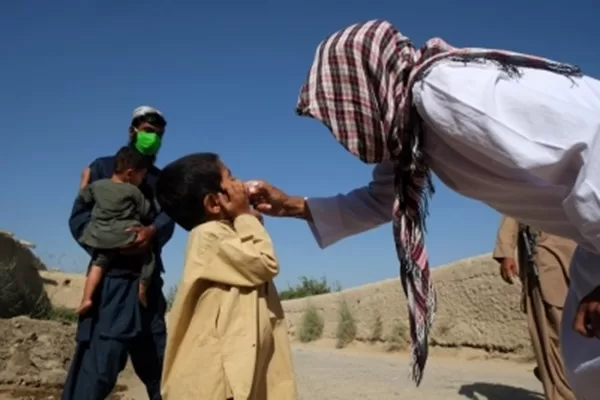
Addressing a press conference in Islamabad, Pakistan Health Minister Mustafa Kamal revealed the stark math of the country’s current predicament. Currently, Pakistan provides 13 essential vaccines—including those for polio, measles, and hepatitis B—free of charge to its citizens. However, none of these are produced within its borders.
The financial burden is currently cushioned by international partners. “Pakistan contributes 51 percent of the cost now,” Kamal stated, “with around 49 percent covered by international organizations operating through Gavi, the Vaccine Alliance.”
However, this “cushion” has a hard expiration date. Gavi’s transition policy dictates that as a country’s Gross National Income (GNI) grows, external support is phased out. For Pakistan, that full transition is expected by 2031.
“Unless we start local production of vaccines, we will face an annual import bill of $1.2 billion by 2031,” Kamal warned.
Why the India Halt Matters
For decades, India has been the “pharmacy of the world,” providing high-volume, low-cost vaccines to Gavi and UNICEF. Pakistan was a major beneficiary of this pipeline, receiving Indian-manufactured doses even during periods of diplomatic tension.
That pipeline was severed following Operation Sindoor on May 7, 2025—a military strike launched by India against terror infrastructure in retaliation for the Pahalgam attack. In the aftermath, India suspended all bilateral trade and closed the Integrated Check Post at Attari. The result for the health sector has been a sudden need to source vaccines from more expensive markets in Europe or through complex secondary routes, driving up costs and straining foreign exchange reserves.
A Demographic Tsunami
The urgency is compounded by Pakistan’s demographic reality. As the world’s fifth most populous nation, Pakistan records approximately 6.2 million births annually.
“Vaccination is not just a health issue; it is a volume game,” says Dr. Sameer Siddiqui, a senior public health consultant based in Karachi. “With 6.2 million new infants entering the system every year, the demand for the Expanded Programme on Immunization (EPI) is relentless. When you lose access to the most cost-effective supplier in the region, the math simply stops working for a developing economy.”
The Roadmap to Self-Reliance
In response to the crisis, the Pakistani government has fast-tracked a new National Vaccine Policy. The goal is to move beyond the production of basic serums—like anti-rabies and tetanus toxoid—to manufacturing complex recombinant and mRNA vaccines.
Key Strategic Moves:
-
Saudi Partnership: A high-level delegation from the Saudi Ministry of Health recently visited the National Institute of Health (NIH) in Islamabad to assess local capacity for joint ventures.
-
Scaling Production: To be economically viable, experts suggest Pakistan must produce at least 300 million doses annually—enough to cover domestic needs and create an export surplus.
-
Regulatory Reform: The Drug Regulatory Authority of Pakistan (DRAP) is reportedly streamlining the licensing process for private-sector pharmaceutical firms to enter the biologics space.
Risks and Public Health Implications
The transition period—between the halt of Indian supplies and the birth of a domestic industry—presents a “danger zone” for public health.
Independent health observers worry that rising costs could lead to “vaccine stockouts” or a reduction in the number of diseases covered. While Pakistan currently covers 13 diseases, neighboring countries like Saudi Arabia cover up to 47.
“The risk of a resurgence in vaccine-preventable diseases is real,” says Dr. Sania Nishtar, CEO of Gavi (speaking generally on transition challenges). “When countries transition to self-financing, they must ensure that the ‘zero-dose’ children—those in the most remote areas—are not left behind due to budget constraints.”
The Path Forward
For the average Pakistani family, the immediate impact may be invisible as long as the government continues to provide free doses. However, the long-term sustainability of this program now depends on a race against time.
If Pakistan fails to establish its own “Serum Institute” style facilities by 2031, the $1.2 billion bill could force difficult choices: either devaluing the currency further to pay for imports or scaling back life-saving immunization coverage.
Statistical Snapshot: The Vaccine Crisis
| Metric | Current Status | Projected (2031) |
| Annual Births | 6.2 Million | ~7.1 Million |
| Total Annual Cost | ~$400 Million | $1.2 Billion |
| Gavi Support | 49% | 0% |
| Domestic Production | 0 (Routine Vaccines) | Target: 13 Vaccines |
References
- https://tennews.in/pak-stares-at-1-2-billion-of-vaccine-import-bill-by-2031-as-india-halts-supply/
Medical Disclaimer: This article is for informational purposes only and should not be considered medical advice. Always consult with qualified healthcare professionals before making any health-related decisions or changes to your treatment plan. The information presented here is based on current research and expert opinions, which may evolve as new evidence emerges.