 0
0
 0
0
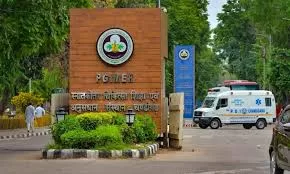
New Delhi, May 8, 2025: The Ministry of Health and Family Welfare is set to convene a high-level meeting to address the prolonged delay in implementing the rotatory headship policy at two of India’s premier medical institutions-All India Institute of Medical Sciences (AIIMS), New Delhi, and Post Graduate Institute of Medical Education and Research (PGIMER), Chandigarh. The meeting follows mounting protests by faculty members demanding the policy’s enforcement.
Background and Current Situation
The rotatory headship policy, which proposes a system of periodic rotation of department heads to ensure democratic and transparent academic governance, has been a long-standing demand of faculty associations at AIIMS and PGIMER. Despite assurances from the Ministry in 2023 that the policy would be operational by June 2024, no concrete steps have been taken so far, leading to growing frustration among faculty members.
In response to the delay, the Faculty Associations of AIIMS and PGIMER launched a month-long black badge protest starting May 1, 2025, to highlight their grievances and press for action. They have repeatedly expressed concerns over the lack of dialogue with the Health Minister’s office and the absence of a clear timeline for implementation.
High-Level Committee and Recommendations
The upcoming meeting will be led by a committee headed by Dr. VK Paul of NITI Aayog, which includes notable members such as former AIIMS director Dr. MC Mishra and renowned cardiologist Dr. KK Talwar. This committee was formed in 2023 to oversee the rollout of the rotatory headship system.
The committee had earlier recommended the introduction of a collegium system to facilitate a fair and transparent rotation process. The system aims to replace the current model where department heads hold office until the age of 62, which faculty members argue restricts leadership opportunities and stifles academic dynamism.
Faculty Perspectives and Demands
A member of the Faculty Association of AIIMS told The New Indian Express, “It was formally communicated that the rotatory headship policy would be implemented from June 2024. Despite multiple dialogues with the Health Ministry, no tangible progress has been made. The Health Minister has not granted us an audience, and the matter keeps getting deferred without justification.”
The faculty associations emphasize that the rotatory and collegium-based headship system is essential for promoting fairness, transparency, and democratic governance in academic institutions.
Way Forward
Officials indicate that the forthcoming meeting will take stock of the current status and formulate a roadmap for the policy’s implementation. The government’s intervention is seen as a crucial step toward resolving the impasse and ensuring that the administrative reform is finally put into practice.
Disclaimer:
This article is based on information available as of May 8, 2025, from Medical Dialogues and related sources. The situation regarding the rotatory headship policy at AIIMS and PGIMER is evolving, and further developments may occur. Readers are advised to consult official announcements for the latest updates.
Citations: