 0
0
 0
0
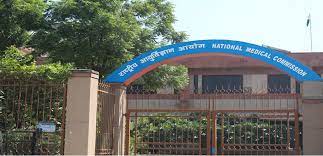
New Delhi — In a decisive move to uphold the integrity of medical education in India, the Union Ministry of Health and Family Welfare has outlined a stringent framework of consequences for medical colleges that fail to meet essential quality standards. Addressing the Rajya Sabha on Thursday, Union Minister of State for Health, Smt. Anupriya Patel, detailed the punitive measures enforced by the National Medical Commission (NMC), ranging from hefty monetary fines to the reduction of MBBS seats and stoppage of admissions.
The announcement comes amidst growing concerns regarding the “dilution of quality” in medical education due to the rapid proliferation of new colleges across the country.
Zero Tolerance for Non-Compliance
Responding to queries from Parliament member Shri C. VE. Shanmugam about whether the government was aware of quality lapses, the Minister emphasized that the NMC is aggressively enforcing the Maintenance of Standards of Medical Education Regulations, 2023 (MSMER 2023).
“Colleges found deficient in any of the parameters, including faculty, infrastructure, or clinical requirements, are issued show-cause notices,” Minister Patel stated. She clarified that if institutions fail to rectify these gaps, they face severe repercussions. “In cases of major non-compliance, monetary penalties and reduction of MBBS seats are imposed.”
Under the current regulations, the NMC holds the authority to levy fines up to ₹1 crore per violation. This financial deterrent is coupled with operational restrictions, such as blocking new admissions—a move effectively pausing a college’s ability to function until standards are met.
Key Measures and Digital Surveillance
The Health Ministry highlighted a shift towards digital transparency to curb the phenomenon of “ghost faculty” and infrastructure fabrication.
-
Annual Declaration Reports (ADRs): All medical colleges must now submit detailed compliance reports online, which are scrutinized by expert panels.
-
Biometric Monitoring: The Aadhaar Enabled Biometric Attendance System (AEBAS) is mandatory to ensure faculty presence, directly addressing the issue of teachers being listed on rolls but absent from classrooms.
-
Graded Penalties: The Medical Assessment and Rating Board (MARB) follows a graded system where persistent defaulters face withdrawal of recognition, rendering their degrees invalid for future batches.
The Scale of the Problem: Recent Data
While the government pushes for expansion—aiming for one medical college per district—recent statistics reveal the magnitude of quality control challenges.
-
Regional Crackdowns: In July 2025, data presented in Parliament revealed that over 30 medical colleges in West Bengal alone were found deficient in faculty or infrastructure parameters for the 2024-25 academic year, leading to penalties and conditional renewals.
-
Corruption Scandals: Earlier this year, the NMC took exemplary action by blacklisting a private medical college in Karnataka and cancelling its seat renewal following a bribery scandal involving an assessor, signaling a crackdown on corruption within the accreditation process itself.
-
Systemic Gaps: The Economic Survey 2024-25 also flagged critical issues, noting that despite high fees in the private sector—ranging from ₹60 lakh to ₹1 crore—many institutions continue to struggle with patient load and faculty retention.
Expert Perspectives: “Infrastructure Can’t Be Compromised”
Medical professionals and advocacy groups have welcomed the strict stance but warn that regulations must be matched by ground-level audits.
Dr. Sajal Bansal, Chief Advisor to the Federation of All India Medical Associations (FAIMA), recently highlighted the disconnect between policy and reality. “While the number of seats is increasing, our recent survey indicates that critical gaps persist,” Dr. Bansal noted. The FAIMA-RMS Survey 2025 found that nearly 90% of resident doctors felt poor infrastructure was directly impacting their training quality, with over 55% reporting staff shortages.
“Medical education is not just about classrooms; it is about clinical exposure,” explains Dr. Ravi Shekhar, a senior medical educator and former dean (name changed for anonymity). “If a college lacks patients or qualified mentors, we are essentially certifying students who may not be ready to treat real patients. The NMC’s move to link penalties to clinical load is vital for public safety.”
Implications for Public Health
The stakes are high for the general public. A dilution in medical education standards directly translates to the competency of the future healthcare workforce.
-
Patient Safety: Ensuring that every licensed doctor has been trained in a fully equipped hospital minimizes the risk of medical errors.
-
Student Protection: By penalizing non-compliant colleges early, the NMC aims to prevent students from being trapped in unrecognized institutions, safeguarding their careers and financial investments.
Challenges Ahead
Despite these measures, enforcement remains a hurdle. Critics argue that while fines generate revenue, they do not always result in immediate infrastructure improvements. Furthermore, the sheer volume of new colleges opening under Public-Private Partnership (PPP) models requires a robust inspection machinery that the NMC is still scaling up.
As the academic year 2026 approaches, the message from the Health Ministry is clear: expansion of medical seats cannot come at the cost of excellence. For medical colleges, compliance is no longer optional—it is a condition of survival.
Medical Disclaimer:
This article is for informational purposes only and should not be considered medical advice. Always consult with qualified healthcare professionals before making any health-related decisions or changes to your treatment plan. The information presented here is based on current research and expert opinions, which may evolve as new evidence emerges.
References:
-
Parliamentary Proceedings: Statement by Minister of State for Health Smt. Anupriya Patel in Rajya Sabha, December 11, 2025.