 0
0
 0
0
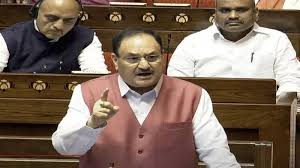
New Delhi – In a significant move to standardize medical education across India’s rapidly expanding healthcare landscape, Union Health Minister J.P. Nadda has officially specified the detailed department-wise faculty requirements for MBBS admissions. The announcement, made in response to a parliamentary query, cements the National Medical Commission’s (NMC) Minimum Standard Requirement (MSR) Regulations 2023 as the definitive benchmark for medical institutions.
The directive comes at a critical juncture for Indian medical education, which has seen a 118% surge in MBBS seats over the last decade. By locking in specific faculty-to-student ratios, the government aims to address long-standing concerns regarding the quality of training in newly established medical colleges, ensuring that the “quantity” of doctors does not compromise the “quality” of healthcare.
The New Benchmarks: By the Numbers
The Health Minister’s disclosure provides a granular roadmap for medical colleges based on their annual intake capacity, ranging from 50 to 250 MBBS seats. These figures are not merely guidelines but mandatory compliance metrics for institutions seeking renewal or recognition.
According to the data presented in the Lok Sabha, the total faculty strength required for a standard medical college with 100 MBBS seats is significantly robust, ensuring comprehensive student supervision. The breakdown includes:
-
17 Professors
-
27 Associate Professors
-
41 Assistant Professors
-
25 Tutors/Demonstrators
-
40 Senior Residents
As the intake capacity increases, the requirements scale up proportionally. For a large institution with 250 MBBS seats, the regulation mandates a formidable faculty strength of 20 Professors, 62 Associate Professors, 86 Assistant Professors, 43 Tutors, and 80 Senior Residents.
Department-Wise Specifics: Balancing Pre-Clinical and Clinical Training
The MSR 2023 regulations go beyond aggregate numbers, enforcing specific quotas for each department to ensure a balanced curriculum.
For the foundational Anatomy department in a 100-seat college, institutions must maintain a team of one Professor, one Associate Professor, two Assistant Professors, and four Tutors. This ensures that first-year students receive adequate hands-on guidance during cadaveric dissections.
Similarly, clinical departments, which form the backbone of hospital-based learning, have rigorous requirements. The General Medicine department for the same 100-seat college requires one Professor, three Associate Professors, four Assistant Professors, and four Senior Residents.
“This level of specificity is designed to plug gaps,” explains Dr. R.K. Sharma (name changed for general perspective), a senior medical administrator. “Previously, colleges might have been top-heavy with professors but light on residents who actually do the bedside teaching. These regulations mandate a pyramid structure that benefits the learner.”
The “Why” Now: Quality Control Amidst Expansion
The timing of this enforcement is pivotal. India has witnessed an explosion in the number of medical colleges—rising from 387 in 2014 to over 700 in 2024. While this addresses the doctor-patient ratio deficit, it has sparked fears of “ghost faculties” and infrastructure deficits.
The MSR 2023 regulations are part of a broader digital overhaul. Alongside these numbers, the NMC has introduced the Aadhaar-Enabled Biometric Attendance System (AEBAS) to track faculty presence in real-time, making it difficult for colleges to maintain faculties merely “on paper.”
Challenges and Expert Perspectives
While the standardization is welcomed by student advocacy groups, it has raised concerns regarding implementation, particularly in rural and tier-2 city colleges which already face acute recruitment challenges.
Dr. Aruna Vanikar, a former member of the NMC’s Undergraduate Medical Education Board, has previously highlighted that regulations must be pragmatic. Critics from the Indian Medical Association (IMA) have also voiced concerns regarding separate amendments that allow visiting faculty or non-teaching specialists to fill these roles, fearing it might “dilute” the academic pedagogy essential for creating thorough clinicians.
“The ratios are excellent on paper,” notes a senior representative from a resident doctors’ association. “But the ground reality is that many government colleges are struggling to fill these posts. If the NMC strictly enforces this without a parallel recruitment drive, we might see colleges losing recognition, which ultimately harms the students.”
Furthermore, the controversial decision to reduce the permissible percentage of non-medical MSc/PhD faculty in pre-clinical subjects (like Anatomy and Physiology) remains a point of contention, with some experts arguing it exacerbates the shortage of qualified teachers in foundational sciences.
Implications for Public Health
For the general public, these technical ratios translate directly to patient safety. A medical student trained in a college with adequate faculty supervision is less likely to make clinical errors and more likely to diagnose complex conditions accurately.
“Medical education is not just about reading books; it is an apprenticeship,” the Health Minister’s statement implies. By ensuring that there are enough Senior Residents and Assistant Professors—the “first line” of teachers—the government is attempting to safeguard the competency of the next generation of Indian doctors.
Medical Disclaimer
Medical Disclaimer: This article is for informational purposes only and should not be considered medical advice. Always consult with qualified healthcare professionals before making any health-related decisions or changes to your treatment plan. The information presented here is based on current research and expert opinions, which may evolve as new evidence emerges.
References
-
Primary Source: Misra, B. (2025). Health Minister specifies department-wise faculty requirement for MBBS admissions as per NMC regulations. Medical Dialogues. Retrieved from https://medicaldialogues.in/news/health/doctors/health-minister-specifies-department-wise-faculty-requirement-for-mbbs-admissions-as-per-nmc-regulations-160207