 0
0
 0
0
KOLKATA — State and federal health authorities in India have launched an intensive containment operation following the detection of two suspected cases of the Nipah virus (NiV) in West Bengal. The individuals, both nursing professionals, were identified on January 11 at the ICMR-Virus Research and Diagnostic Laboratory at AIIMS Kalyani and are currently receiving critical care at a private medical facility.
The development has triggered a multi-agency response involving the Union Health Ministry and the National Centre for Disease Control (NCDC), as officials race to trace contacts across three districts: Nadia, East Burdwan, and North 24 Parganas.
Rapid Response and Containment Efforts
West Bengal Chief Secretary Nandini Chakraborty and Health Secretary Narayan Swarup Nigam confirmed on Monday that both patients are currently admitted to the Intensive Care Unit (ICU). The nurses were previously stationed at a hospital in Barasat, North 24 Parganas, raising concerns about potential occupational exposure.
In a swift move to prevent a localized outbreak, a National Joint Outbreak Response Team has been deployed. This elite task force includes experts from:
-
The National Institute of Virology (NIV), Pune
-
The National Institute of Epidemiology (NIE), Chennai
-
AIIMS Kalyani
-
The Department of Wildlife (to investigate potential zoonotic spillover)
“Our primary objective is twofold: ensuring the highest level of care for the affected individuals and executing rigorous contact tracing,” stated Secretary Nigam. “We are monitoring anyone who interacted with the patients in Nadia, East Burdwan, and North 24 Parganas to break the chain of transmission immediately.”
Understanding Nipah Virus: A High-Priority Pathogen
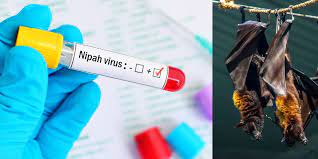
Nipah virus is a zoonotic virus, meaning it spreads from animals to humans. According to the World Health Organization (WHO), the natural hosts of the virus are fruit bats (Pteropodidae family). It can also be transmitted through contaminated food or directly between people.
The virus is of significant concern to global health experts because of its high case-fatality rate, which is estimated to be between 40% and 75% depending on the local epidemiological surveillance and clinical management capabilities.
Symptoms to Watch For
Infection in humans can range from asymptomatic infection to acute respiratory infection and fatal encephalitis (inflammation of the brain). Common symptoms include:
-
Fever and headache
-
Cough and sore throat
-
Dizziness and drowsiness
-
Mental confusion or disorientation (signs of encephalitis)
“Nipah is particularly challenging because its initial symptoms often mimic common seasonal flus or respiratory infections,” says Dr. Arindam Basu, an infectious disease specialist not involved in the current cases. “For healthcare workers, the risk is compounded by the proximity to patients during the peak of viral shedding.”
National Coordination and Support
The gravity of the situation prompted immediate communication between New Delhi and Kolkata. Union Minister for Health and Family Welfare, J.P. Nadda, has written to West Bengal Chief Minister Mamata Banerjee, pledging the full resources of the central government.
The Public Health Emergency Operations Centre (PHEOC) at the NCDC in Delhi has been activated to serve as a nerve center for the national response. Guidelines under the Communicable Disease Alert have already been disseminated to the State Integrated Disease Surveillance Programme (IDSP) to ensure standardized protocols for testing and isolation.
The Challenge of Contact Tracing
Contact tracing is the cornerstone of Nipah containment. Because the virus has a relatively long incubation period—typically 4 to 14 days, though periods as long as 45 days have been reported—identifying every individual the nurses interacted with is a logistical challenge.
Because the two nurses reside in different districts (Nadia and East Burdwan) but worked in a third (North 24 Parganas), the geographic footprint of the investigation is broad. The involvement of the Department of Wildlife is also crucial, as they will investigate whether local fruit bat populations show signs of viral activity or if contaminated date palm sap—a common transmission vehicle in past Bengal outbreaks—played a role.
Expert Perspective: Balancing Caution and Calm
While the term “Nipah” often sparks anxiety due to its high mortality rate, public health experts emphasize that the virus does not typically spread as easily as COVID-19.
“Nipah outbreaks are usually focal, meaning they stay localized if identified early,” explains Dr. Suniti Mishra, a public health consultant. “The fact that these suspected cases were flagged at a VRDL lab so quickly suggests that our surveillance systems are working. However, the involvement of healthcare workers is a reminder of the absolute necessity for ‘Contact Precautions’ and ‘Droplet Precautions’ in clinical settings.”
Potential Limitations in Reporting
It is important to note that these are currently suspected cases. Confirmation from the National Institute of Virology (NIV) in Pune is the “gold standard” for a definitive diagnosis. Until the genomic sequencing and confirmatory assays are completed, there remains a possibility that the illnesses could be attributed to other viral pathogens common to the region.
What This Means for the Public
For residents in the affected districts, health authorities advise maintaining high standards of hygiene and caution.
-
Avoid Consuming Raw Date Palm Sap: This is a known risk factor as bats often contaminate the collection containers.
-
Wash Fruits Thoroughly: Ensure all fruits are washed and peeled before consumption; avoid fruits that show signs of bird or bat bites.
-
Practice Hand Hygiene: Frequent handwashing with soap and water remains the most effective barrier against many viral infections.
-
Report Symptoms: If you have been in contact with anyone from the affected areas and develop a high fever or respiratory distress, contact local health services immediately.
The situation remains fluid, and further updates are expected as the National Joint Outbreak Response Team begins its field investigations.
Medical Disclaimer
Medical Disclaimer: This article is for informational purposes only and should not be considered medical advice. Always consult with qualified healthcare professionals before making any health-related decisions or changes to your treatment plan. The information presented here is based on current research and expert opinions, which may evolve as new evidence emerges.
References and Sources
Official Statements & News Sources:
-
Indo-Asian News Service (IANS). (2026, January 12). Two Suspected Nipah Cases Detected In Bengal.