 0
0
 0
0
The Gujarat Karmayogi Health Security Scheme (GKSSY) is designed to financially protect about 6.42 lakh government employees, pensioners, and their families from high medical costs. It offers cashless treatment coverage up to Rs 10 lakh for a wide range of medical procedures, complementing existing schemes like Ayushman Bharat and Mukhyamantri Amrutam (MA) Yojana. The GKSSY operates as a special “G-Category” under the larger PM-JAY framework.
During the launch event, Ayushman cards were symbolically handed to beneficiaries to facilitate access to medical services. The state government plans an annual expenditure of Rs 303.50 crore to support the scheme, demonstrating a strong fiscal commitment to public employee welfare.
Emergency Ambulance Upgrade and Integration
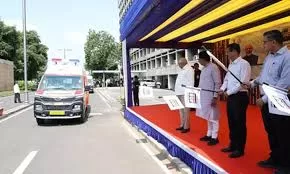
The launch included the introduction of 94 new 108 Emergency Ambulances equipped with advanced life support systems. These additions bring the total operational fleet to 1,549 ambulances statewide, including 913 under the 108 emergency service and 542 ambulances integrated from government health institutions.
These vehicles are equipped with modern technology to improve “golden hour” emergency response—critical in increasing survival rates during life-threatening conditions such as cardiac arrest, trauma, or stroke. The ambulances serve rural and remote regions, playing a crucial role in bridging accessibility gaps in medical emergencies.
Expert Perspectives and Public Health Context
Dr. Meera Shah, a public health expert not involved with the scheme, commended the initiative stating, “Financial barriers often delay critical treatments in emergencies or severe illness. A cashless coverage of Rs 10 lakh for government employees and pensioners can significantly improve timely access to tertiary care and reduce catastrophic health expenditures.”
Gujarat’s healthcare system has strategically invested in tertiary care centers, including specialty institutes like the U.N. Mehta Institute of Cardiology and Gujarat Cancer Research Institute, reinforcing the capacity to provide advanced medical procedures.
The robust ambulance network complements these developments by facilitating faster hospital transfers and emergency interventions. This comprehensive approach aligns with global public health principles that emphasize integrated healthcare delivery systems capable of responding efficiently to both preventive and emergency medical needs.
Implications for Public and Health Professionals
For government employees and pensioners in Gujarat, the GKSSY scheme offers substantial financial protection, potentially reducing out-of-pocket expenses that often drive families into poverty during serious illnesses. Moreover, the upgraded ambulance service strengthens pre-hospital care and emergency medical services, crucial for improving survival outcomes.
Healthcare professionals in the region can expect better patient flow and timely referrals supported by the extended ambulance fleet and cashless treatment provisions. Public health authorities will likely monitor this integrated model’s outcomes to inform possible replication across other Indian states.
Limitations and Balanced Perspectives
While the scheme promises wide coverage, its scope is limited to government employees, pensioners, and their families, leaving out large segments of the population who may still experience financial hardship during health crises. Additionally, the annual Rs 303.50 crore funding is a significant expense, raising considerations about long-term fiscal sustainability.
Some critics might argue that extending similar schemes to all citizens could better fulfill public health equity goals. However, targeted schemes for vulnerable employee groups remain important interim steps in the broader universal health coverage movement India is pursuing.
Conclusion
The Gujarat Karmayogi Health Security Scheme and the expansion of the 108 emergency ambulance network represent significant strides in safeguarding the health and finances of government employees and pensioners in Gujarat. This initiative complements existing national health programs and underscores the state’s commitment to modernizing healthcare access and emergency response capabilities.
By integrating financial protection with emergency care improvements, Gujarat contributes to advancing health security and resilience, exemplifying a model that other states may consider amid India’s ongoing healthcare reforms.
Medical Disclaimer
This article is for informational purposes only and should not be considered medical advice. Always consult with qualified healthcare professionals before making any health-related decisions or changes to your treatment plan. The information presented here is based on current research and expert opinions, which may evolve as new evidence emerges.
References
-
Gujarat CM announces health scheme, inaugurates ambulances as festive gift, IANS, September 22, 2025.