 0
0
 0
0
NEW DELHI — In a major push to fortify the nation’s nutritional security, the Union Ministry of Health and Family Welfare announced on Tuesday a significant expansion of India’s food safety infrastructure. Speaking before the Rajya Sabha, Minister of State Shri Prataprao Jadhav detailed a multi-tiered strategy by the Food Safety and Standards Authority of India (FSSAI) to combat food adulteration through a massive network of accredited laboratories and “testing labs on wheels.”
The initiative arrives at a critical juncture as global food supply chains face increasing scrutiny. By deploying 305 Food Safety on Wheels (FSWs) across 35 States and Union Territories, the government aims to bridge the “testing gap” in rural areas, ensuring that the milk, oils, and grains reaching dinner tables meet rigorous national standards.
A Network of Precision: The Laboratory Backbone
At the heart of this enforcement drive is a sophisticated hierarchy of testing facilities. To date, the FSSAI has notified 246 laboratories accredited by the National Accreditation Board for Testing and Calibration Laboratories (NABL) for primary food analysis.
These labs serve as the first line of defense, screening samples for contaminants ranging from pesticide residues to industrial dyes. For cases involving legal disputes or appeals, the government has established 24 Referral Food Laboratories. These high-level institutions provide the final scientific word on “appellate samples,” ensuring that enforcement actions are backed by undeniable empirical evidence.
“The integrity of a food safety system is only as strong as its analytical capabilities,” says Dr. Aranya Sen, a public health analyst not involved in the government report. “Moving from localized, informal checking to a standardized NABL-accredited network is a massive leap in protecting the consumer’s right to safe food.”
Bringing Science to the Streets: Food Safety on Wheels
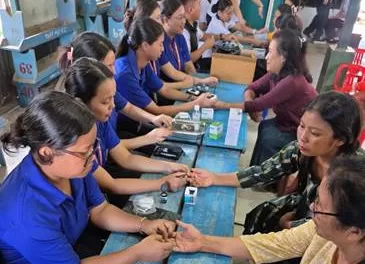
Perhaps the most visible change for the average citizen is the rollout of the Food Safety on Wheels (FSW) program. These multipurpose vehicles are designed to solve a perennial problem: the “last-mile” delivery of food safety services.
| FSW Feature | Function & Purpose |
| Rapid Testing | Detects common adulterants like starch in milk or synthetic colors in spices. |
| Outreach | Reaches remote villages where permanent lab infrastructure is absent. |
| Education | Conducts awareness programs for local vendors and consumers. |
| Training | Provides on-site workshops for small-scale food business operators (FBOs). |
The 305 FSWs currently operational act as mobile clinics for food. They allow consumers to bring suspicious items for basic testing, providing immediate results and demystifying the science of food safety.
Understanding the Risks: Why Adulteration Matters
Food adulteration is more than just a commercial fraud; it is a significant public health hazard. Common adulterants can have varied impacts on the human body:
-
Metanil Yellow: Often used to color pulses and turmeric, this non-permitted food color is neurotoxic.
-
Argemone Oil: Used to bulk up mustard oil, it can lead to epidemic dropsy and cardiac distress.
-
Formalin: Used illegally to preserve fish and milk, it is a known carcinogen.
According to FSSAI data for the fiscal years 2023-26, enforcement drives have become increasingly targeted. By identifying “hotspots” of non-compliance, regional offices are moving away from random sampling toward data-driven surveillance.
The Shared Responsibility Model
A unique aspect of the Indian food safety framework is the “Shared Responsibility” model. While the FSSAI sets the science-based standards at the central level, the heavy lifting of field enforcement—inspections, seizures, and monitoring—falls to State Food Safety Authorities.
“It is a coordinated dance,” explains a senior food safety officer. “The Center provides the scientific blueprint and the high-tech mobile labs, but the local inspectors are the ones ensuring the neighborhood halwai (confectioner) isn’t using sub-standard fats.”
Despite these strides, challenges remain. Experts point out that the sheer volume of India’s unorganized food sector—millions of street vendors and small producers—makes total surveillance a Herculean task.
What This Means for the Consumer
For the health-conscious consumer, these developments signify a shift toward transparency. However, officials emphasize that public vigilance is the final component of the safety chain.
Practical Tips for Readers:
-
Look for the Logo: Ensure packaged goods carry the FSSAI license number.
-
Utilize Mobile Labs: If an FSW is in your area, use it to test staples like milk or honey.
-
Report Suspicious Activity: Use the FSSAI’s ‘Food Safety Connect’ app to report instances of suspected adulteration.
Looking Ahead: A Data-Driven Future
As the Ministry of Health moves further into 2026, the focus is expected to shift toward digital integration—linking lab results in real-time to a central database to track patterns of adulteration across state lines. While the current deployment of 305 mobile labs is a milestone, the goal remains to ensure that no pocket of the country is left without access to primary testing.
By combining high-tech laboratory precision with grassroots mobile outreach, India is not just reacting to food safety crises—it is building a preemptive shield to prevent them from reaching the plate.
References
-
Government Source: Press Information Bureau (PIB) Delhi, “Steps taken to Prevent Adulteration in Food Items,” Posted Feb 10, 2026.
Medical Disclaimer: This article is for informational purposes only and should not be considered medical advice. Always consult with qualified healthcare professionals before making any health-related decisions or changes to your treatment plan. The information presented here is based on current research and expert opinions, which may evolve as new evidence emerges.
Annexure-I
Details of enforcement action on various food safety issues (including food adulteration)
| S. No. | State/UT | FY 2023-24 | FY 2024-25 | ||
| No. of Samples Analysed |
No. of Samples found non-conforming | No. of Samples Analysed | No. of Samples found non-conforming | ||
| 1 | Andaman And Nicobar Islands | 0 | 0 | 810 | 4 |
| 2 | Andhra Pradesh | 6439 | 472 | 5984 | 514 |
| 3 | Arunachal Pradesh | 501 | 11 | 125 | 9 |
| 4 | Assam | 1139 | 125 | 1705 | 234 |
| 5 | Bihar | 2806 | 126 | 2863 | 124 |
| 6 | Chandigarh | 311 | 49 | 374 | 65 |
| 7 | Chhattisgarh | 1373 | 167 | 2069 | 270 |
| 8 | Dadra and Nagar Haveli & Daman & Diu | 185 | 0 | 56 | 0 |
| 9 | Delhi | 3412 | 150 | 2624 | 130 |
| 10 | Goa | 599 | 16 | 1172 | 74 |
| 11 | Gujarat | 15841 | 910 | 12387 | 901 |
| 12 | Haryana | 3485 | 856 | 2233 | 500 |
| 13 | Himachal Pradesh | 1618 | 401 | 1587 | 293 |
| 14 | Jammu & Kashmir | 9057 | 750 | 6955 | 651 |
| 15 | Jharkhand | 384 | 292 | 364 | 138 |
| 16 | Karnataka | 5492 | 286 | 9371 | 662 |
| 17 | Kerala | 10792 | 1304 | 10767 | 1635 |
| 18 | Ladakh | 638 | 11 | 417 | 45 |
| 19 | Lakshadweep | 0 | 0 | 0 | 0 |
| 20 | Madhya Pradesh | 13998 | 2022 | 13920 | 1635 |
| 21 | Maharashtra | 5087 | 1174 | 5403 | 1250 |
| 22 | Manipur | 168 | 3 | 126 | 1 |
| 23 | Meghalaya | 123 | 7 | 388 | 5 |
| 24 | Mizoram | 0 | 0 | 0 | 2 |
| 25 | Nagaland | 138 | 3 | 223 | 11 |
| 26 | Orissa | 2003 | 252 | 2282 | 273 |
| 27 | Puducherry | 31 | 0 | 173 | 0 |
| 28 | Punjab | 6041 | 929 | 4131 | 748 |
| 29 | Rajasthan | 18536 | 3493 | 13840 | 3788 |
| 30 | Sikkim | 231 | 0 | 254 | 0 |
| 31 | Tamil Nadu | 18146 | 2237 | 18071 | 2240 |
| 32 | Telangana | 6156 | 973 | 3347 | 324 |
| 33 | Tripura | 87 | 0 | 123 | 5 |
| 34 | Uttar Pradesh | 27750 | 16183 | 30380 | 16500 |
| 35 | Uttarakhand | 1998 | 192 | 1509 | 140 |
| 36 | West Bengal | 5948 | 414 | 14502 | 1217 |
| Total | 1,70,513 | 33808 | 1,70,535 | 34,388 | |
Annexure-II
Details of enforcement action on various food safety issues (including food adulteration)
in the FY 2025-26 (till date)
| Year | No. of Samples Analysed | No. of Samples found non-conforming |
| 2025-26 | 1,55,306 | 27,567* |
*The data for FY 2025–26 is provisional.