 0
0
 0
0
December 10, 2025
In a statement that has reignited the debate over India’s environmental health crisis, the Union Ministry of Health and Family Welfare informed Parliament on Tuesday that there is “no conclusive data” to establish a direct correlation of death or disease exclusively due to air pollution.
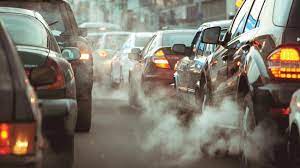
The assertion, made by Minister of State for Health Prataprao Jadhav in the Rajya Sabha, stands in stark contrast to repeated warnings from the global medical community, including the World Health Organization (WHO) and The Lancet, which estimate that air pollution contributes to nearly 1.7 million premature deaths in India annually.
The Government’s Stance: “Synergistic Factors”
In a written reply to the Upper House, Minister Jadhav maintained that while air pollution is a known “triggering factor” for respiratory ailments, attributing deaths solely to it is scientifically complex.
“The health effects of air pollution are a synergistic manifestation of factors, which include food habits, occupational habits, socioeconomic status, medical history, immunity, heredity, etc., of the individuals,” Jadhav stated.
Essentially, the government’s position relies on a technicality of cause-of-death certification: because air pollution often exacerbates underlying conditions—such as heart disease or diabetes—it is rarely listed as the exclusive cause of death on a medical certificate.
The Minister highlighted several government initiatives aimed at mitigation, including the National Programme for Climate Change and Human Health (NPCCHH), the Pradhan Mantri Ujjwala Yojana (PMUY) to reduce household smoke, and the National Clean Air Programme (NCAP) launched in 2019.
The Scientific Consensus: A “Silent Killer”
While the government highlights the lack of “exclusive” linkage, the medical consensus relies on “attributable risk”—a statistical measure used to estimate how many deaths in a population can be traced back to a specific risk factor.
According to the Lancet Countdown on Health and Climate Change, released in October 2025, fossil fuel-driven air pollution was linked to approximately 1.72 million deaths in India in 2022. The report emphasized that microscopic particulate matter (PM2.5) penetrates deep into the lungs and enters the bloodstream, causing systemic inflammation that leads to heart attacks, strokes, and lung cancer.
“The argument that death is not ‘exclusively’ caused by pollution is semantically true but medically misleading,” explains Dr. Randeep Guleria, renowned pulmonologist and former Director of AIIMS. “It is akin to saying tobacco doesn’t ‘exclusively’ cause lung cancer because genetics play a role. But we know smoking is the primary driver. Similarly, breathing Delhi’s air on severe days is equivalent to smoking 8 to 10 cigarettes a day.”
Earlier this week, a group of over 80 Padma awardee doctors issued an unprecedented warning, declaring the air pollution crisis a “medical emergency.” They noted that over one-third of respiratory deaths and 40% of stroke deaths in India are now linked to long-term exposure to toxic air.
The Gap Between Policy and Pathology
The discrepancy between the government’s statement and medical data highlights a critical gap in how public health threats are categorized.
“Clinicians see the acute impact in emergency rooms every winter,” says Dr. Sanjeev Bagai, a senior pediatrician and Padma Shri awardee. “We are seeing non-smokers in their 30s with ‘smoker’s lungs’ and children with irreversible lung damage. To wait for ‘conclusive data’ of an exclusive link is to deny the evidence staring us in the face.”
Even the government’s own research body, the Indian Council of Medical Research (ICMR), released a study in 2019 stating that one in eight deaths in India could be attributed to air pollution. The study found that the average life expectancy of an Indian would increase by 1.7 years if air quality met recommended standards.
Implications for Public Health
The refusal to formally link mortality to air pollution has practical implications for policy and public behavior:
-
Resource Allocation: Without acknowledging the mortality burden, health budgets may under-prioritize pollution-related preventative care.
-
Public Perception: Citizens may underestimate the risk, viewing pollution as a seasonal nuisance rather than a life-threatening hazard.
-
Legal Accountability: It becomes difficult for citizens to seek legal recourse or compensation for pollution-related health damages.
Minister Jadhav did note that the Health Ministry issues public advisories and has developed training modules for healthcare workers to handle climate-sensitive diseases. However, critics argue that adaptation plans are insufficient without aggressive source control.
Breaking Down the Risk
For the average citizen, understanding the risk is vital. Medical professionals advise:
-
Monitor AQI: Treat High AQI days (above 200) as you would extreme weather—limit outdoor exposure.
-
Mask Up: N95 masks offer the only effective protection against PM2.5; cloth masks are largely ineffective.
-
Create Clean Zones: Use air purifiers or HEPA filters in bedrooms, particularly for children and the elderly.
As the winter smog settles over northern India, the debate continues. While the government searches for “exclusive” proof, the hospitals continue to fill up, suggesting that for millions of Indians, the link between the air they breathe and their health is conclusive enough.
Medical Disclaimer: This article is for informational purposes only and should not be considered medical advice. Always consult with qualified healthcare professionals before making any health-related decisions or changes to your treatment plan. The information presented here is based on current research and expert opinions, which may evolve as new evidence emerges.
References
-
Parliamentary Proceedings: Statement by Minister of State for Health Prataprao Jadhav, Rajya Sabha, December 9, 2025.
-
Global Health Data: The Lancet Countdown on Health and Climate Change 2025 Report, October 2025.
-
National Research: India State-Level Disease Burden Initiative, Indian Council of Medical Research (ICMR), PHFI, and IHME, 2019.
-
Expert Commentary: Quotes attributed to Dr. Randeep Guleria (Ex-Director, AIIMS) and Dr. Sanjeev Bagai (Padma Shri).
-
Statistical Source: World Health Organization (WHO) Ambient Air Quality Database, 2024 Update.
The selected video features Dr. Randeep Guleria explaining the severe health impacts of air pollution, reinforcing the expert perspectives cited in the article.