 0
0
 0
0
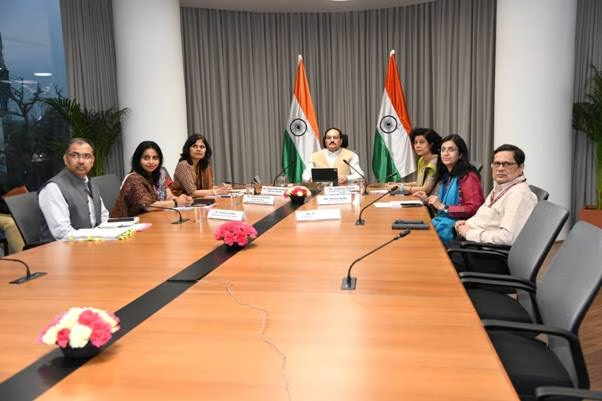
GENEVA / NEW DELHI — In a historic move to combat one of the leading causes of female mortality in India, Union Health Minister Shri Jagat Prakash Nadda officially reaffirmed the nation’s commitment to eliminating cervical cancer during a high-profile briefing at World Health Organization (WHO) headquarters. The announcement marks the rollout of the world’s largest free Human Papillomavirus (HPV) vaccination campaign, targeting 12 million adolescent girls annually, as part of a comprehensive “multi-pronged” strategy that bridges prevention, screening, and timely treatment.
A Paradigm Shift in Women’s Health
Cervical cancer remains a silent crisis in India, claiming more than 80,000 lives every year—roughly one woman every seven minutes. Addressing global health leaders virtually, Minister Nadda emphasized that the health and dignity of women are now at the center of India’s national health agenda.
“The government has adopted a strategy focused on the vision of ‘Swasth Nari Sashakt Parivar’ (Healthy Women, Empowered Families),” Nadda stated. This vision is backed by the nationwide launch of the HPV vaccination campaign, inaugurated by Prime Minister Narendra Modi on February 28, 2026.
The 90-70-90 Strategy
India’s current efforts align directly with the WHO’s 90-70-90 Global Strategy, which aims to put the world on a path to elimination by 2030 through three key pillars:
-
90% of girls fully vaccinated with the HPV vaccine by age 15.
-
70% of women screened with a high-performance test by ages 35 and 45.
-
90% of women identified with cervical disease receiving treatment.
Expanding Screening and Early Detection
While the vaccination drive focuses on the future, the government is simultaneously scaling up its screening program for adult women. Under the National Programme for Prevention and Control of Non-Communicable Diseases (NP-NCD), India has already screened over 86 million women.
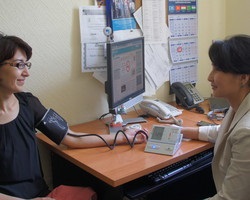
The primary screening tool being utilized is Visual Inspection with Acetic Acid (VIA)—a cost-effective, real-time diagnostic method where a healthcare provider applies a dilute vinegar solution to the cervix to identify precancerous lesions. This service is now available at Ayushman Arogya Mandirs (primary health centers) for women aged 30 to 65.
“Screening is our most powerful tool for the millions of women who are past the age of vaccination,” says Dr. Anita Roy, an independent public health consultant (not involved in the government briefing). “The challenge now is moving from ‘opportunistic’ screening—where a woman only gets tested if she visits a clinic for another reason—to a systematic, population-based approach that reaches the last mile.”
The Science of the Single Dose
A notable technical aspect of the new campaign is the adoption of a single-dose schedule using the Gardasil Quadrivalent vaccine. This follows a 2022 WHO position paper and recommendations from India’s National Technical Advisory Group on Immunization (NTAGI), which found that a single dose provides comparable efficacy to the traditional two-dose regimen for girls under 21.
Why One Dose?
-
High Efficacy: Clinical trials, including those conducted by the International Agency for Research on Cancer (IARC) in India, show that a single dose offers over 95% protection against the most common cancer-causing HPV strains (16 and 18).
-
Logistical Efficiency: A single dose dramatically reduces the burden on the healthcare “cold chain” and makes it easier for families to ensure their children are fully protected without needing a follow-up visit.
-
Equity: Lower costs allow the government to provide the vaccine free of charge to a larger population.
Addressing Skepticism and Ensuring Trust
Despite the overwhelming scientific consensus on safety, the rollout faces the modern challenge of “digital misinformation.” Critics on social media have raised concerns ranging from long-term side effects to fertility myths—claims that major medical bodies like the ICMR and CDC have repeatedly debunked.
Minister Nadda addressed these concerns by emphasizing the voluntary nature of the program. “The HPV vaccination drive is rooted in parental consent,” he noted, underlining a respect for community values and family autonomy. To ensure transparency, every vaccination is tracked in real-time via the U-WIN digital platform, while the eVIN system monitors vaccine safety and storage temperatures.
Common Side Effects vs. Myths
Medical experts emphasize that the HPV vaccine is one of the most studied vaccines in history.
-
What to expect: Mild soreness at the injection site, low-grade fever, or brief dizziness.
-
What the data shows: There is no evidence linking the vaccine to fertility issues or chronic illness.
Global Recognition
WHO Director-General Dr. Tedros Adhanom Ghebreyesus lauded India’s leadership, calling the initiative a “landmark step.” He noted that by vaccinating 12 million girls annually, India is not just protecting its own citizens but providing a blueprint for other middle-income nations.
“We have the ability to make cervical cancer a disease of the past,” Dr. Tedros said. “India’s scale of implementation is exactly what is needed to move the needle globally.”
Practical Information for Readers
-
Who is eligible? Currently, the drive targets adolescent girls aged 14.
-
Where to go? Vaccines are available free of cost at designated government health facilities and through school-based camps.
-
Screening for Adults: Women aged 30–65 should visit their nearest Ayushman Arogya Mandir for a VIA screening every five years.
As the 90-day intensive campaign continues, health officials are urging parents and community leaders to rely on evidence-based information. “This is a vaccine against cancer,” concludes Minister Nadda. “It is a shield for the future of our daughters.”
Reference Section
https://www.pib.gov.in/PressReleasePage.aspx?PRID=2235710®=3&lang=1
Medical Disclaimer: This article is for informational purposes only and should not be considered medical advice. Always consult with qualified healthcare professionals before making any health-related decisions or changes to your treatment plan. The information presented here is based on current research and expert opinions, which may evolve as new evidence emerges.