 0
0
 0
0
ABU DHABI — In a decisive move to safeguard decades of global health progress, international leaders, philanthropists, and health organizations pledged a combined $1.9 billion on Monday to eradicate polio. The commitment, announced at the “Investing in Humanity” summit during Abu Dhabi Finance Week, comes at a precarious moment for the Global Polio Eradication Initiative (GPEI), which faces significant budget constraints and a shifting geopolitical landscape.
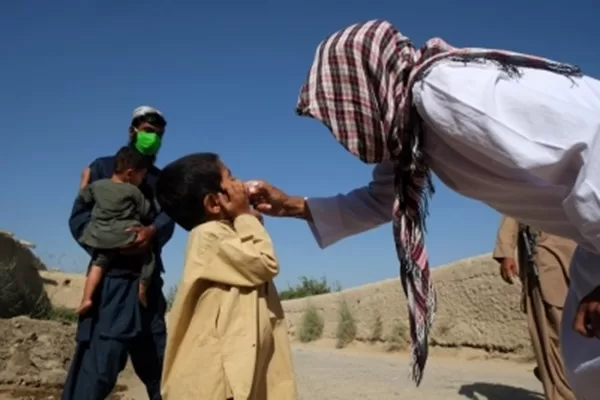
The funding injection is designed to close a widening resource gap in the GPEI’s 2022–2029 strategy, ensuring that vaccination campaigns can continue to reach the world’s most vulnerable children. With wild poliovirus now endemic in only two nations—Pakistan and Afghanistan—the fresh capital aims to deliver the “final blow” to a disease that once paralyzed hundreds of thousands of children annually.
Bridging the Financial Gap
Before Monday’s summit, hosted by the Mohamed bin Zayed Foundation for Humanity, the GPEI was grappling with a daunting $1.7 billion funding shortfall for the remainder of its strategic period. The new pledges have successfully reduced this gap to $440 million, offering a lifeline to eradication efforts that were at risk of being scaled back.
The Bill & Melinda Gates Foundation led the contributions with a massive $1.2 billion pledge. Rotary International, a founding partner of the GPEI, committed $450 million, reinforcing its decades-long dedication to the cause.
Other notable contributions included:
-
$140 million from the Mohamed bin Zayed Foundation for Humanity.
-
$154 million from Pakistan, signaling strong domestic ownership of the eradication goal.
-
$100 million from Bloomberg Philanthropies.
-
$62 million from Germany.
-
$46 million from the United States, a pledge made despite broader shifts in U.S. global health policy following the administration’s move to withdraw from the World Health Organization (WHO) earlier in 2025.
“The new support pledged in Abu Dhabi will be instrumental in helping the GPEI reach all children in the final endemic countries and stop variant polio outbreaks around the world,” stated Dr. Tedros Adhanom Ghebreyesus, Director-General of the WHO. “We are on the cusp of eradicating polio and securing a historic win for humanity.”
A Strategy Under Pressure
The pledge comes against a backdrop of financial austerity. The GPEI had previously projected a 30% budget cut for 2026, necessitating a shift toward a “smarter, leaner” operational blueprint. The reduction in global foreign aid—exacerbated by the U.S. administration’s executive order in January 2025 to withdraw from the WHO—threatened to derail surveillance and vaccination networks essential for detecting the virus.
Health experts have warned that funding volatility is one of the greatest risks to eradication. Polio is an unforgiving virus; if vaccination campaigns miss a significant number of children, the virus can resurge rapidly.
“Decades of progress has proved that a polio-free world is within our reach when we act together,” said Her Highness Sheikha Mariam bint Mohamed bin Zayed Al Nahyan, Chair of the Mohamed bin Zayed Foundation for Humanity. She emphasized that the gathering demonstrated a “shared determination to end polio and protect every child.”
The State of the Virus: 2025
The battle against polio is currently fought on two fronts:
-
Wild Poliovirus (WPV1): This original strain remains endemic only in Afghanistan and Pakistan. While case numbers have fluctuated—with a concerning resurgence to 99 cases in 2024 and persisting transmission into 2025—health officials remain optimistic that consistent access to remote communities can stop the spread.
-
Variant Poliovirus (cVDPV): These strains, which can emerge in under-immunized communities, have caused outbreaks in parts of Africa, the Middle East, and Asia. The new funding will support the deployment of the novel oral polio vaccine type 2 (nOPV2), a genetically stable tool designed to stop these variant outbreaks without seeding new infections.
The stakes of failure are high. According to GPEI modeling, halting eradication efforts now could lead to a resurgence of the disease, potentially paralyzing up to 200,000 children every year within a decade. Conversely, achieving eradication is projected to save the global economy an estimated $33 billion by the end of the century.
Implications for Public Health
For the average citizen, this funding ensures that the global safety net against infectious diseases remains intact. The infrastructure built to fight polio—including laboratories, surveillance systems, and community health workers—often serves as the first line of defense against other emergencies, such as measles outbreaks or potential pandemics.
However, the “last mile” of eradication is notoriously the most difficult. It requires not just money, but diplomatic access to conflict zones and trust from local communities. The substantial contribution from Pakistan ($154 million) is seen as a critical indicator of political will in one of the last remaining reservoirs of the virus.
While the $1.9 billion pledge is a monumental step, the remaining $440 million gap serves as a reminder that the mission is not yet fully funded. As the GPEI pivots to its 2026 “leaner” strategy, the efficiency of every dollar spent will be scrutinized more than ever before.
Medical Disclaimer:
This article is for informational purposes only and should not be considered medical advice. Always consult with qualified healthcare professionals before making any health-related decisions or changes to your treatment plan. The information presented here is based on current research and expert opinions, which may evolve as new evidence emerges.
References
Primary Sources & Reporting:
-
Global Polio Eradication Initiative (GPEI). (2025, December 8). Global Leaders pledge US$ 1.9 billion in Abu Dhabi to End Polio and protect children worldwide.
-
Reuters via ETHealthworld. (2025, December 8). Global leaders commit $1.9 billion to eradicate polio amid funding cuts.