 0
0
 0
0
December 19, 2025
GENEVA — As 2025 comes to a close, the global health community is reflecting on a year of profound contradictions in the fight against infectious diseases. While the World Health Organization (WHO) reports historic milestones in malaria vaccination and cervical cancer prevention, these triumphs are being shadowed by a resurgence of measles in North America and a “fragile” recovery of routine childhood immunizations following the pandemic.
In a year-end address, the Director of the Department of Immunization, Vaccines and Biologicals at WHO characterized 2025 as a period defined by scientific progress and collective determination. However, the Director warned that geopolitical instability, climate-related disruptions, and the persistent “infodemic” of vaccine misinformation continue to threaten the hard-won gains of the 21st century.
The Measles Paradox: Global Success vs. Local Resurgence
One of the most striking revelations from the WHO’s 2025 measles report is that global deaths from the virus have plummeted by 88% since the year 2000. This statistic represents millions of lives saved through consistent, large-scale vaccination efforts.
Yet, the victory is far from complete. In November 2025, the Americas lost their hard-won “measles-free” verification for the second time in a decade, following the re-establishment of endemic transmission in Canada. Currently, both the United States and Mexico are racing against a 12-month clock to halt ongoing outbreaks and avoid losing their own elimination status.
“Measles is the ‘canary in the coal mine’ for health systems,” says Dr. Elena Rodriguez, an independent infectious disease specialist not affiliated with the WHO report. “When we see outbreaks in high-income countries like Canada, it reveals subnational immunity gaps—pockets where coverage has dipped just enough for the most contagious virus on Earth to find a foothold.”
Conversely, progress is surging elsewhere. This month, Cabo Verde, Mauritius, and Seychelles became the first countries in the WHO African Region to be verified as having eliminated endemic measles, joining 96 other countries worldwide.
A New Era for Malaria and Tuberculosis
For decades, a vaccine for malaria—a disease that kills a child every minute—seemed like a distant dream. In 2025, that dream reached an unprecedented scale.
-
24 African nations now include malaria vaccines in routine childhood immunization.
-
10 million children are now targeted annually for the shots.
-
Price Reductions: Major manufacturers recently announced future price drops, which experts say will be the “turning point” for national affordability.
While the World Malaria Report 2025 notes that drug and insecticide resistance remain significant threats, the vaccine rollout provides a fourth pillar of protection alongside bed nets, indoor spraying, and preventative medicine.
The year also brought long-awaited news regarding Tuberculosis (TB). In November, the WHO released a milestone report outlining the financing and distribution pathways for the first new TB vaccines in over 100 years. Currently in advanced clinical trials, these novel vaccines represent the best hope for reducing a global TB burden that has remained stubbornly high for a century.
Fighting Meningitis and Polio: Regional Victories
The fight against meningitis saw a “milestone year” with the release of the first global guidelines for diagnosis, treatment, and care. This framework aims to speed up detection and reduce the long-term disabilities often associated with the disease. Furthermore, momentum is building for a Group B Streptococcus vaccine, which would specifically protect mothers and newborns from life-threatening infections.
In the Western Pacific, health officials celebrated 25 years of remaining polio-free. While wild poliovirus remains endemic in only a few regions globally, the Western Pacific’s success serves as a blueprint for maintaining high-quality surveillance and rapid response capacity even after a disease has been “defeated” locally.
The Road to 2030: Inequity and “Zero-Dose” Children
As part of the Immunization Agenda 2030 (IA2030) mid-term review, the WHO confirmed that while global programs have largely recovered from COVID-19 disruptions, deep inequities remain.
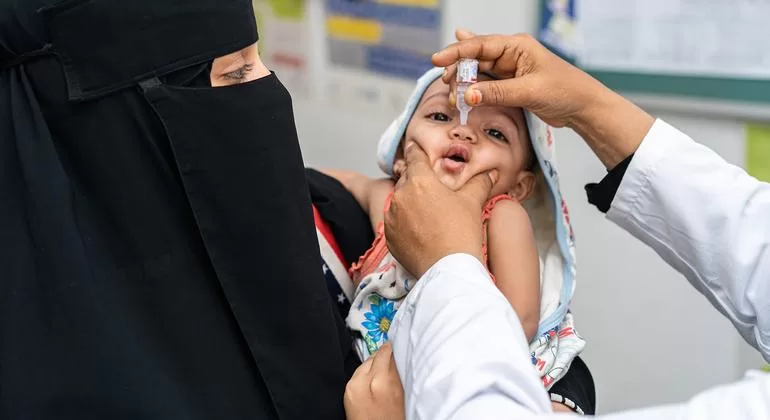
Perhaps the most sobering statistic of 2025 is the 14 million “zero-dose” infants—children who did not receive even a single dose of any vaccine in 2024. Most of these children live in fragile, conflict-affected, or humanitarian settings where healthcare access is non-existent.
“We are seeing a two-speed world,” the WHO Director noted. “While we hit the ambitious goal of reaching 86 million girls with the HPV vaccine this year—a massive win for cervical cancer elimination—we are still failing the most vulnerable children in conflict zones.”
Challenges Ahead: Misinformation and Climate Change
Looking toward 2026, the WHO identified four primary “headwinds” facing global health:
-
Misinformation: False claims continue to distort risk perceptions, leading to vaccine hesitancy even in areas with easy access to healthcare.
-
Economic Pressures: Constrained financing and reduced health budgets are forcing countries to make “difficult trade-offs” regarding the introduction of new vaccines.
-
Climate Change: Extreme weather events are increasingly disrupting vaccine supply chains (the “cold chain”) and shifting the geographical patterns of diseases like Yellow Fever and Malaria.
-
Inequity: The gap between wealthy nations and those in humanitarian crises continues to widen.
What This Means for You
For the general public, the WHO’s 2025 update serves as a reminder that immunization is a lifelong necessity, not just a childhood milestone. From the HPV vaccine protecting adolescents from cancer to the yellow fever shots protecting travelers and displaced populations, vaccines remain the most effective tool for preventing premature death.
Healthcare providers are encouraged to use the new meningitis and TB frameworks to guide patient care, while parents are urged to ensure their children are caught up on routine “bread and butter” shots like Measles-Mumps-Rubella (MMR) to prevent the local outbreaks seen this year in North America.
“The science is stronger than ever,” says the WHO Director. “What we need now is the collective will to ensure that science reaches every person, everywhere.”
Medical Disclaimer
This article is for informational purposes only and should not be considered medical advice. Always consult with qualified healthcare professionals before making any health-related decisions or changes to your treatment plan. The information presented here is based on current research and expert opinions, which may evolve as new evidence emerges.
References & Sources
-
World Health Organization (WHO): Message by the Director of the Department of Immunization, Vaccines and Biologicals (November/December 2025).