 0
0
 0
0
27 August 2025, Islamabad Pakistan – The Gates Foundation will support the World Health Organization (WHO) in its partnership with Pakistan to strengthen preparedness and the response to ongoing monsoon floods, helping to meet the health needs of 465 000 most-affected people across 33 high-risk districts in Khyber Pakhtunkhwa (KP), Sindh, Punjab and Balochistan.
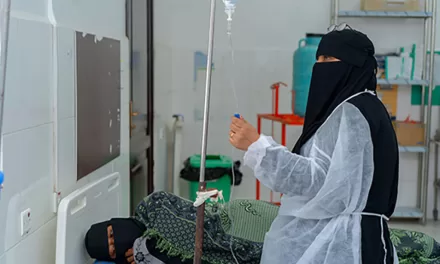
The generous donation from the Gates Foundation – totaling US$ 1 million – will support national and provincial authorities as they work to ensure the continuity of life-saving health services and strengthening disease surveillance, outbreak response, the availability of essential medical supplies in targeted locations, health sector coordination, and risk communication and community engagement to provide lifesaving information.
The initiative, to be implemented over the next 6 months, will pay particular attention to pregnant women, children under 5, older persons, persons with disabilities, internally displaced persons, and the most vulnerable populations in host communities.
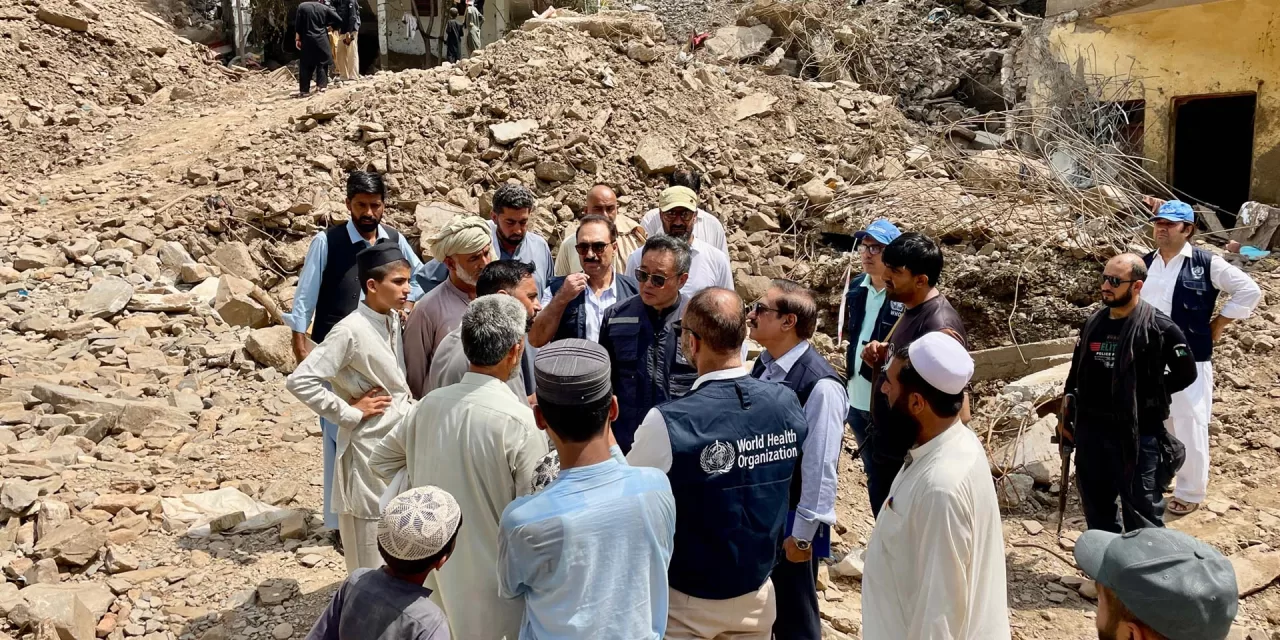
“We are particularly thankful to the Gates Foundation for this generous and timely support to WHO teams working in the field with federal and provincial authorities to meet health needs, deliver medical supplies and save lives. As the climate crisis fuels ever more extreme monsoons and natural disasters, evidence shows that a rapid response and good preparedness are essential to preserve public health. WHO stands with Pakistan to save lives today and build stronger, more resilient health systems for tomorrow, protecting the future generations,” said WHO Representative in Pakistan Dr Dapeng Luo during a visit to health facilities in areas affected by the floods in Swabi District, KP province.
WHO teams in Pakistan continue to support federal and provincial authorities to meet health needs and save lives in response to the recent climate-driven devastating flash floods that, since Friday 15 August, have killed at least 450 people and injured 265 in KP, affecting over 860 000 people as of 27 August, according to the Provincial Disaster Management Authority (PDMA). Flash floods and heavy rain have displaced thousands and damaged 57 health facilities (3 of them totally destroyed), 4243 houses and 60 schools in the province, according to the PDMA.
At the national level, between 26 June and 27 August, the National Disaster Management Authority reported 802 fatalities and 1088 persons injured, as well as damages to 89 health facilities (7 of them totally destroyed), 7465 houses, 238 bridges, 658 km of roads, and 5584 head of livestock. Since the onset of the monsoon, 658 relief camps have assisted 29 311 people, 63 medical camps have provided treatment to 5106 people, and 832 rescue operations have been conducted, rescuing 122 146 people.
Different WHO teams are supporting national and provincial authorities in convening health sector partners to assess the situation, coordinate the response, and disseminate key information.
WHO has also provided medical supplies to reach the most vulnerable. One day after the floods hit Khyber Pakhtunkhwa, WHO urgently dispatched health supplies to treat up to 15 000 patients to the provincial Government. Since June, WHO has sent medical supplies nationwide, enough to assist up to 380 000 flood-affected and displaced persons
As part of the Monsoon Contingency Plan 2025, WHO has supported Pakistan and partners in preparing for the provision of emergency health assistance to 1.3 million vulnerable people across 33 priority districts.