 0
0
 0
0
SHEGAON, MAHARASHTRA — In the quiet pilgrimage town of Shegaon, a significant shift in India’s healthcare landscape reached a crescendo this week. The National Arogya Fair 2026, a four-day intensive summit organized by the Ministry of Ayush in collaboration with the All India Ayurvedic Congress, concluded yesterday, leaving behind a blueprint for what officials call a “holistic revolution.”
Spanning February 25–28, the event drew thousands of attendees—ranging from chronic disease patients to turmeric farmers—to the Visava Maidan. By integrating free medical consultations with technical workshops on medicinal farming, the fair sought to prove that traditional medicine is not just a relic of the past, but a pillar of future public health and rural economic stability.
A Presidential Mandate for Preventive Care
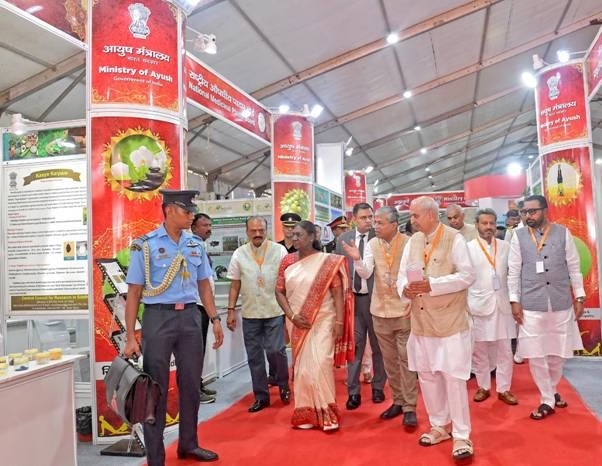
The fair was inaugurated by the President of India, Smt. Droupadi Murmu, who framed health as a collective national asset rather than an individual burden. “Health is the highest form of happiness,” the President noted, emphasizing that Ayush systems (Ayurveda, Yoga, Unani, Siddha, Sowa-Rigpa, and Homeopathy) provide a “comprehensive lifestyle framework” essential for reducing the national disease burden.
The President’s address underscored a pivotal shift in Indian health policy: a move from curative care (treating illness) to preventive care (maintaining wellness). By conferring the Lifetime Ayurvedic Gaurav Samman upon veteran practitioners, the ceremony signaled a formal validation of traditional medicine within the modern clinical hierarchy.
Bridging the Gap: Free OPDs and Public Response
For the general public, the fair’s primary draw was the “Mega OPD” (Outpatient Department). Thousands of residents from the Vidarbha region—an area historically underserved by specialist medical care—queued for free consultations.
Key Clinical Services Offered:
-
Integrated Diagnostics: Expert advice on lifestyle disorders like Type 2 diabetes and hypertension.
-
Cross-System Consultations: Access to Sowa-Rigpa and Siddha practitioners, systems often less accessible in Western India.
-
Yoga Therapy: Live demonstrations focusing on postural correction and stress management.
“We are seeing a growing acceptance of Yoga as a legitimate preventive tool, not just a physical exercise,” noted Union Minister of State for Ayush, Shri Prataprao Jadhav. He described the fair as a “Mahakumbh of Indian traditional medicine,” suggesting that the integration of these systems could position India as a global leader in holistic wellness.
The “Green” Economy: Farming as Healthcare
Perhaps the most innovative aspect of the 2026 fair was its focus on the National Medicinal Plants Board (NMPB). In a region like Vidarbha, where agricultural distress is a recurring challenge, the fair presented medicinal farming as a viable lifeline.
Approximately 2,000 farmers attended workshops titled “Ayurvedic Farming: Production, Value Addition and Marketing.” The sessions weren’t merely theoretical; they resulted in signed Letters of Intent, including a major buy-back arrangement for turmeric. This ensures that farmers have a guaranteed buyer, removing the price volatility that often plagues traditional crops like cotton or soy.
“Diversifying into medicinal plants offers a sustainable and profitable avenue,” explained a local agricultural expert during the sessions. “It connects healthcare advancement with income enhancement.”
Evidence-Based Tradition: Addressing the Skeptics
Despite the enthusiasm, the Ministry of Ayush faces the ongoing challenge of scientific validation. To address this, the fair’s pavilion featured extensive displays from various Research Councils, showcasing peer-reviewed outcomes and quality assurance protocols.
Dr. Rajesh Kotecha, Secretary of the Ministry of Ayush (in previous statements regarding Ayush initiatives), has frequently emphasized the importance of “evidence-based” traditional medicine. The 2026 fair reinforced this by highlighting digital outreach efforts and standardized herbal product manufacturing.
Perspectives from the Wider Medical Community
While the fair celebrated traditional success, some medical professionals urge a balanced approach. Dr. Arvinder Soin, a prominent surgeon (not affiliated with the event), has previously noted that while Ayurveda excels in preventive wellness and certain chronic conditions, it should complement, not replace, emergency and acute surgical interventions. The consensus among modern practitioners is moving toward Integrative Medicine, where the strengths of both Western and Traditional systems are utilized for the patient’s benefit.
Public Health Implications and Limitations
The success of the Shegaon fair highlights a critical trend: the decentralization of healthcare. By bringing high-level medical expertise to a rural district like Buldhana, the government is addressing the “urban-rural divide” in health access.
Potential Challenges:
-
Standardization: Ensuring that the herbal medicines provided at the fair maintain consistent potency across different manufacturers.
-
Follow-up Care: While a four-day fair provides immediate relief, the long-term management of chronic conditions requires a permanent local infrastructure.
-
Scientific Literacy: Translating ancient texts into modern pharmacological data remains a work in progress.
What This Means for You
For the average consumer, the conclusion of the National Arogya Fair 2026 serves as a reminder to look at health through a wider lens.
-
Preventive Routine: Consider incorporating Yoga or Ayush-based dietary principles (Ayush Aahar) as a supplement to—not a replacement for—your current medical regimen.
-
Consultation is Key: Always consult a certified practitioner. The “natural” label does not mean a substance is free of side effects or drug interactions.
-
Agricultural Opportunity: For those in the farming sector, medicinal plants represent a growing market backed by government incentives and increasing global demand.
As the tents are folded in Shegaon, the message remains clear: India’s path to “Viksit Bharat” (Developed India) by 2047 is being paved with a blend of ancient wisdom and modern clinical rigor.
References & Sources
Official Reports:
-
Press Information Bureau (PIB) Delhi. “National Arogya Fair 2026 concludes in Shegaon.” Posted 01 March 2026.
Medical Disclaimer: This article is for informational purposes only and should not be considered medical advice. Always consult with qualified healthcare professionals before making any health-related decisions or changes to your treatment plan. The information presented here is based on current research and expert opinions, which may evolve as new evidence emerges.