 0
0
 0
0
GRANADA, SPAIN — In a significant leap for regenerative medicine, researchers at the University of Granada (UGR) announced on March 9, 2026, the development of a groundbreaking artificial cornea derived from common fish scales. This innovation, led by the university’s Tissue Engineering Group and the ibs.GRANADA Biomedical Research Institute, offers a potential low-cost solution to the global shortage of donor corneas, promising to restore sight to millions of people suffering from corneal blindness.
The Invisible Barrier: Understanding the Cornea Challenge
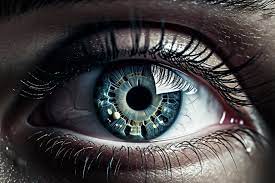
The cornea is the eye’s clear, outermost layer. It acts as a window, protecting the inner structures like the iris and lens while performing the critical task of focusing light to ensure sharp vision. Despite its resilience, the cornea possesses a unique anatomical trait: it is avascular, meaning it lacks blood vessels.
While this transparency is essential for sight, it also means the cornea has a limited capacity to repair itself after severe damage. Infections, chemical burns, trauma, or degenerative diseases like keratoconus can cause the cornea to become opaque or scarred.
The global impact is staggering. According to data from the World Health Organization and recent studies in JAMA Ophthalmology, corneal opacities cause blindness in approximately 5.5 million people aged 40 and older. Another 6.2 million suffer from unilateral (one-sided) blindness. Currently, the “gold standard” treatment is a transplant using a human donor cornea. However, for every 70 people who need a transplant, only one donor cornea is available. This scarcity creates years-long waiting lists and leaves millions in low-resource regions without hope for recovery.
A Bio-Inspired Solution from the Market
The Granada research team, led by Professor Ingrid Garzón, looked toward an unlikely source to bridge this gap: the local fishing industry. By utilizing scales from common fish like carp—which are typically discarded as industrial waste—the scientists created a “Biocornea-like” matrix.
The process involves two critical steps:
-
Decellularization: Removing all fish cells to prevent the human immune system from rejecting the material.
-
Decalcification: Softening the hard scales while preserving their structural integrity.
The result is a transparent, biocompatible scaffold composed primarily of Type I collagen, which mirrors the natural collagen structure of the human cornea.
“Due to its origin, this product is very accessible, easy to obtain, and inexpensive,” explained Professor Garzón. “It could help boost the local fishing industry while providing a life-changing medical tool.”
Proven Stability in Preclinical Trials
The “Biocornea” has already undergone rigorous testing. In lab settings and animal models, the fish-scale matrix demonstrated high mechanical resistance—essential for withstanding the internal pressure of the eye—and high transparency.
More importantly, the material acts as a “biological bridge,” encouraging the patient’s own cells to grow across the scaffold and regenerate healthy tissue. In previous pilot studies, similar fish-scale-derived implants successfully sealed corneal perforations in mini-pig models, remaining stable for up to six months without signs of rejection. The current Granada prototypes, funded by Spain’s Carlos III Health Institute, have shown equally promising functional outcomes in rabbits.
Professor Miguel Alaminos, a co-author of the study and Professor of Histology at UGR, emphasized the necessity of this shift. “Although standard transplants usually offer good results, it’s necessary to develop new effective regeneration methods that do not depend on organ donation, which is subject to waiting lists.”
Expert Perspectives: A Sustainable Future
External experts have greeted the news with cautious optimism. Dr. Theo H. van Essen, an ophthalmologist at Antwerp University who has researched fish-scale biocompatibility, previously noted that fish-scale collagen supports excellent human cell growth and is remarkably well-tolerated by ocular tissue.
Dr. Rachel Williams, a specialist in tissue engineering at the University of Liverpool, highlighted the economic and ethical advantages. “Repurposing fish scales aligns with circular economy principles in biotechnology,” she stated. “This has the potential to slash the costs of an implant from several thousand dollars to just a few hundred.”
| Feature | Human Donor Cornea | Fish-Scale Artificial Cornea |
| Availability | Extremely Limited | Abundant (Waste product) |
| Cost | High ($10,000+ including surgery) | Potential for low-cost (hundreds) |
| Wait Time | Months to Years | On-demand manufacturing |
| Risk | Rejection or disease transmission | Minimized via decellularization |
Public Health Implications and Global Reach
If human clinical trials succeed, the implications for global health are profound. In parts of Africa and Southeast Asia, corneal disease is responsible for up to 90% of all cases of blindness. In these regions, the infrastructure for organ donation is often non-existent.
A low-cost, shelf-stable artificial cornea could be integrated into public health programs, such as India’s National Programme for Control of Blindness. Beyond chronic disease, these implants could serve as emergency “patches” for acute ulcers or perforations, preventing total vision loss in the critical hours following an injury.
Limitations and the Road to 2030
Despite the excitement, the researchers urge patience. The transition from animal models to human patients is a long, highly regulated process.
-
Human Trials: The team is currently preparing for submission to regulatory bodies like the European Medicines Agency (EMA) and the FDA.
-
Potential Risks: While processing removes most triggers, there is a theoretical risk of rare fish-protein allergies.
-
Longevity: Long-term studies are needed to ensure the fish-scale matrix does not degrade prematurely over several decades of human use.
The University of Granada team targets 2030 for potential clinical integration, focusing the coming years on scaling up production and ensuring sterile, global distribution.
A New Chapter in Regenerative Medicine
The use of fish scales is part of a broader trend in “nature-inspired” medicine. From using shark skin for wound grafts to silk proteins for high-tech lenses, scientists are increasingly finding that the solutions to complex human health problems have been swimming or crawling alongside us all along.
For the general public, this breakthrough is a reminder of the power of sustainable science. While the “fish-scale cornea” moves toward the clinic, ophthalmologists continue to stress the importance of proactive eye care—wearing UV protection and seeking immediate treatment for infections—to protect the natural corneas we already have.
References
-
Economic Times Health. “Spanish researchers develop low-cost artificial cornea from fish scales.” March 2026.
Medical Disclaimer: This article is for informational purposes only and should not be considered medical advice. Always consult with qualified healthcare professionals before making any health-related decisions or changes to your treatment plan. The information presented here is based on current research and expert opinions, which may evolve as new evidence emerges.