 0
0
 0
0
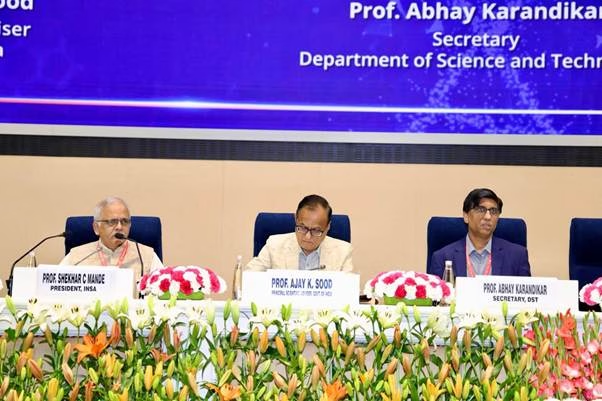
NEW DELHI – In a landmark gathering at Vigyan Bhawan to mark National Science Day 2026, India’s top scientific minds converged to address a persistent hurdle in the nation’s progress: the “valley of death” between laboratory discovery and real-world application.
Under the theme “Women in Science Catalysing Viksit Bharat,” the summit, led by Principal Scientific Adviser (PSA) Prof. Ajay K. Sood, outlined a strategic roadmap to ensure that scientific breakthroughs—ranging from aerospace engineering to life-saving medical technologies—reach the public faster and more efficiently than ever before.
Bridging the Gap: The Science-Policy Convergence
For decades, the journey from a scientist’s “eureka moment” to a product on a shelf or a treatment in a hospital has been arduous. Prof. Sood emphasized that for India to achieve its vision of a developed nation (Viksit Bharat), the wall between researchers and policymakers must come down.
“Science–policy convergence is essential,” Prof. Sood stated during his keynote address. He argued that scientific advancement is no longer just about academic excellence; it is about “translating scientific capabilities into national strength.”
This translation is particularly critical in the healthcare and biotechnology sectors. When a new diagnostic tool or a drug molecule is discovered, it often faces years of regulatory ambiguity. By integrating policy experts into the research phase, the government aims to create “mission-mode” frameworks that clear the path for indigenous technologies.
Breaking the “Serial” Cycle
One of the most significant shifts discussed at the forum was the move away from “serial” development. Traditionally, a project moves linearly: from a university lab to a small-scale pilot, and finally to a manufacturing plant.
Dr. K. Balasubramanian, Director of the Non-Ferrous Technology Development Centre (NFTDC), called for a systems-based approach. This means involving engineers, manufacturers, and policy experts at the very beginning of the scientific process. While his focus was on critical metals for aerospace and defense, medical experts note that this same “parallel processing” is what allowed for the rapid development of vaccines during the COVID-19 pandemic.
Key Focus Areas for 2026:
-
Indigenous Medical Devices: Scaling up “Made in India” technologies to reduce reliance on expensive imports.
-
Aerospace and Defense: Leveraging indigenous systems like “Drishti,” a runway visibility system developed by Padma Shri awardee Dr. Shubha V. Iyenger.
-
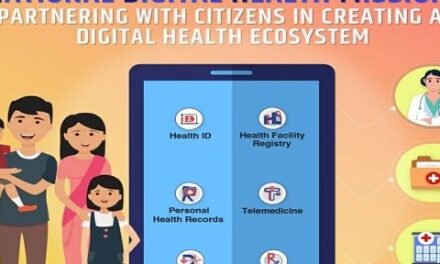
Digital Health Accessibility: Utilizing “Direct to Mobile” broadcasting to deliver health education and emergency alerts to rural areas without internet dependency.
Empowering Women as Catalysts of Change
A recurring theme of the 2026 celebration was the indispensable role of women in the scientific ecosystem. Prof. Abhay Karandikar, Secretary of the Department of Science and Technology (DST), noted that building inclusive research environments is not just a matter of equity, but of national progress.
The recognition of Dr. Shubha V. Iyenger with the Padma Shri in 2026 serves as a beacon for this movement. Her work on the “Drishti” system demonstrates how indigenous Indian research can meet international safety standards, providing a blueprint for other sectors, including medical imaging and diagnostic hardware.
Why This Matters for Your Health
For the average citizen, “science-policy interface” might sound like bureaucratic jargon. However, the practical implications are life-changing.
-
Lower Costs: When medical devices are developed and manufactured domestically through streamlined policies, the cost of procedures (like MRIs or robotic surgeries) typically drops.
-
Faster Access: Efficient “lab-to-life” pipelines mean that new treatments for chronic diseases reach Indian hospitals months or years sooner.
-
Language Inclusivity: Prof. Sood highlighted the importance of communicating science in Indian languages. For patients, this means better informed-consent forms, clearer medication instructions, and more reliable health information in their mother tongue.
“Evidence-based policymaking must be informed by scientific expertise,” noted Prof. Shekhar C. Mande, President of the Indian National Science Academy (INSA). “Strengthening the interface between academia and government is critical.”
The Challenges Ahead: A Balanced View
Despite the optimism, experts caution that several hurdles remain. Transitioning to a “mission-mode” approach requires massive, sustained investment and a cultural shift within academic institutions that have traditionally prioritized publication over patenting and commercialization.
Furthermore, while “Direct to Mobile” (D2M) broadcasting—discussed by former Prasar Bharati CEO Shashi S. Vempati—promises a digital leapfrog, the infrastructure must be robust enough to handle the data needs of a billion people without compromising privacy or security.
Summary for the Reader
The 2026 National Science Day signals a shift in India’s scientific identity. The focus has moved from knowing to doing. By aligning researchers with the officials who write the rules, India is attempting to create a frictionless environment where a breakthrough in a Delhi lab can become a household reality in a village in Tamil Nadu or a hospital in Assam within record time.
References
-
Primary Source: Press Information Bureau (PIB) Delhi, “Science leaders discuss efficient ways to convert research outcomes to real-world applications,” Posted 28 Feb 2026.
Medical Disclaimer: This article is for informational purposes only and should not be considered medical advice. Always consult with qualified healthcare professionals before making any health-related decisions or changes to your treatment plan. The information presented here is based on current research and expert opinions, which may evolve as new evidence emerges.