 0
0
 0
0
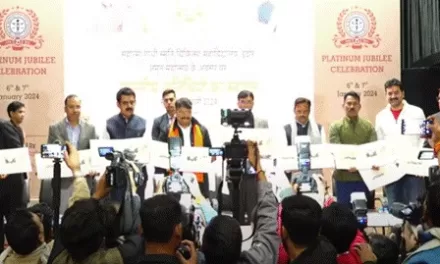
NEW DELHI — In a high-tech convergence of heritage and hardware, the Ministry of Ayush has taken center stage at the India–AI Impact Summit 2026. Unveiling a suite of “citizen-centric” innovations, the government is betting on Artificial Intelligence to bridge the gap between centuries-old traditional medicine and modern, evidence-based digital healthcare.
The summit, inaugurated by Prime Minister Narendra Modi, serves as a global platform for the Global South to lead the conversation on responsible AI. However, for the average health-conscious consumer, the real news isn’t in the policy—it’s in the “Ayush Grid,” a digital backbone designed to make Ayurveda, Yoga, Unani, Siddha, and Homeopathy more accessible, measurable, and safe through machine learning.
The “Ayush Grid”: A Digital Nervous System for Health
At the heart of the exhibition is the My Ayush Integrated Services Portal (MAISP). If the Ayush Grid is the skeleton of this new system, MAISP is the muscle. It aims to be a “one-stop shop” for citizens, integrating everything from clinical service delivery and medicinal plant research to drug administration and tele-consultations.
“The Ayush Grid and MAISP represent a paradigm shift,” says Vaidya Rajesh Kotecha, Secretary of the Ministry of Ayush. “By embedding AI tools into research and regulatory systems, we are ensuring standardization and evidence-based advancement.”
For healthcare professionals, this means a move toward standardized documentation. Historically, traditional medicine has faced criticism for a lack of uniform data. The new AI-enabled infrastructure aims to solve this by using natural language processing (NLP) to digitize and analyze vast amounts of classical texts and clinical outcomes, creating a searchable, evidence-backed database.
Your Yoga Teacher is Now an AI
Perhaps the most “viral” innovation at the pavilion is the Yoga Posture AI. Developed using computer vision—the same technology that allows self-driving cars to “see”—this tool acts as a real-time digital tutor.
-
How it works: The AI analyzes a user’s body alignment via a smartphone camera.
-
The Benefit: It provides instant feedback to correct postures (asanas), significantly reducing the risk of injury for those practicing at home.
-
Public Health Impact: By making precise Yoga practice accessible to remote populations, the Ministry hopes to promote preventive wellness on a massive scale.
“We are demonstrating how computer vision can enhance precision and safety,” explains Shri Naman Goel, OSD of the Ayush Grid. “It’s about taking India’s timeless health knowledge and making it future-ready.”
Clinical Decision Support: AI as the Doctor’s Assistant
Beyond consumer apps, the Ministry is showcasing AI prototypes designed to assist clinicians. These tools are trained on traditional diagnostic frameworks—such as Prakriti (constitution) analysis in Ayurveda—to help practitioners make more tailored treatment recommendations.
| AI Application | Function in Ayush Systems |
| Chatbots | Triaging patient queries and providing authentic health information. |
| Research Analytics | Identifying patterns in drug-herb interactions and efficacy. |
| Clinical Support | Assisting practitioners with standardized diagnosis protocols. |
| Supply Chain AI | Tracking the quality and authenticity of medicinal plants from farm to pharmacy. |
The Push for Evidence and Safety
While the integration of AI and traditional medicine offers exciting possibilities, it is not without hurdles. Skeptics in the medical community often point to the “black box” nature of AI—where even developers aren’t always sure how an algorithm reaches a conclusion.
“The challenge is ensuring that AI doesn’t just replicate biases or unverified claims,” says Dr. Arati Sharma, a digital health researcher (not involved in the current project). “The collaboration with the IIT Jodhpur Centre of Excellence (CoE) and the World Health Organization (WHO) is a crucial step. It suggests that these tools are being built with global safety and validation frameworks in mind, rather than in a vacuum.”
The Ministry has responded to these concerns by emphasizing “responsible AI.” This includes a 5.25 crore INR Innovation Challenge launched in collaboration with the Ministry of MSME, specifically designed to fund startups that can prove the clinical validity and safety of their AI models.
What This Means for You
For the general public, the “AI-fication” of Ayush signifies three major changes:
-
Authenticity: Digital portals like MAISP will help users find verified practitioners and authentic medicines, cutting through the noise of “wellness” misinformation online.
-
Affordability: AI-driven triage and tele-health can lower the cost of preventative care, making holistic health more than just a luxury for the urban elite.
-
Personalization: Traditional medicine has always been “personalized,” but AI provides the data-processing power to match specific treatments to a person’s unique biological markers with higher accuracy.
As India moves toward the goal of “Welfare for All” (Sarvajana Hitaya, Sarvajana Sukhaya), the Ayush Pavilion serves as a reminder that the future of medicine may not be a choice between the ancient and the modern, but a sophisticated blend of both.
References
1. Official Government Sources:
-
Press Information Bureau (PIB) Delhi. “Ayush Pavilion Pulls Visitors with Citizen-Centric AI Innovations.” Posted 17 Feb 2026. [Reference Link/PIB ID: 2026/Ayush/AI-Impact]
Medical Disclaimer: This article is for informational purposes only and should not be considered medical advice. Always consult with qualified healthcare professionals before making any health-related decisions or changes to your treatment plan. The information presented here is based on current research and expert opinions, which may evolve as new evidence emerges.