 0
0
 0
0
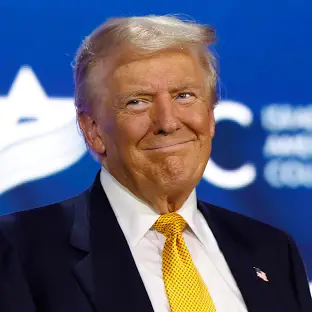
On January 20, 2026, at the World Economic Forum in Davos, Switzerland, U.S. President Donald Trump asserted he pressured French President Emmanuel Macron to raise domestic prescription drug prices through tariff threats, prompting an immediate rebuttal from the Élysée Palace calling the statement “fake news.” The exchange highlights escalating U.S.-Europe frictions over pharmaceutical pricing, where Americans pay markedly higher costs for medications compared to Europeans.
Incident Details
Trump recounted in his Davos speech telling Macron, “You’re going to have to lift the price of that pill,” threatening 25% tariffs on all French imports and 100% on wines and champagnes if unmet. The Élysée responded swiftly on X (formerly Twitter), stating Macron “does not set their prices. They are regulated by the social security system and have in fact remained stable,” attaching a GIF of Trump declaring “fake news.” This denial underscores France’s structured drug pricing, independent of presidential fiat, amid Trump’s push for “Most Favored Nation” (MFN) policies to align U.S. prices with lower international benchmarks.
U.S.-France Drug Price Disparities
Prescription drugs in the U.S. cost substantially more than in France, with 2022 data showing U.S. prices at 278% of those in 33 OECD countries, including France among the lower-priced nations. Analyses indicate U.S. list prices average 2.5 times higher than in France and Germany for drugs approved 2014-2023, narrowing slightly post-rebates but remaining elevated. France’s system negotiates prices via the Economic Committee on Health Products (CEPS) with pharmaceutical firms, factoring therapeutic value and market comparables, keeping out-of-pocket costs low—among Europe’s lowest.
| Aspect | United States | France |
|---|---|---|
| Pricing Mechanism | Largely market-driven with private insurers; limited negotiation until recent IRA | CEPS negotiations with pharma; social security caps |
| Avg. Price Multiplier vs. OECD | 278% (2022) | Below average; ~40% of U.S. |
| Per Capita Spend (2005 OECD baseline, adjusted trends persist) | $792 | Lower volume/high reimbursement |
| Regulation Example | MFN proposals tie to lowest global | Stable, no recent hikes |
Trump’s Broader Pricing Agenda
Trump promotes MFN and voluntary pharma deals exchanging tariff relief for price parity with nations like France, arguing the U.S. subsidizes the world—a pill costing $10 in Europe sells for $130 stateside. His January 2026 remarks build on Executive Order 14,297 (May 2025), mandating MFN for Medicare, though past versions faced legal blocks over due process and statutory issues. Proponents see relief for U.S. patients facing $792 per capita pharma spend (historical high), but critics warn it pressures low-price countries to hike or risks innovation via revenue losses.
Expert Perspectives
“MFN sounds equitable but ignores why prices differ: France’s single-payer negotiation leverages volume for discounts, unmatchable in the U.S. fragmented system,” notes a Harvard Petrie-Flom Center analysis on global risks. Pharma legal expert Heath Ingram warns new rebate models could be challenged as CMS overreach, potentially “rewriting inflation rebate statutes.” French insights highlight vulnerability: low prices aid access but limit budgetary flexibility amid €5 billion 2026 social savings targets. No involved experts quoted; perspectives from independent observers emphasize balanced reforms over unilateral tariffs.
Public Health Implications
Lower French prices enhance affordability, with reimbursable drugs covering most needs via social security, reducing household burdens. U.S. patients benefit from innovation subsidized partly by high prices, but disparities fuel access gaps—e.g., orphan drugs closer aligned (1.6x France) vs. small molecules (3.2x). Trump’s approach could lower U.S. costs short-term but spur European hikes, threatening global equity; OECD notes all nations regulate, yet U.S. lags comprehensive controls. Readers should monitor policies: no immediate French changes affect daily pharmacy visits, but transatlantic trade risks broader inflation.
Limitations and Counterpoints
Trump’s claim overlooks France’s fixed regulations, with no evidence of hikes—Élysée cites pharmacy stability. MFN faces pharma pushback on IP “takings” and stalled launches in low-price markets. Europe’s low prices partly stem from U.S. market funding R&D (39% global production), per OECD; forced alignment might curb new drugs. Balanced view: U.S. needs reforms like IRA negotiations, but tariffs risk retaliation without addressing insurer opacity.
Medical Disclaimer: This article is for informational purposes only and should not be considered medical advice. Always consult with qualified healthcare professionals before making any health-related decisions or changes to your treatment plan. The information presented here is based on current research and expert opinions, which may evolve as new evidence emerges.
References
-
Reuters/CNBC: “France rejects Trump’s comment on drug prices” (Jan 21, 2026).[cnbc]