 0
0
 0
0
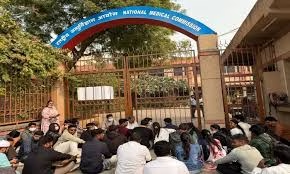
Foreign Medical Graduates (FMGs) from various states across India gathered in New Delhi at the National Medical Commission (NMC) office in early November 2025 to protest prolonged delays in the issuance of eligibility certificates necessary for appearing in the Foreign Medical Graduates Examination (FMGE) and internship enrollment. The All FMGs Association (AFA) has called upon the Union Health Ministry and Health Minister J. P. Nadda to intervene, citing systemic failures and urging urgent resolution of the issue that has affected hundreds of FMGs for over one to two years.
Key Developments and Background
The eligibility certificate is a mandatory document issued by the NMC that certifies foreign medical graduates’ credentials and eligibility to appear for the FMGE—India’s screening examination for foreign medical degrees—or to register for the compulsory internship in India. Despite timely submission of applications along with required documentation by FMGs, the NMC has been accused of indefinitely delaying certificate issuance, sometimes for up to two years.
Dr. Kaushal, a spokesperson for the protesting graduates, highlighted that under the previous Medical Council of India (MCI) regime, eligibility certificates were issued within days and at a lower application fee than the current NMC charges. The opaque and prolonged “verification” process under the NMC has left many FMGs in limbo, unable to progress in their medical careers despite having fulfilled all criteria.
Expert Perspectives
Medical education experts observe that such administrative bottlenecks exacerbate the existing challenges faced by FMGs, which include passing the FMGE and securing internships amid scarce opportunities and variable state policies. Sandhya Venkateswaran, Senior Fellow at CSEP, notes that regulatory lapses combined with policy incoherence hinder the integration of FMGs into India’s healthcare workforce despite the country’s chronic doctor shortage, especially in rural areas.
Dr. Kirti Singh, Ophthalmology Director at Guru Nanak Eye Center, underscores the importance of strict certification processes like FMGE to maintain clinical standards, but she advocates for streamlined and transparent administrative procedures to prevent unnecessary delays that disadvantage FMGs.
Context and Public Health Implications
India faces a persistent shortage of qualified medical professionals, with rural and underserved regions especially impacted. FMGs represent a vital resource, having invested significant time and financial resources in medical education abroad. Efficient processing of eligibility certificates and integration pathways could mitigate healthcare workforce gaps.
Delays in certificate issuance stall FMGs’ ability to take the FMGE or begin internships, creating a backlog that contributes to loss of trained talent and delayed healthcare delivery. Protests, such as the recent gathering at the NMC office, highlight the urgent need for administrative reforms and robust policy frameworks to recognize FMGs as an asset rather than a liability.
FMGE and Internship Challenges
The FMGE pass rate historically remains low (around 20-30%), partly due to curriculum and clinical exposure differences abroad. Moreover, NMC regulations mandate a compulsory rotating medical internship of up to one year post-FMGE clearance. However, internship slots are limited, with FMGs often capped at around 7.5% of total seats and facing inconsistent state-level implementation, compounding their challenges.
Some rules introduced during the NMC era, such as denial of recognition for compensatory certificates for online classes taken by FMGs during the pandemic, require FMGs to undergo extended internships or retraining, adding to their burdens. These stipulations have previously elicited protests and calls for reconsideration.
Calls for Health Ministry Intervention and Solutions
The All FMGs Association urges the Union Health Ministry to intervene and ensure the NMC expedites eligibility certificates issuance. They demand transparent verification processes, equitable fees, and timely communication. Suggested systemic reforms include a centralized digital portal for FMGs’ documentation, clear-cut timelines for certificate processing, and increased internship quotas for FMGs, currently proposed to be raised from 7.5% to 20% in some states.
Additionally, experts recommend harmonizing FMG regulations with broader medical graduate licensing reforms like the upcoming National Exit Test (NExT) to unify standards and processes. Improving FMG integration will benefit India’s healthcare system by addressing doctor shortages while ensuring quality and safety.
Limitations and Alternate Views
While procedural delays are widely acknowledged, NMC officials emphasize the need for thorough verification to prevent fraudulent claims amid growing foreign medical graduate numbers. The Commission asserts that scrutiny remains essential for maintaining medical education quality standards.
However, critics argue that the existing processes lack transparency, disproportionately burden FMGs, and ultimately hamper India’s ability to effectively utilize available medical talent. Balancing rigorous quality assurance with administrative efficiency remains a critical policy challenge.
Practical Implications for Readers
For prospective and current FMGs, the ongoing situation underscores the importance of early and complete documentation submission and active monitoring of application status. Awareness of evolving NMC guidelines and engagement with FMG associations can provide support.
For Indian healthcare stakeholders, resolving these issues is key to tapping into a valuable talent pool. Policymakers and institutions should prioritize reforms that reduce bureaucratic inertia without compromising standards, facilitating smoother transition of FMGs into clinical practice.
Medical Disclaimer:
This article is for informational purposes only and should not be considered medical advice. Always consult with qualified healthcare professionals before making any health-related decisions or changes to your treatment plan. The information presented here is based on current research and expert opinions, which may evolve as new evidence emerges.
References: