 0
0
 0
0
NEW DELHI – A recent study by the Institute of Advanced Study in Science and Technology (IASST) in Guwahati suggests that traditional fermented foods could be the key to personalized nutrition for India’s diverse population. The research, published in the journal Food Chemistry, highlights that the health benefits of bioactive peptides (BAPs) found in these foods can vary significantly across different populations. This discovery could pave the way for targeted health interventions and a more precise approach to diet.
Bioactive Peptides and Their Health Benefits
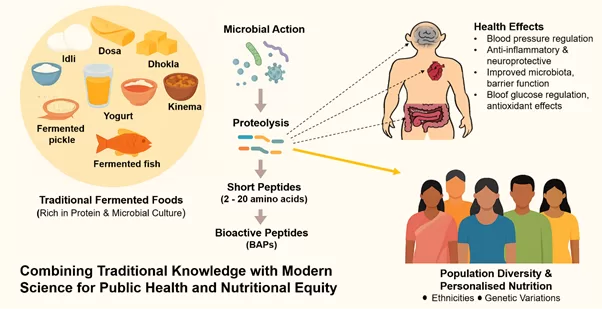
Bioactive peptides are short protein fragments, typically consisting of 2 to 20 amino acids, that are formed during the fermentation process. The IASST study, led by Prof. Ashis K. Mukherjee, Dr. Maloyjo Joyraj Bhattacharjee, Dr. Asis Bala, and Dr. Mojibr Khan, found that these peptides can regulate blood pressure, blood sugar, immunity, and inflammation. Foods like yogurt, idli, miso, natto, kimchi, and fermented fish are particularly rich in these beneficial compounds.
The research explains that these peptides interact with biomolecules in the body through various forces, such as electrostatic forces, hydrogen bonding, and hydrophobic interactions. This allows them to exert antimicrobial, antihypertensive, antioxidant, and immune-modulatory effects, which in turn can positively influence cardiac function, immune response, and metabolic health.
The Need for Precision Nutrition
The study’s most significant finding is that the effectiveness of these peptides is not uniform. Their bioavailability and impact can differ from person to person due to factors like genetic polymorphisms, gut microbiota composition, dietary habits, and pre-existing health conditions. For example, gene variants in ACE or IL-6 may affect how an individual responds to these peptides.
This variability underscores the necessity for precision nutrition, where health solutions are customized to individual needs rather than a one-size-fits-all approach. The researchers emphasize that this data is particularly relevant for India, a country with immense genetic and cultural diversity.
Future Outlook and Public Health Initiatives
The study’s authors advocate for the integration of traditional fermented foods into public health initiatives. They call for more “omics-based” research, which uses high-throughput technologies to analyze large sets of molecules, to better understand these food systems. By focusing on innovation in rural food systems, the researchers believe India can establish itself as a global leader in personalized nutrition. The study also addresses potential challenges, such as variability in fermentation methods, peptide stability, and their interaction with gut microbiota.
Disclaimer
This news article is based on a scientific study and should not be considered as medical advice. Always consult with a healthcare professional before making any significant changes to your diet or health regimen.
Reference
Mukherjee, A. K., Bhattacharjee, M. J., Bala, A., & Khan, M. (2025). Bioactive peptides from fermented foods and their potential for personalized nutrition. Food Chemistry, 2025.