 0
0
 0
0
December 13, 2025
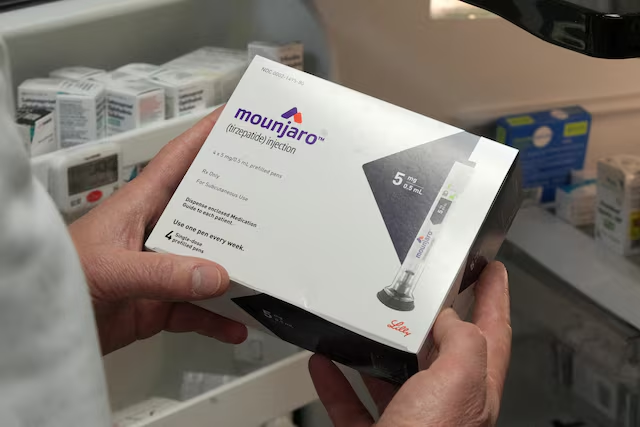
AMSTERDAM — In a landmark decision that could reshape the treatment landscape for young people struggling with chronic metabolic disease, the European Medicines Agency’s (EMA) Committee for Medicinal Products for Human Use (CHMP) has recommended extending the use of Eli Lilly’s diabetes drug, Mounjaro (tirzepatide), to children and adolescents aged 10 years and older.
The announcement, made Friday following the committee’s December meeting, positions Mounjaro to become the first dual GIP and GLP-1 receptor agonist available for pediatric patients with type 2 diabetes in the European Union. The recommendation comes as healthcare providers grapple with a rising tide of early-onset type 2 diabetes, a condition once seen almost exclusively in adults.
Expanding the Arsenal Against Youth Diabetes
The CHMP’s positive opinion supports the use of Mounjaro as an adjunct to diet and exercise for youth aged 10 and above with insufficiently controlled type 2 diabetes. The committee specified that the drug could be used as a standalone treatment when metformin—the standard first-line therapy—is considered inappropriate due to intolerance, or as an add-on to other diabetes medications.
“This recommendation marks a critical step forward in addressing the urgent need for more effective therapeutic options for children,” said the committee in its release. Currently, treatment options for this demographic are starkly limited, primarily consisting of metformin, insulin, and older GLP-1 receptor agonists like Novo Nordisk’s Victoza (liraglutide).
Clinical Breakthrough: The Data Behind the Decision
The committee’s endorsement hinges on results from the Phase 3 SURPASS-PEDS clinical trial, which evaluated the safety and efficacy of tirzepatide in youth. Data released earlier this year demonstrated that the drug significantly outperformed existing therapies in glycemic control.
According to study results, participants treated with Mounjaro achieved an average reduction in hemoglobin A1c (a key marker of long-term blood sugar control) of 2.2%. Furthermore, the trial highlighted a secondary benefit crucial for this patient population: significant weight loss. Given the strong link between pediatric obesity and type 2 diabetes, therapies that address both conditions simultaneously are viewed as a “holy grail” by endocrinologists.
“In the pediatric population, we often see a more aggressive progression of type 2 diabetes compared to adults,” explains Dr. Elena Rossi, a pediatric endocrinologist based in Milan who was not involved in the study. “Having a therapy that targets two different hormonal pathways—GIP and GLP-1—offers a mechanism to preserve beta-cell function and control weight more effectively than what we have had in our toolkit.”
Mechanism of Action
Mounjaro works by mimicking two hormones naturally produced in the gut: glucose-dependent insulinotropic polypeptide (GIP) and glucagon-like peptide-1 (GLP-1). These hormones activate receptors that stimulate insulin release after meals, suppress appetite, and regulate blood sugar levels. While traditional GLP-1 drugs target only one receptor, tirzepatide’s “dual agonist” approach is believed to produce synergistic effects, leading to the potent A1c and weight reductions seen in trials.
A Growing Public Health Crisis
The approval process unfolds against a backdrop of concerning statistics. The International Diabetes Federation reports that type 2 diabetes rates in adolescents have been climbing steadily globally, driven largely by increasing rates of childhood obesity. Unlike type 1 diabetes, which is autoimmune, type 2 is closely tied to lifestyle and metabolic factors, though it presents unique challenges in youth, including a higher rate of treatment failure with metformin alone.
“For years, we have been fighting a fire with limited water,” Dr. Rossi notes. “Metformin works for many, but for a significant number of children, it isn’t enough. Insulin, while effective, carries the risk of hypoglycemia and weight gain, which can exacerbate the underlying metabolic syndrome. A drug like tirzepatide fills a gaping void.”
Safety and Considerations
While the efficacy data is promising, experts emphasize that Mounjaro is not without risks. The safety profile in children was found to be generally consistent with that in adults. The most common side effects reported were gastrointestinal, including nausea, diarrhea, and vomiting, which typically subside over time.
However, the EMA and FDA have maintained warnings regarding potential risks of thyroid C-cell tumors, observed in rodent studies, though this risk has not been confirmed in humans. Healthcare providers are advised to monitor patients closely and avoid the drug in those with a personal or family history of medullary thyroid carcinoma.
What’s Next?
The CHMP opinion is a recommendation, not a final approval. The European Commission (EC) will now review the opinion and is expected to issue a final marketing authorization decision within approximately two months. Once approved, each EU member state will determine pricing and reimbursement, a process that will dictate when patients can practically access the drug.
For families navigating the complex challenges of pediatric diabetes, the news offers a tangible sense of hope. “This isn’t just about better numbers on a chart,” says Dr. Rossi. “It’s about preventing the long-term complications of diabetes—kidney disease, vision loss, cardiovascular issues—before they even have a chance to start.”
Medical Disclaimer: This article is for informational purposes only and should not be considered medical advice. Always consult with qualified healthcare professionals before making any health-related decisions or changes to your treatment plan. The information presented here is based on current research and expert opinions, which may evolve as new evidence emerges.
References:
-
European Medicines Agency (EMA). (2025, December 12). Meeting highlights from the Committee for Medicinal Products for Human Use (CHMP) 8-11 December 2025. European Union.