 0
0
 0
0
Epidemiological Distribution
- Global: Dengue is now endemic in >100 countries. The Americas, Southeast Asia, and Western Pacific bear 70% of global disease burden.The incidence of dengue has grown dramatically worldwide in recent decades, with the number of cases reported to WHO increasing from 505 430 cases in 2000 to 14.6 million in 2024.
- From January to July 2025, over 4 million cases and over 3000 deaths have been reported to WHO from 97 countries.
- India & South Asia, America region
- India reports annual epidemics, especially post-monsoon.The Region of the Americas contributed a significant proportion of the global burden, with over 13 million cases reported to WHO in 2014.
- National Vector Borne Disease Control Programme (NVBDCP) surveillance shows ~200,000 reported cases annually, but actual numbers may be 10–20 times higher.
- Endemic vs epidemic:
- Endemicity in tropical urban centers (e.g., Bangkok, Manila, Delhi)
- Epidemics occur with the introduction of new serotypes or genotype shifts
- Seasonality:
- Peaks in monsoon and post-monsoon months due to increased vector breeding
- Climate change is expanding the transmission season
- Disease burden:
- WHO (2022): ~3.9 billion people live at risk of dengue infection
- Estimated 40,000 deaths annually worldwide
- In India, CFR of DHF/DSS ranges 1–5% in treated cases, but up to 20% if untreated
- Demographic patterns:
- Children: higher risk of DHF in Southeast Asia
- Adults: more cases in South Asia and Latin America
- No strong gender predilection
- Higher incidence in urban poor populations due to dense housing and poor sanitation
- Several factors are associated with the increasing risk of spread of the dengue epidemic, including the changing distribution of the responsible vectors (chiefly Aedes aegypti and Aedes albopictus), especially in previously dengue-naive countries; climate change leading to increasing temperatures, high rainfall and humidity; fragile and overburdened health systems; limitations in surveillance and reporting; and political and financial instabilities in countries facing complex humanitarian crises and high population movements.
Etiological Agent
Causative agent: Dengue virus (DENV), belonging to genus Flavivirus, family Flaviviridae.
- Serotypes: Four antigenically distinct serotypes (DENV-1, 2, 3, 4). Infection with one serotype confers lifelong immunity to that serotype, but only temporary cross-protection to others. Subsequent infection with a different serotype increases risk of severe disease.
- Structure:
- Enveloped, positive-sense single-stranded RNA virus
- Genome encodes three structural proteins (C, prM/M, E) and seven non-structural proteins
- The E protein is key for viral binding, fusion, and host immune response.
- Pathogenesis:
- Primary infection: usually mild or classic dengue fever
- Secondary infection: predisposes to severe dengue due to Antibody-Dependent Enhancement (ADE) – non-neutralizing antibodies from prior infection facilitate viral entry into monocytes/macrophages, amplifying viremia and cytokine storm.
Vector and Transmission
Primary vector: Aedes aegypti
- Small, dark mosquito with lyre-shaped markings on thorax and white bands on legs
- Day-biting, most active in early morning and late afternoon
- Prefers human blood and breeds in artificial containers (overhead tanks, discarded tires, flowerpots)
- Secondary vector: Aedes albopictus (“Asian tiger mosquito”)
- Less anthropophilic, more rural/semi-urban
- Expanding range due to adaptability to cooler climates
- Breeding habitats & ecology:
- Stagnant clean water in urban environments
- Eggs resistant to desiccation—survive for months in dry conditions
- Transmission dynamics:
- Intrinsic incubation period (IIP): 4–10 days (in humans)
- Extrinsic incubation period (EIP): 8–12 days (in mosquito, dependent on temperature)
-
Human-to-mosquito transmission
- Mosquitoes can become infected by people who are viremic with DENV. This can be someone who has a symptomatic dengue infection, someone who is yet to have a symptomatic infection (those who are pre-symptomatic), and also someone who shows no signs of illness (those who are asymptomatic).
- Human-to-mosquito transmission can occur up to 2 days before someone shows symptoms of the illness, and up to 2 days after the fever has resolved.
- The risk of mosquito infection is positively associated with high viremia and high fever in the patient; conversely, high levels of DENV-specific antibodies are associated with a decreased risk of mosquito infection. Most people are viremic for about 4–5 days, but viremia can last as long as 12 days.
Transmission through the mosquito bite
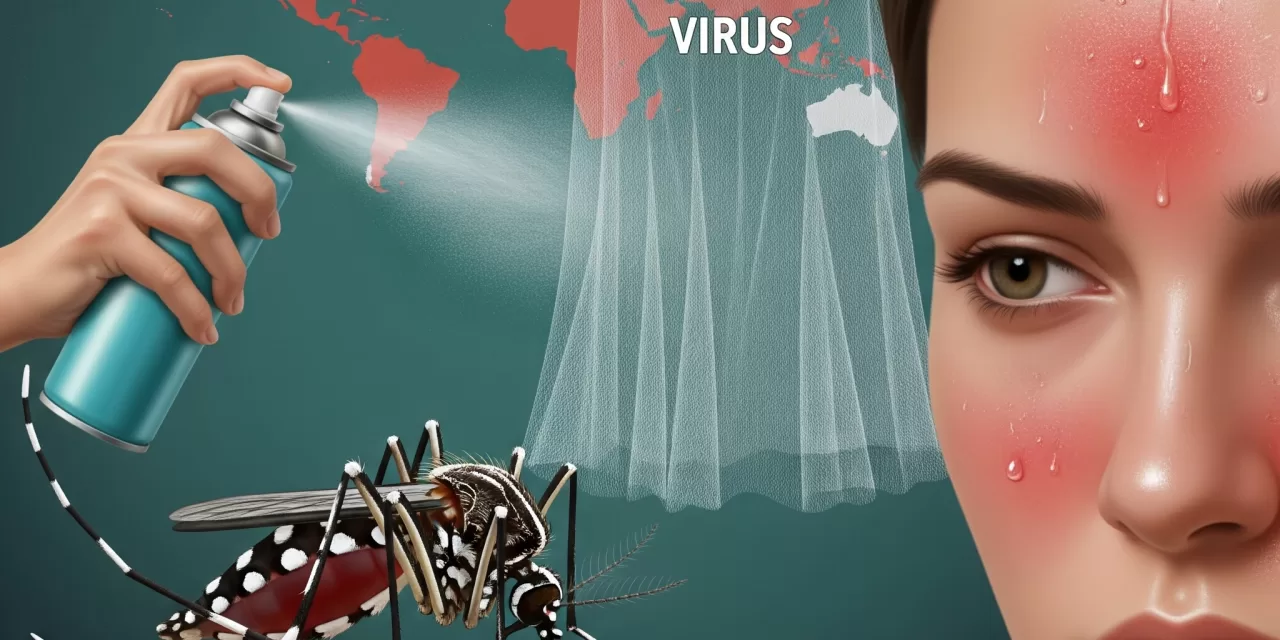
The dengue virus is transmitted to humans through the bites of infected female mosquitoes, primarily the Aedes aegypti mosquito. Other species within the Aedes genus can also act as vectors, but their contribution is normally secondary to Aedes aegypti.
After feeding on a DENV-infected person, the virus replicates in the mosquito midgut before disseminating to secondary tissues, including the salivary glands. The time it takes from ingesting the virus to actual transmission to a new host is termed the extrinsic incubation period (EIP). The EIP takes about 8–12 days when the ambient temperature is 25–28°C. Variations in the EIP are not only influenced by ambient temperature but also by several other factors – such as the magnitude of daily temperature fluctuations, the virus genotype, and the initial viral concentration – which can also alter the time it takes for a mosquito to transmit the virus. Once infectious, a mosquito can transmit the virus for the rest of its life.
Maternal transmission
The primary mode of transmission of the DENV between humans involves mosquito vectors. There is evidence, however, of the possibility of maternal transmission (i.e. from a pregnant mother to her baby). At the same time, vertical transmission rates appear low, with the risk of vertical transmission seemingly linked to the timing of acquiring the dengue infection during pregnancy. When a mother does have a dengue infection when she is pregnant, babies may suffer from pre-term birth, low birthweight and fetal distress.
Other transmission modes
Rare cases of transmission via blood products, organ donation and transfusions have been recorded. Similarly, transovarial transmission of the virus within mosquitoes has also been recorded.
- Factors affecting vectorial capacity:
- Temperature and rainfall (increase breeding & shorten EIP)
- Urbanization, poor water storage practices
- Vector density and biting rate
Risk Factors and Determinants Host factors:
- Age: Children → higher DHF risk in endemic SE Asia; Adults → more severe forms in India
- Immunity: Secondary infection → risk of ADE
- Genetics: Certain HLA types linked to susceptibility
- Nutrition: Malnutrition may influence immune response
- Environmental factors:
- Climate: Rainfall, humidity, temperature support breeding
- Urbanization: Unplanned cities, slums, poor drainage → mosquito habitats
- Water storage: Overhead tanks, containers without lids
- Social determinants:
- Poor housing, overcrowding
- Low awareness of vector breeding habits
- Lower socioeconomic status (linked to B.G. Prasad/Kuppuswamy scales )
- Behavioral factors:
- Lack of protective clothing/repellents
- Inadequate community participation in vector control
- Improper waste management
Clinical Epidemiology and Natural History
- WHO case definitions (2009):
- Dengue without warning signs (fever, nausea, rash, leukopenia)
- Dengue with warning signs (abdominal pain, persistent vomiting, mucosal bleed, clinical fluid accumulation, lethargy, hepatomegaly, rising hematocrit with falling platelets)
- Severe dengue (severe plasma leakage → shock, severe bleeding, organ failure)
- Clinical spectrum:
- Asymptomatic → mild febrile illness → classic dengue fever (“breakbone fever”) → DHF/DSS
- Phases of illness:
- Febrile phase (2–7 days)
- Critical phase (24–48h, plasma leakage, risk of shock)
- Recovery phase
- Complications:
- DHF, DSS
- Encephalopathy, myocarditis, hepatitis (less common)
- Case fatality:
- Untreated DSS: up to 20%
- With timely management: <1%
Surveillance and Control
Surveillance:
- Integrated Disease Surveillance Programme (IDSP), NVBDCP case reporting
- Laboratory confirmation: NS1 antigen, IgM ELISA, RT-PCR
- Vector control:
- Source reduction (eliminating breeding sites)
- Biological control (larvivorous fish, copepods)
- Chemical control (temephos, pyrethroids)
- Personal protection (nets, repellents)
- Clinical management:
- Early recognition, fluid management (crystalloid IV therapy)
- No specific antiviral, supportive care is mainstay
- Prevention:
- Vaccine (Dengvaxia/QDenga – limited use, WHO guidelines cautious)
- Community participation: IEC campaigns, school programs
The best way to prevent infection is to avoid being bitten by mosquitoes during the daytime. Mosquitoes that transmit the dengue virus often live in and around the home and in the garden. People should:
- wear clothing that covers the body well (especially the legs and feet);
- keep mosquitoes out of the house by placing insect screens over doors and windows;
- apply insect repellents according to the manufacturer’s label instructions;
- sleep under a net, during the day;
- take extra precautions to prevent transmission if a family member is infected by avoiding mosquito bites; and
- clean the surroundings and prevent water stagnation in and around homes.
If you get dengue, it’s important to:
- rest;
- drink plenty of liquids;
- use acetaminophen (paracetamol) for pain;
- avoid non-steroidal anti-inflammatory medication such as ibuprofen and aspirin; and
- watch for severe symptoms and contact your doctor as soon as possible if you notice any.
Current Challenges and Conclusion (50 words)
Challenges: Expanding geographical range due to climate change, uncontrolled urbanization, rising insecticide resistance, and limited vaccine availability.
Conclusion: Dengue epitomizes the complex interplay between virus, vector, host, and environment. Effective control requires integrated surveillance, community engagement, and global cooperation.