 0
0
 0
0
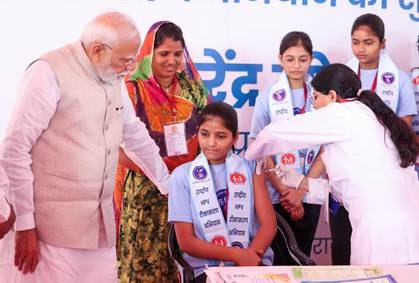
AJMER, RAJASTHAN — In a decisive move for women’s public health, Prime Minister Narendra Modi officially launched India’s nationwide Human Papillomavirus (HPV) vaccination campaign this past weekend. Targeting 14-year-old girls, the initiative aims to provide a robust shield against cervical cancer, a disease that remains one of the leading causes of cancer mortality among women in India.
The launch, held in Ajmer, was marked by personal interactions between the Prime Minister and the first group of students to receive the vaccine. For the young participants, the day was defined by a sense of relief and a lack of the “medical anxiety” often associated with such large-scale health mandates.
“Safe and Secure”: The Student Experience
Purvi Agarwal, one of the first students vaccinated during the launch, described the experience as empowering rather than intimidating.
“I felt very safe,” Agarwal said, noting that she had previously researched the link between HPV and cancer in local news reports. “We know cervical cancer causes the death of many women. That is why this vaccine is very important.”
For many families, the most significant aspect of the rollout is accessibility. While HPV vaccines in the private market can cost upwards of ₹4,000 per dose, the government’s initiative provides the series free of charge. “The vaccine being made available for free is a big relief for families,” Agarwal added.
Another student, Chanchal Meghwanshi, reported no adverse effects following the injection. “I had no pain or doubts,” she shared. “It did not feel like I was talking to the Prime Minister, but to someone very simple. He asked about my family and my exams, making us feel at ease about the process.”
The Medical Necessity: Why 14?
Cervical cancer is almost entirely preventable. According to the World Health Organization (WHO), nearly all cervical cancer cases (99%) are linked to infection with high-risk HPV, an extremely common virus transmitted through sexual contact.
The decision to target the 14-year-old demographic follows the recommendations of India’s National Technical Advisory Group on Immunization (NTAGI). Medical experts explain that the vaccine is most effective when administered before any potential exposure to the virus.
Key Benefits of the HPV Vaccine:
-
High Efficacy: The vaccine is 93% to 100% effective in preventing the HPV strains responsible for most cervical cancers.
-
Long-term Protection: Clinical data shows the vaccine provides durable, long-lasting immunity.
-
Herd Immunity: Widespread vaccination reduces the overall prevalence of the virus in the community.
“By vaccinating girls at this age, we are providing them with a lifetime of protection before they are ever at risk,” says Dr. Ananya Sharma, an independent oncologist (not involved in the Ajmer launch). “It is a proactive rather than reactive approach to oncology.”
Global and National Context
India joins a growing global movement. Currently, 160 out of 194 countries have integrated the HPV vaccine into their National Immunization Programmes. Interestingly, the global trend is shifting toward efficiency; 90 countries have now adopted a single-dose schedule, supported by WHO evidence that a single dose offers comparable protection to multi-dose regimens for this age group.
In India, the campaign is not just about the injection itself but about a “pan-India” awareness drive. The goal is to dismantle the stigma surrounding reproductive health and ensure that preventive care reaches rural and underserved urban populations.
Addressing Safety and Limitations
While the vaccine is widely celebrated by the medical community, health officials emphasize the importance of continued screening.
“The vaccine is a powerful tool, but it does not replace the need for regular screenings like Pap smears or HPV DNA tests later in life,” cautions Dr. Rajesh Malhotra, a public health researcher. “The vaccine covers the most high-risk strains, but not every single variant of the virus.”
Common side effects are typically mild and short-lived, including:
-
Slight soreness at the injection site.
-
Low-grade fever.
-
Temporary dizziness (often related to injection anxiety).
Health ministry officials have confirmed that all vaccination centers are equipped with observation areas to monitor students for 30 minutes post-vaccination, ensuring immediate care for any minor reactions.
A Healthier Future for India’s Daughters
The Ajmer launch serves as a pilot for a broader rollout that will eventually span schools and government health centers across all states. For students like Chanchal Meghwanshi, the mission is now personal. She has vowed to encourage her peers to take the shot.
“This vaccine will protect girls from cervical cancer in the future,” Meghwanshi said. “We want everyone to feel as secure as we do today.”
As the campaign moves forward, the focus will remain on high coverage rates—the only way to ensure that cervical cancer becomes a rarity rather than a common tragedy in India’s healthcare landscape.
Medical Disclaimer
Medical Disclaimer: This article is for informational purposes only and should not be considered medical advice. Always consult with qualified healthcare professionals before making any health-related decisions or changes to your treatment plan. The information presented here is based on current research and expert opinions, which may evolve as new evidence emerges.
References
- https://morungexpress.com/feel-safe-and-secure-after-hpv-vaccine-say-ajmer-schoolgirls-share-experience-of-interaction-with-pm-modi