 0
0
 0
0
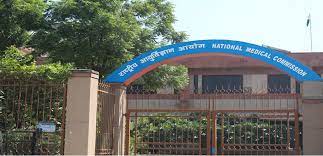
New Delhi, March 15, 2026 — In a decisive move to standardize specialist training and safeguard patient care, the National Medical Commission (NMC) has announced sweeping amendments to the Minimum Requirements for Post-Graduate Courses (PGMSR 2023). Effective immediately as of February 20, 2026, these mandates require all medical colleges and standalone postgraduate (PG) institutions across India to overhaul their infrastructure, faculty accountability, and clinical protocols. The update, detailed in a public notice on March 11, arrives as India seeks to bridge the gap between a rapidly expanding medical education sector and the urgent need for high-quality specialist physicians.
A New Blueprint for Specialist Training
The revised PGMSR 2023 is designed to ensure that the “specialist” title is backed by rigorous, hands-on clinical experience. Under the new rules, every PG institute must adhere to strict national building norms and maintain a minimum 80% bed occupancy year-round. This requirement ensures that residents are not merely studying textbooks but are actively managing a diverse and consistent patient load.
Critical Care at the Forefront
One of the most significant shifts involves the management of Intensive Care Units (ICUs). The amendments now mandate that 15% of all departmental beds must be designated as ICU or High Dependency Unit (HDU) beds. Crucially, two-thirds of these must be full ICU beds under the direct control of the specific department.
For a PG student in internal medicine or surgery, this means “owning” the critical care of their patients rather than referring them to a centralized, detached ICU. This hands-on requirement aims to produce specialists who are as comfortable in a crisis as they are in a routine consultation.
Digital Integration and Modern Infrastructure
The NMC is also pushing for a “digital-first” educational environment. Requirements now include:
-
Live OT Relays: Seminar halls must be equipped with high-speed Wi-Fi to allow live streaming from Operation Theatres, enabling students to observe complex surgeries in real-time.
-
ABHA Linking: All patient records must be integrated with the Ayushman Bharat Health Account (ABHA), ensuring seamless digital health histories and data equity.
-
Advanced Diagnostics: Departments must operate fully functional, in-house labs and imaging facilities featuring cutting-edge technology, moving away from a reliance on outsourced services.
Faculty Accountability: Ending the “Ghost Faculty” Era
To address long-standing concerns regarding faculty availability, the NMC has introduced stringent attendance and transparency measures. Faculty members are now classified as strictly full-time, with a total ban on private practice during official working hours.
The 75% Rule
Faculty and residents must maintain a 75% attendance record over 300 working days annually. This will be monitored via the Aadhaar-Enabled Biometric Attendance System (AEBAS). To prevent institutions from inflating their numbers, the NMC has ruled that faculty counted for PG seats at one institute cannot be “double-counted” at another institution within the same academic year.
Public Transparency
In an era of digital accountability, the NMC now requires colleges to update their official websites monthly. These sites must publicly list:
-
Current PG seat availability and student admission status.
-
Comprehensive faculty lists with contact details and a three-year history.
-
Real-time clinical data, including OPD attendance, surgery numbers, and birth/death rates.
Expert Perspectives: A Balanced View
While the medical community generally welcomes the push for higher standards, some experts urge a cautious approach to implementation.
Dr. Rahul Sharma, Professor of Medical Education at AIIMS New Delhi (who was not involved in drafting the amendments), notes the potential for long-term benefits. “Mandating 75% faculty attendance and ABHA integration will boost accountability and patient data equity,” Dr. Sharma says. “This has the potential to significantly improve training outcomes, particularly in underserved areas where oversight has historically been thin.”
However, he also highlights a potential hurdle for smaller institutions. “Standalone institutes with 220 beds may struggle in rural settings without adequate patient loads, risking a scenario where training becomes superficial despite meeting the technical requirements.”
Dr. Priya Menon, Dean of a private medical college in Maharashtra, points out the logistical challenges. “Website transparency and CCTV monitoring are excellent deterrents for non-compliance. However, capping units at six could inadvertently limit the expansion of super-specialty departments in high-volume urban centers that actually have the capacity to train more students.”
What This Means for Public Health and Patients
The implications of these amendments extend far beyond the classroom. India currently faces a stark specialist shortage, with approximately 1.5 specialists per 10,000 people, well below the World Health Organization’s (WHO) benchmark of 4 per 10,000.
By forcing hospitals to maintain high bed occupancy and modern ICU facilities, the NMC is effectively ensuring that teaching hospitals—often the primary care centers for millions—operate at a higher standard of efficiency.
Benefits for the Health-Conscious Consumer:
-
Reduced Medical Errors: Research indicates that robust, supervised PG training can reduce procedural complications by 20% to 30%.
-
Continuity of Care: Digital records via ABHA mean that your specialist in a teaching hospital will have immediate access to your medical history, reducing redundant testing and misdiagnosis.
-
Better Emergency Response: With more PG students trained in department-specific ICUs, the availability of “critical-care ready” doctors in emergency rooms is expected to rise.
Challenges and Limitations
Despite the promising framework, critics remain concerned about the “one-size-fits-all” nature of the mandates. Historically, NMC inspections have been criticized for inconsistency. The requirement for 80% occupancy, while ideal for training, may place an unsustainable financial burden on smaller or newer non-government colleges, potentially leading to increased tuition fees or institutional closures.
Furthermore, there is currently no pilot data to quantify how these specific changes will impact the quality of care in the short term. Stakeholders are calling for periodic audits to ensure that the drive for “minimum standards” does not become a mere “box-ticking” exercise for institutions.
The Road Ahead
As India’s postgraduate medical seats have surged from 50,000 in 2020 to over 70,000 in 2026, the PGMSR 2023 amendments serve as a necessary guardrail. The success of these reforms will ultimately depend on the NMC’s ability to enforce these standards fairly while supporting institutions in their transition to a more digital, accountable, and patient-centric model of education.
For now, the message to medical institutions is clear: compliance is not optional, and the era of “paper-only” faculty and underutilized hospital beds is coming to a close.
Medical Disclaimer: This article is for informational purposes only and should not be considered medical advice. Always consult with qualified healthcare professionals before making any health-related decisions or changes to your treatment plan. The information presented here is based on current research and expert opinions, which may evolve as new evidence emerges.
References
-
National Medical Commission (NMC). Public Notice No. N-P016(11)/1/2023-PGMEB-NMC (e8383995), March 11, 2026.
-
Postgraduate Medical Education Board (PGMEB). Minimum Standards of Requirements for Post-Graduate Courses-2023 (PGMSR-2023), amended February 20, 2026.
-
Medical Dialogues. “NMC amends Minimum Standard Requirements for running PG medical courses, here are key takeaways.” March 13, 2026.