 0
0
 0
0
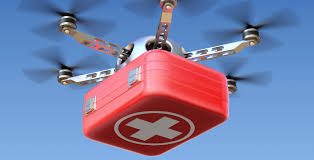
VIJAYAWADA, Dec 28, 2025 — In a landmark move to bridge the “last-mile” gap in emergency medicine, the Andhra Pradesh government has officially sanctioned the deployment of autonomous drones to deliver life-saving medical supplies to the state’s most isolated tribal regions. The initiative, centered in the rugged terrain of the Alluri Sitharama Raju district, marks a significant shift toward technology-driven public health in Southern India.
The Health, Medical and Family Welfare Department finalized a partnership with Red Wing Labs, a Bengaluru-based aerospace startup, to establish a drone logistics network. Operations are scheduled to commence by late January 2026, with the town of Paderu serving as the primary command-and-control hub.
Bridging the Geographic Divide
For years, the “Golden Hour”—the critical window for emergency medical intervention—has been a secondary concern to the literal hours required to navigate the winding, often unpaved roads of the Eastern Ghats.
Under the new agreement, drones will service a network of Primary Health Centres (PHCs) and Community Health Centres (CHCs) within a 60–80 km radius of Paderu. These unmanned aerial vehicles (UAVs) are designed to bypass traditional road bottlenecks, cutting delivery times from hours to minutes.
Key Operational Features:
-
Payload Capacity: Each drone can carry up to 2 kilograms of medical cargo.
-
Cold-Chain Integrity: Units are equipped with active temperature-controlled compartments to ensure vaccines and blood products remain stable during flight.
-
Bi-Directional Logistics: Beyond delivery, drones will transport diagnostic samples (blood, urine, and stool) from remote clinics back to centralized laboratories, accelerating diagnosis for diseases like malaria or tuberculosis.
“The objective is to ensure that geography is no longer a barrier to survival,” stated G. Veerapandian, Commissioner of Health and Family Welfare, during the signing. “During the monsoon or in cases of sudden trauma, these drones will serve as an essential aerial corridor between the King George Hospital in Visakhapatnam and the Paderu hub.”
Evidence-Based Precedents
While the technology may seem futuristic, the Andhra Pradesh initiative builds on a growing body of evidence. Red Wing Labs has already successfully operated similar corridors in Arunachal Pradesh and Odisha, where they conducted over 1,100 flights and saved an estimated 15,000 hours of land travel time.
Global data supports this transition. A study published in The Lancet Global Health analyzed over 12,000 drone deliveries in Rwanda, finding that aerial transport delivered blood products 79 minutes faster on average than road ambulances and reduced blood component wastage by 67%.
“In emergency medicine, time is tissue,” says Dr. Arpit Sharma, a public health consultant not involved in the AP project. “For a mother experiencing postpartum hemorrhage in a remote tribal hamlet, a drone-delivered unit of O-negative blood isn’t just a convenience—it is the difference between life and death.”
Navigating Challenges: Weather and Infrastructure
Despite the optimism, the deployment faces significant hurdles. The “Medicine from the Sky” trials in other Indian states have highlighted that high altitudes and unpredictable weather can severely impact battery life and flight stability.
Potential Limitations:
-
Atmospheric Interference: High winds and heavy rainfall in the Eastern Ghats can ground flights, meaning drones cannot yet fully replace traditional logistics.
-
Battery Performance: Research by the Indian Council of Medical Research (ICMR) indicates that at higher altitudes, lithium-polymer batteries may lose significant capacity unless preheated or insulated.
-
Community Trust: Success depends on the training of local healthcare workers to handle the arrival and departure of drones safely.
Critics also point to the high cost of maintenance. To address this, the current partnership includes a six-to-seven-month “proof-of-concept” phase, during which Red Wing will provide services free of cost. This period will allow the government to assess the “cost-per-life-saved” metric before committing to a long-term, taxpayer-funded rollout.
The Road Ahead: From Paderu to the State
The government’s vision extends beyond the Paderu hub. If the pilot proves successful, the state plans to integrate drone corridors into its broader “Swarna Andhra 2047” vision, potentially using drones for organ transport and disaster relief during floods.
For the tribal communities of Alluri Sitharama Raju district, the sight of a drone overhead will soon signal more than just technological progress—it will represent a reliable link to the modern medical care they have long sought.
Reference Section
- https://www.daijiworld.com/news/newsDisplay?newsID=1301988
Medical Disclaimer: This article is for informational purposes only and should not be considered medical advice. Always consult with qualified healthcare professionals before making any health-related decisions or changes to your treatment plan. The information presented here is based on current research and expert opinions, which may evolve as new evidence emerges.