 0
0
 0
0
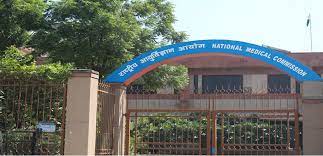
In a significant development in medical education governance, a group of doctors has filed a plea before the Delhi High Court challenging the National Medical Commission’s (NMC) recent regulation permitting medical MSc and PhD degree holders to serve as faculty members in core MBBS subjects. The plea, filed by the United Doctors Front (UDF), argues that this regulation undermines the quality of medical education and violates constitutional and statutory provisions. The case is scheduled for hearing on August 21, 2025, before a bench led by the Chief Justice of the Delhi High Court. This controversy revolves around changes in faculty eligibility criteria in critical medical disciplines including Anatomy, Biochemistry, Physiology, Pharmacology, and Microbiology, impacting training quality of future doctors in India.
Key Developments
The crux of the dispute originates from a regulatory shift formalized in the Medical Institutions (Qualifications of Faculty) Regulations, 2025, issued by the NMC. These regulations reinstated the appointment of medical MSc and PhD holders as faculty, allowing them to constitute up to 30% of teaching positions in the specified core MBBS departments. This reversal contrasts with the more restrictive 2020 guidelines, under which non-medical faculty appointments in these departments were capped at 15%, with complete restrictions (0%) in Microbiology and Pharmacology.
Historically, medical MSc degree holders had been allowed to teach in these departments until 2020 at higher ratios—up to 30% across various subjects and even 50% in Biochemistry. However, the 2020 amendments tightened the limits drastically, reflecting concerns about maintaining high standards in medical training by emphasizing qualified medical doctors as educators.
The 2025 regulation also includes a proviso that these non-medical faculty appointments can only be made if medically qualified teaching staff are not available, highlighting a conditional relaxation rather than an outright allowance.
Expert Perspectives and Arguments
The United Doctors Front, representing many medical professionals, has voiced strong objections to this change. They argue that permitting MSc and PhD holders who are not medically qualified to teach core medical subjects dilutes the quality and rigor of MBBS education. Their petition underscores the risk of compromising clinical understanding and practical training by replacing clinicians with purely academic degree holders in foundational medical sciences.
Dr. Ramesh Kumar, a senior professor of medicine not associated with the case, offered perspective: “Medical education is not merely theoretical. It bridges fundamental sciences with clinical practice, and those teaching must have a robust clinical foundation. While MSc and PhD holders bring valuable research expertise, their role in core clinical subject teaching needs clear boundaries to maintain education quality.”
Background and Context
The debate reflects ongoing tensions in medical education systems worldwide regarding faculty qualifications. Balancing the scientific rigor of foundational subjects with clinical relevance is a complex task, especially in rapidly evolving medical fields. Competent teaching staff shortages have compelled regulatory bodies like the NMC to explore flexible faculty criteria, but such adjustments face scrutiny from practitioners worried about preserving educational standards.
India’s NMC replaced the Medical Council of India (MCI) with promises of improving medical regulation and education. However, this faculty eligibility matter highlights the challenge of harmonizing quality standards, faculty availability, and regulatory clarity.
Public Health Implications
Decisions about medical faculty composition directly influence the competence of graduating doctors, which in turn affects public health outcomes and patient safety on a large scale. If medical graduates receive suboptimal foundational training, the downstream impact may manifest as gaps in clinical judgment and patient care efficacy. Conversely, overly rigid faculty criteria risk exacerbating teacher shortages, potentially limiting student intake and medical education accessibility.
Counterarguments and Limitations
Some proponents of the regulatory change argue that MSc and PhD holders contribute valuable subject-matter expertise and research acumen, which enhances the teaching environment. Their presence can foster a scientific mindset and strengthen research training for medical students. Furthermore, the regulation’s contingency based on the unavailability of medical faculty aims to safeguard against wholesale replacement of clinicians by non-medical educators.
However, critics caution that this balance is delicate, requiring robust oversight and clear role definitions to ensure that clinical contextualization is not lost.
What This Means for Medical Students and Institutions
Medical colleges in India will need to navigate these evolving guidelines carefully. Institutions may now consider appointing more non-medical MSc and PhD faculty in core subjects but should remain mindful of ensuring sufficient medically qualified educators. Students may witness a more diverse faculty background, potentially enriching but also challenging the traditional clinical teaching approach.
For prospective MBBS students and their families, awareness that regulatory shifts are ongoing may be important for understanding changes in medical education quality and faculty composition.
Medical Disclaimer: This article is for informational purposes only and should not be considered medical advice. Always consult with qualified healthcare professionals before making any health-related decisions or changes to your treatment plan. The information presented here is based on current research and expert opinions, which may evolve as new evidence emerges.
References
-
National Medical Commission, Medical Institutions (Qualifications of Faculty) Regulations, 2025.
-
United Doctors Front plea against NMC Regulations, Delhi High Court filing, August 2025.
-
Medical Dialogues, “Doctors Challenge NMC Regulations Allowing Medical MSc, PhD holders as Faculty in core MBBS subjects,” August 2025.
-
Interview: Dr. Ramesh Kumar, Senior Professor of Medicine, [Institution name], August 2025.
This report covers the ongoing legal and regulatory debate impacting medical education in India and the quality standards safeguarding the training of future doctors.