 0
0
 0
0
March 12, 2026
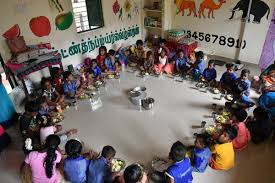
NEW DELHI — In a sweeping move to combat malnutrition and enhance early childhood development, the Union Ministry of Women and Child Development has announced a massive infrastructure and technological overhaul of the nation’s Anganwadi system. Under the flagship Mission Saksham Anganwadi and Poshan 2.0, the government is transitioning from traditional care centers to “technologically empowered” hubs. By integrating smartphone-based monitoring, facial recognition for ration delivery, and upgraded physical facilities, the initiative aims to provide real-time data on child growth while ensuring that life-saving nutrition reaches the country’s most vulnerable populations.
A New Blueprint for Rural Healthcare
For decades, Anganwadi Centres (AWCs) have served as the first point of contact for maternal and child health in India. However, aging infrastructure has often hindered service delivery. The current phase of Mission Poshan 2.0 seeks to rectify this by constructing 50,000 new Anganwadi Centres during the 15th Finance Commission cycle, at a rate of 10,000 units per year.
The financial architecture of this expansion relies on a “convergence model.” Each new AWC receives a budget of approximately Rs. 12.00 Lakh, pooled from the Mahatma Gandhi National Rural Employment Guarantee Scheme (MGNREGS), the Ministry of Women and Child Development (MWCD), and the 15th Finance Commission.
Beyond new builds, the government is focusing on “Saksham” (Capable) Anganwadis. Two lakh existing centers are being upgraded with:
-
Clean Water Access: Funding for water facilities has increased from Rs. 10,000 to Rs. 17,000 per center.
-
Sanitation: Toilet construction grants have tripled, rising from Rs. 12,000 to Rs. 36,000.
-
Modern Learning Tools: Installations of LED screens, water filtration systems, and “Building as Learning Aid” (BALA) paintings to foster Early Childhood Care and Education (ECCE).
The Digital Pulse: Poshan Tracker and Growth Monitoring
Perhaps the most significant shift is the digital migration of health data. The Poshan Tracker application has been rolled out nationwide as a governance tool. This app allows Anganwadi workers to track child growth indicators—such as stunting, wasting, and underweight prevalence—in near real-time.
“The shift from manual registers to digital tracking is a game-changer for public health,” says Dr. Aranya Sen, a public health policy consultant not involved in the government rollout. “By capturing data at the moment of measurement, we reduce the ‘lag time’ between identifying a malnourished child and providing intervention. However, the success of this depends entirely on the digital literacy of the frontline workers and the consistency of internet connectivity in remote areas.”
To support this, the government has provided smartphones and specialized growth monitoring devices to workers across the country. According to Ministry data, the budget allocation for Mission Poshan 2.0 has seen a steady climb, reaching Rs. 21,960 crore for the 2025-26 fiscal year, reflecting the high priority placed on these digital tools.
Ensuring Accountability: Facial Recognition and Nominees
To address “leakages” in the distribution of Take-Home Ration (THR), the Ministry has introduced a Facial Recognition System (FRS). This ensures that the benefits reach the specific registered beneficiary—be it a pregnant woman, lactating mother, or adolescent girl.
Recognizing that mobility can be an issue for late-stage pregnancy or illness, a new Nominee Module was launched. This allows a beneficiary to name a representative who, after a one-time e-KYC process, can collect rations using their own face-matching verification.
Comparative Budget Allocation (2022–2026)
| Financial Year | Budget Allocation (BE) in Crores (INR) |
| 2022-23 | 20,294.58 |
| 2023-24 | 20,554.31 |
| 2024-25 | 21,200.00 |
| 2025-26 | 21,960.00 |
Public Health Implications and Expert Perspectives
The integration of AWCs with Government Primary Schools—a policy launched in September 2025—marks a strategic move toward Foundational Literacy and Numeracy (FLN). By co-locating these centers, the government aims to create a seamless transition for children from nutritional support to formal schooling.
While a 2025 impact assessment by NITI Aayog found the mission’s relevance to be “satisfactory,” some experts urge caution. “Infrastructure is the skeleton, but quality of care is the soul,” notes Dr. Rajesh Kumar, a pediatrician specializing in community nutrition. “While LED screens and smartphones are excellent, we must ensure that the Anganwadi workers—who are the backbone of this system—are not overwhelmed by data entry at the cost of personal counseling with mothers.”
What This Means for You
For the average citizen and health-conscious consumer, these developments signify a more transparent and robust safety net for maternal and child health. If you or someone you know utilizes Anganwadi services:
-
Demand Digital Accuracy: Ensure your child’s growth is being logged in the Poshan Tracker to receive tailored nutritional advice.
-
Utilize the Nominee System: If you are unable to visit a center due to health reasons, use the new nominee module to ensure you don’t miss your ration cycle.
-
Engage with Saksham Facilities: Take advantage of the new “Poshan Vatikas” (Nutrition Gardens) which provide fresh, local produce and education on dietary diversity.
As India moves toward its goal of a “Malnutrition Free” nation, the transformation of these 1.4 million centers from mere feeding stations into technologically advanced wellness hubs represents one of the largest public health experiments in modern history.
Reference Section
-
Primary Source: Press Information Bureau (PIB) Delhi, “Steps undertaken to improve infrastructure facilities at Anganwadi Centres under Mission Saksham Anganwadi and Poshan 2.0,” Posted 11 March 2026.
-
Government Authority: Ministry of Women and Child Development (MWCD), Government of India. poshantracker.in
Medical Disclaimer: This article is for informational purposes only and should not be considered medical advice. Always consult with qualified healthcare professionals before making any health-related decisions or changes to your treatment plan. The information presented here is based on current research and expert opinions, which may evolve as new evidence emerges.