 0
0
 0
0
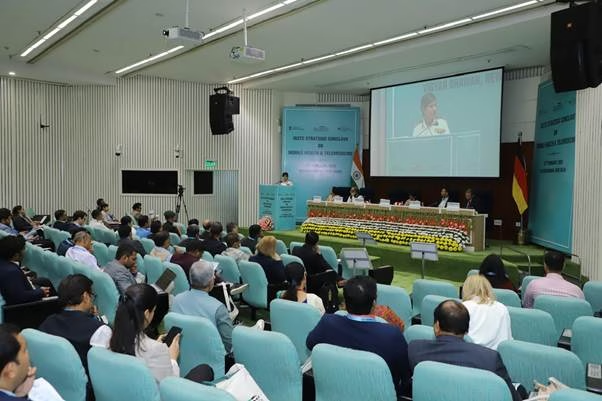
NEW DELHI — In a landmark move to bridge the gap between cutting-edge technology and patient care, the Indo-German Science & Technology Centre (IGSTC) Strategic Conclave 2026 convened yesterday at Vigyan Bhawan. The high-level summit, focused on “Mobile Health & Telemedicine,” signaled a shift from theoretical research to the rapid deployment of digital solutions for millions of citizens, ranging from urban tech-users to remote military personnel.
The conclave, backed by India’s Department of Science and Technology (DST) and the Biotechnology Industry Research Assistance Council (BIRAC), brought together a coalition of policymakers, military health leaders, and industry titans. Their mission: to standardize and scale telemedicine beyond simple video calls into a sophisticated ecosystem of AI diagnostics and wearable monitoring.
From Battlefield to Bedside: The Scaling of Telemedicine
One of the most compelling arguments for the expansion of digital health came from the frontlines of military medicine. Surg VAdm Dr. Arti Sarin, Director General Armed Forces Medical Services (DGAFMS), revealed that telehealth has become a “critical vertical” for an ecosystem serving approximately 16 million personnel, veterans, and their families.
“Telehealth has evolved from basic real-time consultations to satellite-enabled platforms that support maritime deployments and remote, high-altitude regions,” Dr. Sarin noted.
For the general public, this military blueprint offers a glimpse into the future of civilian care. The DGAFMS emphasized that for telemedicine to be truly effective, it must integrate AI-enabled diagnostics and secure, encrypted communication. This ensures that a soldier in the Himalayas or a patient in a rural village receives the same quality of diagnostic care as someone in a metropolitan hospital.
Closing the Rural-Urban Divide
While the military paves the way for high-tech deployments, the Indian government is focused on ensuring these innovations reach the “last mile.” Dr. Sunita Sharma, Director General Health Services (DGHS), highlighted the integration of telemedicine within the National Digital Health Mission.
Telemedicine services have now reached the Ayushman Mandir level (grassroots health and wellness centers), providing specialized care to underprivileged areas. Dr. Sharma specifically pointed to the potential of Point-of-Care (PoC) technologies and machine learning to assist in national health priorities, such as the eradication of tuberculosis.
Key Technologies on the Horizon
The conclave identified four “deep-tech” pillars expected to transform patient experiences by 2027:
-
AI-Enabled Diagnostics: Software that can analyze X-rays or skin lesions via a smartphone camera.
-
Wearable Health Tracking: Devices that monitor chronic conditions (like heart disease or diabetes) in real-time.
-
Chip-based Laboratory Services: “Lab-on-a-chip” tech that allows blood tests to be processed instantly at home.
-
Remote Patient Monitoring: Systems that alert doctors to a patient’s declining vitals before an emergency occurs.
The Innovation Engine: BIRAC and Indo-German Synergy
A recurring theme throughout the summit was the “brain drain” and the need to keep Indian innovators on home soil. Dr. Jitendra Kumar, Managing Director of BIRAC, stressed that structured funding and international collaboration are the keys to keeping talent local.
By partnering with Germany—a global leader in medical engineering—India aims to co-create solutions that are “frugal yet high-tech.” This means medical devices that are durable enough for India’s diverse climate and socio-economic conditions but sophisticated enough to meet international global standards.
Mr. Pavan Chaudhary, Chairman of the Medical Technology Association of India, added an industry perspective, calling for “translational research.” In layman’s terms: moving inventions out of the university lab and onto the pharmacy shelf through better incentives for developers.
The “Digital Divide” and Data Security
Despite the optimism, experts at the conclave were quick to address the “elephant in the room”: the digital divide and data privacy.
Dr. Arindam Bhattacharyya (DST) cautioned that telemedicine must move beyond “pilot stages” to become a sustainable platform. For a person in a remote village, a digital health app is only as good as their internet connection and the security of their personal medical data.
The conclave participants reached a consensus on the need for:
-
Robust Regulatory Frameworks: Clear laws on how AI can be used in diagnosis.
-
Data Privacy Safeguards: Protecting sensitive patient information from cyber threats.
-
Inclusion Strategies: Ensuring that the elderly or those with low digital literacy are not left behind as healthcare goes mobile.
What This Means for You
For the average health-conscious consumer, the outcomes of the IGSTC Strategic Conclave 2026 suggest that the “doctor in your pocket” is becoming a reality.
In the coming years, expect to see more “hybrid” care models. Instead of a physical visit for every check-up, your primary care physician may monitor your vitals through a smartwatch and only call you in when the AI detects an anomaly. This shift aims to reduce hospital overcrowding and make preventative care more convenient.
Next Step for Readers: If you use health-tracking apps or wearables, ensure they are synced with verified platforms like the Ayushman Bharat Digital Mission (ABDM) to help create a seamless digital record for your healthcare providers.
References & Sources
-
Primary Source: IGSTC Strategic Conclave 2026 on “Mobile Health & Telemedicine,” Vigyan Bhawan, New Delhi (Feb 23, 2026).
Medical Disclaimer: This article is for informational purposes only and should not be considered medical advice. Always consult with qualified healthcare professionals before making any health-related decisions or changes to your treatment plan. The information presented here is based on current research and expert opinions, which may evolve as new evidence emerges.