 0
0
 0
0
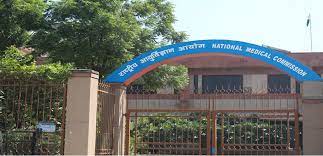
NEW DELHI — In a landmark move toward transparency in medical education and healthcare delivery, the National Medical Commission (NMC) has issued a mandatory directive requiring all medical colleges across India to integrate patients’ digital health records using the Ayushman Bharat Health Account (ABHA) ID.
The directive, issued by the NMC’s IT Division on March 3, 2026, aims to create a verifiable, tamper-proof audit trail of clinical workloads. By linking ABHA IDs to Outpatient (OPD), Inpatient (IPD), and Emergency services, the NMC seeks to replace traditional, easily manipulated paperwork with real-time digital data. This transition is now a critical component of the Minimum Standard Requirements (MSR) for colleges seeking annual renewals or seat increases.
From Paper to Pixels: The New Standard
For decades, the assessment of medical colleges relied heavily on physical registers and self-reported statistics. Critics and whistleblowers have frequently pointed to “patient padding”—the practice of inflating patient numbers or hiring “ghost patients” during inspections—as a systemic flaw that undermines the quality of medical training.
The new mandate leverages the Ayushman Bharat Digital Mission (ABDM) architecture to close these loopholes. Under the directive, medical institutions must utilize ABDM-enabled Hospital Management Information Systems (HMIS) to track every patient interaction.
How the Digital Link Works
The integration process is designed to be frictionless for both providers and patients:
-
For New Patients: Hospitals can generate an ABHA ID on-site using Aadhaar-linked OTP or biometric authentication.
-
For Existing Holders: Patients can share their 14-digit ID via a mobile search or by scanning a QR code through Personal Health Record (PHR) apps.
-
Verification: The NMC will now primarily recognize clinical workloads that are authenticated through these digital IDs, effectively making “unlinked” patients invisible during official assessments.
The Evolution of the Ayushman Bharat Digital Mission
Launched in September 2021, the ABDM was envisioned as a digital backbone for India’s fragmented healthcare system. As of late 2024, the mission had already scaled significantly, with over 67 crore ABHA IDs created and 42 crore health records linked.
The NMC’s latest push builds upon a June 2024 circular that initially introduced ABHA-based assessments. This 2026 directive simplifies the process by adopting updated protocols from the National Health Authority (NHA). It ensures that a patient’s medical history—from lab reports to prescriptions—can follow them seamlessly across the country, much like a “digital health passport.”
“The creation of ABHA ID is a very simple process that has been extended to people on a large scale. It is the logical next step in ensuring that medical education is grounded in actual clinical experience,” noted Dr. B. Srinivas, former Secretary of the NMC, in a recent briefing on digital transitions.
Implications for Public Health and Education
The shift toward digital verification has profound implications for the 700+ medical colleges currently operating in India.
1. Accuracy in Medical Training
Medical students require exposure to a diverse and high-volume patient load to develop clinical competency. By ensuring that workload data is genuine, the NMC guarantees that students at accredited colleges are receiving the hands-on training promised by the institution’s enrollment capacity.
2. Continuity of Care
For the average citizen, the mandate means their records at a teaching hospital are now part of a portable ecosystem. If a patient is treated at a medical college in Karnataka but later travels to Delhi, their history can be accessed instantly by a new provider, reducing diagnostic errors and redundant testing.
3. Data-Driven Policy
On a macro level, the influx of verified data allows the Ministry of Health to identify regional healthcare gaps. “ABDM bridges gaps digitally,” according to a recent statement from the Press Information Bureau (PIB), supporting more equitable resource allocation.
Navigating the Challenges
While the digital shift promises transparency, the road to 100% compliance faces significant hurdles.
-
Infrastructure Gaps: Many rural medical colleges struggle with inconsistent internet connectivity and the high cost of upgrading to ABDM-certified HMIS software.
-
The Private-Public Divide: While government facilities have moved quickly, private institutions have been slower to adopt. By late 2024, only about 17,000 of the 1.3 lakh ABDM-linked facilities were private.
-
Privacy Concerns: Though the system is consent-based—meaning patients must authorize the sharing of their data—experts continue to emphasize the need for robust cybersecurity to protect sensitive health information.
Medical education analysts warn that without adequate technical support, smaller or more remote colleges might face “approval delays” not because of a lack of patients, but because of a lack of digital infrastructure.
What This Means for You
For health-conscious individuals and patients visiting medical college hospitals, the process is straightforward. No patient can be denied treatment for lacking an ABHA ID; however, patients are encouraged to link their records to facilitate better long-term care.
Actionable Steps for Patients:
-
Create your ID: Visit
abdm.gov.inor use the ABHA app to generate your 14-digit ID. -
Scan and Share: Look for the ABDM QR codes at hospital registration desks to skip long queues.
-
Keep Records Handy: Use PHR apps (like the ABHA app or other certified third-party apps) to store your digital prescriptions and lab results.
Conclusion
The NMC’s directive marks the end of the “paperwork era” in Indian medical education. By tying college accreditation to verified digital records, the commission is betting on technology to enforce integrity. While the transition may be challenging for institutions lagging in tech, the ultimate beneficiaries will be the millions of patients seeking reliable care and the thousands of medical students who deserve an education based on reality, not just reports.
References
-
National Medical Commission. (2026, March 3). Integration of Digital Health records of patients. File No. N-16021/2/2026-IT-NMC. Source
Medical Disclaimer: This article is for informational purposes only and should not be considered medical advice. Always consult with qualified healthcare professionals before making any health-related decisions or changes to your treatment plan. The information presented here is based on current research and expert opinions, which may evolve as new evidence emerges.