 0
0
 0
0
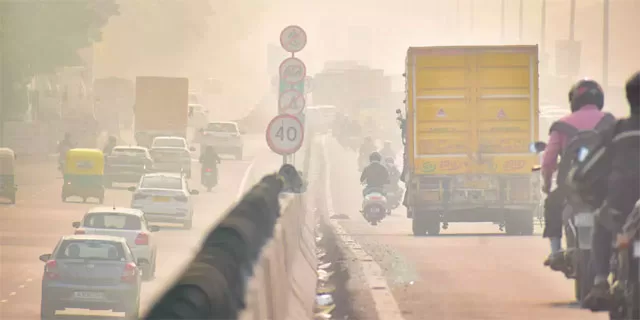
NEW DELHI – A comprehensive new analysis of air quality data has confirmed a sobering reality for the residents of India’s capital: Delhi has once again been ranked as the most polluted city in the country for the 2024-25 period. The study, released by Climate Trends, reveals that Delhi’s air quality is being strangled by a “perfect storm” of high local emissions and stagnant meteorological conditions, triggering a sustained public health emergency that experts warn is shaving years off residents’ lives.
The report, which synthesized data from the Central Pollution Control Board (CPCB) across six major metros—Delhi, Patna, Kolkata, Mumbai, Chennai, and Bengaluru—paints a grim picture of the Indo-Gangetic Plain. While Delhi leads the list, Patna follows closely as the second most polluted, highlighting a regional crisis where toxic air is no longer a seasonal grievance but a year-round threat.
The Invisible Killer: Understanding the PM2.5 Surge
At the heart of the crisis is PM2.5, fine particulate matter less than 2.5 micrometers in diameter. These particles are so small they can bypass the body’s natural defenses, entering the deep lung tissue and even crossing into the bloodstream.
According to the Climate Trends report, Delhi’s annual PM2.5 average for the 2024-25 cycle hovered between 96 and 104 µg/m³. To put this in perspective, this is more than twice the Indian national standard of 40 µg/m³ and nearly 20 times the World Health Organization (WHO) recommended limit of 5 µg/m³.
Key Data Points from the 2024-25 Period:
-
Persistent Breach: Delhi recorded PM2.5 levels exceeding daily safety standards on 212 days.
-
PM10 Levels: Larger dust particles (PM10) breached limits on 285 days—roughly 78% of the year.
-
Meteorological Traps: The study found that “stagnation episodes”—periods with wind speeds below 1 m/s and high humidity—trapped pollutants near the ground, preventing them from dispersing.
“The persistence of PM2.5 exceedances is strongly associated with sub-1 m/s wind regimes across northern cities,” explains Sagnik Dey, Head of the Centre for Atmospheric Sciences at IIT Delhi. “In these conditions, even moderate emissions result in disproportionately high exposure levels because the air simply isn’t moving.”
A Multi-Organ Assault: The Health Toll
For years, air pollution was viewed primarily as a respiratory issue. However, the State of Global Air (SoGA) 2025 report indicates a much broader systemic impact. Pollution is now linked to two million deaths annually in India, a 43% increase since 2000.
Medical professionals are observing a shift in how pollution affects the human body. It is no longer just “smoker’s cough”; it is a systemic inflammatory response.
“Delhi’s toxic air attacks every organ—lungs, heart, brain,” says Dr. Arvind Kumar, a renowned thoracic surgeon. “We are seeing permanently stunted lung development in children and a spike in strokes among younger adults who have no other traditional risk factors.”
The University of Chicago’s Air Quality Life Index (AQLI) estimates that the average Delhi resident stands to lose 8.2 years of life expectancy due to current pollution levels.
Common Health Risks Identified:
-
Cardiovascular: PM2.5 triggers internal inflammation, leading to hypertension, blood clots, and a 17% increase in stroke risk globally.
-
Respiratory: Chronic Obstructive Pulmonary Disease (COPD) and asthma flares are now year-round occurrences.
-
Metabolic: Emerging research links long-term exposure to an increased risk of Type 2 diabetes (one in five cases linked to pollution).
-
Neurological: There is growing evidence of a link between fine particulate matter and the onset of dementia and cognitive decline in the elderly.
Expert Perspectives: Why Progress is Stalling
Despite government initiatives like the National Clean Air Programme (NCAP) and the Graded Response Action Plan (GRAP), the numbers remain stubbornly high. Anumita Roychowdhury, Executive Director at the Centre for Science and Environment (CSE), notes that while there have been gains in reducing stubble burning and transitioning to electric vehicles, other sources are filling the void.
“Delhi’s PM2.5 rose 3.4% in 2024,” Roychowdhury states. “Local sources like construction dust, industrial emissions, and waste burning must be tackled with the same urgency as vehicular pollution. We are seeing past gains being offset by these unchecked sectors.”
Public Health Implications and Practical Advice
The findings suggest that 75% of India’s population is breathing air that fails to meet even interim international safety targets. This places an immense strain on the healthcare infrastructure and reduces national economic productivity.
For health-conscious consumers, experts recommend the following lifestyle adjustments to mitigate personal risk:
-
Monitor Air Quality: Use the CPCB’s ‘Sameer’ app to check real-time AQI before planning outdoor activities.
-
High-Quality Filtration: During “Poor” to “Severe” days, use N95 or N99 masks outdoors. Indoors, HEPA-certified air purifiers can significantly reduce particle counts.
-
Vulnerable Groups: Ensure children and the elderly stay indoors during early morning and late evening hours when pollution concentration is typically highest due to temperature inversion.
-
Transition to Clean Energy: Where possible, shift away from biomass cooking and advocate for localized clean transport options, such as electric buses.
Counterarguments and Study Limitations
While the data is alarming, some government officials point to signs of improvement. They highlight that 2025 saw the second-lowest number of “Severe” days since 2018 and a record number of “Satisfactory” air days during the monsoon and spring months. Critics of the Climate Trends study also note that the analysis relies heavily on fixed CPCB monitors, which may not capture “hyper-local” air quality in rural areas or industrial peripheries.
Furthermore, the role of weather is a double-edged sword. While it explains why Delhi is more polluted than coastal cities like Chennai or Mumbai, it also means that even aggressive emission cuts may not show immediate results if meteorological stagnation persists.
The Road Ahead
As India eyes NCAP Phase-III reforms, the focus is shifting toward “airshed management”—treating entire regions as one unit rather than tackling city by city. This is crucial because pollution in Delhi is often a product of activities in neighboring Haryana, Punjab, and Uttar Pradesh.
For now, the 2024-25 data serves as a stark reminder that while the “Great Smog” of winter makes the headlines, the invisible toxin of PM2.5 is a perennial resident of India’s urban heartland.
Medical Disclaimer: This article is for informational purposes only and should not be considered medical advice. Always consult with qualified healthcare professionals before making any health-related decisions or changes to your treatment plan. The information presented here is based on current research and expert opinions, which may evolve as new evidence emerges.
References
- https://www.hindustantimes.com/cities/delhi-news/delhi-was-most-polluted-city-during-2024-25-followed-by-patna-study-101773233310766.html