 0
0
 0
0
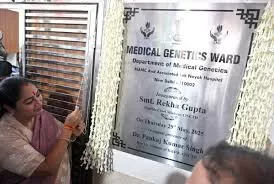
New Delhi, May 30, 2025 — In a significant boost to Delhi’s healthcare landscape, Chief Minister Rekha Gupta inaugurated three state-of-the-art medical units at Lok Nayak Jai Prakash (LNJP) Hospital on Thursday. The new facilities include the capital’s first medical genetics ward, a Lactation Management Unit (LMU), and a Nucleic Acid Amplification Testing (NAT) lab—marking a milestone in the city’s commitment to advanced and equitable healthcare.
Delhi’s First Government-Run Genetics Ward
The newly opened medical genetics department is the first of its kind in a Delhi government hospital and only the fourth in India among NMC-recognised colleges. This department will provide comprehensive diagnosis, treatment, and counseling for rare and complex genetic disorders, serving patients from prenatal stages through old age. Advanced technology in the unit enables testing and research using just a single drop of blood, allowing for both rapid diagnosis and deeper understanding of genetic diseases124.
Chief Minister Gupta emphasized, “This department will not only treat genetic diseases but also carry out research on them. By using just a single drop of blood and advanced machines, this unit will also conduct research.” She noted that many parents in Delhi have had to watch their children suffer from genetic disorders due to lack of specialized facilities, a gap this new ward aims to fill246.
Lactation Management Unit: Supporting the Youngest Patients
The Lactation Management Unit is designed to support premature, low-birth-weight, and critically ill newborns, especially when mothers are unable to breastfeed. The unit provides breastfeeding counseling, safe milk collection and storage, and hospital-grade breast pumps. Importantly, it also offers ‘donor human milk’ services, which can be life-saving for infants at risk of malnutrition or infection. Gupta highlighted, “There are many premature babies whose mothers are not in a condition to feed. Now it will be possible for premature babies to get breast milk. A mother’s milk is quite critical for a child”234.
NAT Lab: Faster, Safer Blood Testing
The Nucleic Acid Amplification Testing (NAT) lab introduces highly sensitive diagnostics for early detection of viral infections such as HIV, Hepatitis B, and Hepatitis C. Previously, blood screening could take up to 45 days; now, results will be available within two days, significantly improving the safety and reliability of blood transfusions and potentially saving hundreds of lives each year34.
Addressing Infrastructure Gaps
During the inauguration, Chief Minister Gupta criticized the previous administration for leaving Delhi with inadequate medical infrastructure. She cited World Health Organization (WHO) recommendations of two hospital beds per 1,000 people, noting that Delhi currently has only 0.42 beds per 1,000 people—rising to 1.5 when including the private sector. Gupta pledged to raise this ratio to three beds per 1,000 people within five years and outlined ongoing efforts to recruit more medical staff and equip hospitals with essential diagnostic tools24.
Gupta also recalled the hardships faced during the Covid-19 pandemic, when shortages of beds and oxygen led to tragic losses, underscoring the urgency of these upgrades246.
A Vision for a Healthier Delhi
The launch of these advanced units at LNJP Hospital reflects the government’s broader vision of making high-quality, timely, and accessible healthcare available to every resident, regardless of age or background. Health Minister Pankaj Kumar Singh assured that all pending healthcare infrastructure projects would be completed soon, further strengthening the city’s medical services4.
Disclaimer: This article is based on information reported by Devdiscourse and other news agencies as of May 30, 2025. Details may be subject to further updates or official clarifications.
Citations: