 0
0
 0
0
In a significant development in the investigation of the deadly car blast near the Red Fort on November 10, 2025, the National Investigation Agency (NIA) has uncovered evidence suggesting a terror module involved medical professionals who allegedly used hospital spaces to store weapons and explosives. This strategy, unprecedented in India, mirrors tactics previously seen in conflict zones such as Gaza, where militant groups used medical facilities as arms depots.
Key Findings from the Investigation
The investigation centers on a Jaish-e-Mohammed-linked terror module that is suspected of orchestrating the Red Fort attack and planning further operations. Among those implicated are individuals posing as doctors, using hospital staff lockers to conceal firearms and explosives. Weapons, including an assault rifle and ammunition, were recovered from a locker at the Government Medical College (GMC) in Anantnag, Kashmir, belonging to one of the accused allegedly involved in the attack. The accused include five main doctors, with several other medical personnel under scrutiny for their roles in the terror network.
Authorities are also probing plans to convert hospitals in Kashmir’s districts of Anantnag, Baramulla, and Budgam into large-scale weapons storage centers, leveraging the inherent trust and security associated with healthcare facilities. This covert approach is reminiscent of Hamas’ use of hospitals in Gaza as armories and command centers, specifically citing the Al-Shifa Hospital’s underground tunnels utilized for militant activities. Such tactics complicate counter-terrorism efforts as they exploit the sanctity and societal protection afforded to medical institutions.
Expert Perspectives and Background
Security analysts emphasize the gravity of this development, noting that embedding terror networks within healthcare settings represents a dangerous escalation in tactics. Vikram Singh, former Uttar Pradesh Director General of Police, described the phenomenon as akin to a “terminal disease,” highlighting the global challenge of terrorist infiltration into civilian sectors. He suggested the urgent need for adopting international best practices to sanitize healthcare spaces and prevent their misuse.
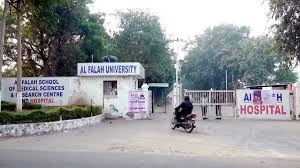
Medical professionals and hospital administrators face unprecedented challenges balancing patient care with security protocols. The scandal has cast suspicion on some institutions, notably Al-Falah University, where an accused suicide bomber was a faculty member. More than 200 doctors and staff at the university are reportedly under investigation. These developments have led to heightened security measures and locker inspections across hospitals in Jammu and Kashmir to prevent further exploitation.
Public Health and Security Implications
This incident raises critical questions about safeguarding health facilities from being co-opted by criminal elements without compromising patient access and care. Hospitals are traditionally neutral zones, protected under international humanitarian law, aimed at preserving medical neutrality even during conflicts. However, the exploitation of these zones for terrorism jeopardizes this status and endangers public trust.
For the general public, these revelations underscore the need for vigilance and cooperation with security agencies, especially in sensitive regions. Healthcare workers must balance professional obligations with ethical duties and security awareness, and institutions might need to implement stricter controls on access to storage areas and inventories.
Limitations and Controversies
While the investigation brings disturbing insights, it is important to acknowledge that some accusations are based on preliminary intelligence. The medical qualifications of some suspects remain unconfirmed, and investigations are ongoing. There is also concern about potential stigmatization of healthcare workers generally, which could harm morale and community trust when medical personnel are unjustly implicated.
Further, security experts caution that linking terror activities to specific communities or professional groups without conclusive evidence could lead to social disharmony. Authorities are advised to maintain transparency while respecting due process to uphold justice and human rights.
Medical Disclaimer:
This article is for informational purposes only and should not be considered medical advice. Always consult with qualified healthcare professionals before making any health-related decisions or changes to your treatment plan. The information presented here is based on current research and expert opinions, which may evolve as new evidence emerges.
References: