 0
0
 0
0
MUMBAI — In a landmark achievement that pulls back the curtain on the earliest, most mysterious moments of human life, international research teams have successfully recreated a functional, “primitive” model of the human uterine environment in the laboratory.
The findings, published Tuesday in a series of three papers across the journals Cell and Cell Stem Cell, offer an unprecedented look at embryo implantation—the critical window when a microscopic cluster of cells attaches to the mother’s womb. While the breakthrough promises to revolutionize our understanding of infertility and recurrent pregnancy loss, it has simultaneously ignited a global conversation regarding the ethical boundaries of reproductive technology and the theoretical future of “artificial wombs.”
Opening the ‘Black Box’ of Early Life
For decades, reproductive biologists have referred to the first two weeks of human development as the “black box” of pregnancy. Once an embryo is conceived, it disappears into the wall of the uterus, becoming invisible to clinicians and researchers alike.
“Implantation is a fundamental milestone, yet it is arguably the least understood stage of human development,” says Dr. Jun Wu, a molecular biologist at the University of Texas Southwestern Medical Center and a key contributor to the research. “It happens so early that we have never been able to observe it directly in a living person. By the time a pregnancy test is positive, the most critical interactions have already occurred.”
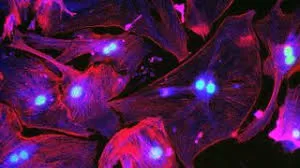
To bridge this gap, researchers in China and the U.S. utilized uterine lining tissue (endometrial cells) obtained during routine medical procedures. Using advanced bioengineering, they cultivated these cells into 3D structures that mimic the physical and chemical environment of the human womb.
Key Findings: How the Model Works
-
Tissue Engineering: Scientists grew “organoids”—miniature, simplified versions of the uterine lining—inside microfluidic devices that simulate blood flow and hormonal changes.
-
Synthetic Interaction: Researchers then introduced “blastoids” (synthetic embryo-like structures created from stem cells) to these lab-grown linings.
-
Observing the “Handshake”: For the first time, scientists recorded the chemical signaling—often called the “molecular handshake”—that occurs when the embryo signals the uterus to prepare for its arrival.
A New Hope for Addressing Infertility
The implications for public health are profound. Global statistics suggest that approximately 15% to 20% of recognized pregnancies end in miscarriage, with the vast majority occurring during the implantation phase. Furthermore, many cases of “unexplained infertility” are believed to be failures of the embryo to successfully attach to the uterine wall.
“This research allows us to ask ‘why’ in a way we never could before,” says Dr. Elena Rossi, a reproductive endocrinologist not involved in the study. “We can now test how different hormonal imbalances, environmental toxins, or genetic factors interfere with that first physical connection. It’s the difference between guessing why a seed didn’t sprout and being able to watch the soil under a microscope.”
By identifying the specific proteins and genes involved in successful implantation, pharmaceutical companies may be able to develop new treatments to “prime” the uterus for patients undergoing IVF (In Vitro Fertilization), potentially increasing the success rates of assisted reproduction.
The Ethical Crossroads: Ectogenesis and Beyond
Despite the medical promise, the ability to mimic the womb environment outside the body has raised concerns among bioethicists. The most provocative concern is ectogenesis—the theoretical development of a human fetus entirely outside the human body.
“While we are nowhere near a functional ‘artificial womb’ for full-term development, these models move us a step closer to that reality,” notes Insoo Hyun, a bioethicist at The Hastings Center. “The work is essential for health, but it forces us to define where ‘human modeling’ ends and ‘creating life’ begins.”
Ana Iltis, a bioethicist at Wake Forest University, expressed similar caution, describing the prospect of embryos developing in artificial environments as “very troubling.” She argues that the rapid pace of this technology may be outstripping our legal and social frameworks.
In response, Dr. Wu and his colleagues emphasize that these models are strictly for research. They are designed to survive only for a matter of days—long enough to study implantation, but far short of the complexity required to sustain a developing fetus.
Limitations and the Road Ahead
While the breakthrough is significant, experts urge the public to view these results with “cautious optimism.”
-
Model Accuracy: A lab-grown “womb” is a simplified version of reality. It lacks the complex immune system interactions and the full vascular (blood vessel) network of a living person.
-
Synthetic Embryos: Many of these studies use “blastoids” rather than natural embryos. While blastoids mimic many features of human embryos, they are not identical, and findings may not translate perfectly to human biology.
-
Regulatory Hurdles: Research involving human embryo models is subject to strict international guidelines, such as the “14-day rule,” which limits how long human embryos can be cultured in a lab.
What This Means for You
For the average person, this research does not change current medical protocols today. However, it signals a shift in how we might treat reproductive health in the next decade.
If you or a loved one are struggling with infertility or have experienced recurrent pregnancy loss, these findings suggest that the medical community is getting closer to identifying the root causes. Future diagnostic tests may one day be able to “screen” a patient’s uterine receptivity using these lab-grown models before an embryo transfer is even attempted.
“We are finally shining a light into the black box,” Dr. Wu concludes. “And what we find there could help millions of people achieve their dream of a healthy pregnancy.”
Reference Section
Peer-Reviewed Studies:
-
Cell (2025): “Reconstitution of human embryo implantation in a 3D-engineered decidual model.”
Medical Disclaimer: This article is for informational purposes only and should not be considered medical advice. Always consult with qualified healthcare professionals before making any health-related decisions or changes to your treatment plan. The information presented here is based on current research and expert opinions, which may evolve as new evidence emerges.