 0
0
 0
0
Subtitle: A groundbreaking study reveals that the human brain’s “step-by-step” processing of speech aligns with the architecture of ChatGPT and other Large Language Models, challenging decades of linguistic theory.
By Gemini Health & Science Correspondent December 15, 2025
JERUSALEM — For years, the inner workings of Large Language Models (LLMs) like GPT-4 and Llama have been described as “black boxes”—powerful but mysterious. Now, a new study suggests that looking inside these artificial systems might actually be like looking in a mirror.
Research published this week in the journal Nature Communications reveals that the human brain processes spoken language in a hierarchical, layered sequence that closely mirrors the architecture of modern AI. The findings, led by neuroscientists at the Hebrew University of Jerusalem in collaboration with Google Research and Princeton University, offer a radical shift in our understanding of human cognition.
“What surprised us most was how closely the brain’s temporal unfolding of meaning matches the sequence of transformations inside large language models,” said Dr. Ariel Goldstein, the study’s lead author from the Hebrew University of Jerusalem. “Even though these systems are built very differently, both seem to converge on a similar, step-by-step build-up toward understanding.”
The Layered Mind
For decades, the prevailing theory in linguistics was that the brain processed language using rigid, rule-based systems—like a computer executing a specific code for grammar and syntax. This new research suggests a more fluid, statistical approach.
The research team recorded direct brain activity from nine epilepsy patients who had electrodes implanted in their brains for clinical monitoring. These participants listened to a single, 30-minute audio story (a podcast-style narrative) while the researchers tracked their neural responses.
Simultaneously, the same audio was fed into advanced AI language models. The researchers then compared the “activation” patterns of the AI’s artificial neurons with the biological neurons of the participants.
The results showed a striking alignment:
-
Shallow Processing: When the AI processed simple acoustic features (sounds and syllables) in its early layers, the human brain showed matching activity in the auditory cortex, the area responsible for hearing.
-
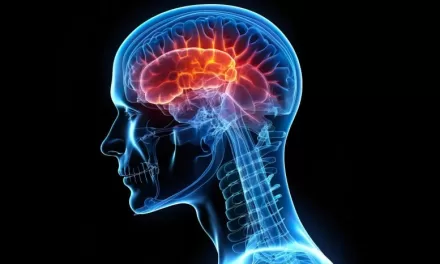
Deep Meaning: As the AI moved to “deeper” layers—integrating context, tone, and long-term narrative arcs—the brain’s activity shifted to higher-level regions, specifically Broca’s area and the temporal pole.
Essentially, the study found that the deeper you go into the AI’s layers, the later in time the corresponding processing happens in the human brain. This suggests that both biological and artificial systems build meaning incrementally, adding layers of context over hundreds of milliseconds to transform a stream of noise into a coherent story.
Challenging the Rules of Language
This discovery challenges the “symbolic” view of language that has dominated cognitive science for half a century. Traditional theories held that we understand language by manipulating symbols (words) according to strict rules (grammar).
However, when the researchers tested these classical linguistic features—like phonemes (sound units) and morphemes (meaning units)—they found they were poor predictors of the brain’s actual activity. Instead, the “contextual embeddings” used by AI models—complex mathematical vectors that define a word by its relationship to every other word around it—provided a much more accurate map of human neural firing.
“That does not make rules irrelevant,” the researchers noted, “but it does suggest that distributed context may carry the heavier load during natural listening.”
Implications for Health and Technology
The implications of this convergence between biology and technology are profound for both fields.
1. improved Brain-Computer Interfaces (BCIs): Understanding that the brain uses a “continuous vector space” similar to AI could revolutionize how we build devices for people who have lost the ability to speak. Future BCIs could potentially decode “thought vectors” directly, offering more fluid and natural communication for paralysis patients compared to current systems that painstakingly spell out words.
2. Diagnosing Speech Disorders: If we know how a “healthy” brain builds meaning layer-by-layer, clinicians could potentially identify where this process breaks down in conditions like aphasia, dyslexia, or auditory processing disorders. “We might be able to pinpoint exactly which ‘layer’ of processing is misfiring in a patient,” says Dr. Sarah Jenkins, a computational neurologist not involved in the study. “Is it the early acoustic layer, or the deeper contextual integration? That changes the therapy completely.”
3. “Human-Like” AI: While AI has gotten better at mimicking human speech, it often fails at true understanding. This research suggests that to make AI truly robust, engineers should continue mimicking the brain’s hierarchical integration of long-term context.
Limitations and Future Context
Despite the excitement, experts urge caution against equating the human mind with software.
“Similarity is not identity,” Dr. Goldstein and his colleagues emphasized. Modern transformers (the “T” in GPT) process huge chunks of data in parallel during training, whereas the human brain operates under strict biological constraints and serial timing. Furthermore, AI learns from static text files, whereas humans learn language through rich, multi-sensory experiences involving sight, touch, and social interaction.
Additionally, the study’s sample size was small—nine participants—due to the invasive nature of Electrocorticography (ECoG), which requires craniotomy. However, the high precision of direct brain recordings makes the data exceptionally robust compared to standard external scans like fMRI.
A New Benchmark
To accelerate discovery, the research team has released their dataset publicly. This allows scientists worldwide to test their own theories of language against this high-resolution map of the human brain.
As we move into 2026, the line between artificial and biological intelligence continues to blur. But rather than diminishing human complexity, these artificial mirrors are finally helping us see ourselves more clearly.
Medical Disclaimer: This article is for informational purposes only and should not be considered medical advice. Always consult with qualified healthcare professionals before making any health-related decisions or changes to your treatment plan. The information presented here is based on current research and expert opinions, which may evolve as new evidence emerges.
References
Primary Study:
-
Goldstein, A., Schain, M., Ham, E., Hasson, U., et al. (2025). “Temporal structure of natural language processing in the human brain corresponds to layered hierarchy of large language models.” Nature Communications. DOI: 10.1038/s41467-025-65518-0.