 0
0
 0
0
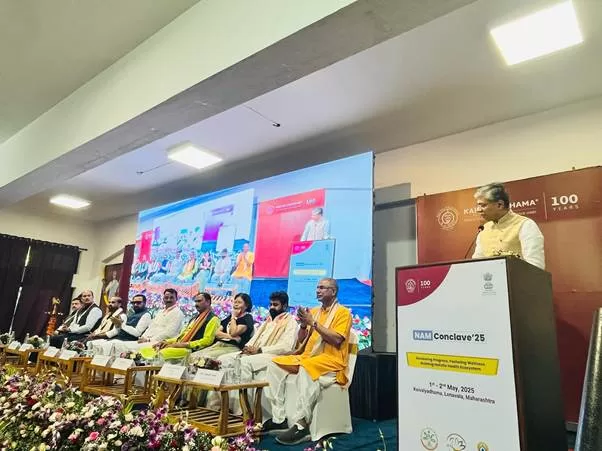
Kaivalyadhama, Lonavala (Maharashtra), May 1, 2025 – The National Ayush Mission (NAM) Conclave 2025 commenced today with dynamic participation from Ayush and Health Ministers representing States and Union Territories, signaling a renewed push to integrate and expand traditional Indian medicine systems across the country. The two-day event, organized by the Ministry of Ayush, Government of India, is being held at the historic Kaivalyadhama in Lonavala and aims to chart a future roadmap for Ayush-based healthcare in India1.
Union Minister of State (Independent Charge) for Ayush and Minister of State, Ministry of Health & Family Welfare, Shri Prataprao Jadhav, inaugurated the conclave alongside key dignitaries, including Dr. Prem Chand Bairwa (Rajasthan), Shri Y. Satya Kumar Yadav (Andhra Pradesh), Dr. Dayashankar Mishra ‘Dayalu’ (Uttar Pradesh), Shri Shyam Bihari Jaiswal (Chhattisgarh), Shri Yadvinder Goma (Himachal Pradesh), Shri G.T. Dhungel (Sikkim), and Smt. Pi Lalrinpuii (Mizoram).
In his address, Shri Jadhav reaffirmed the mission’s core objective: “Our goal is ‘Illness to Wellness’ leading to happiness.” He highlighted the significant impact of Ayushman Arogya Mandir (Ayush), noting that 11.56 crore beneficiaries have availed its services in 2024 alone. The Minister credited the establishment of 12,500 Ayushman Arogya Mandirs for the dramatic rise in healthcare accessibility, with beneficiaries increasing from 1.5 crore in 2021 to over 11.5 crore in 2025. This growth, he emphasized, is underpinned by improved infrastructure, medicine availability, trained manpower, and strengthened educational institutions.
Vaidya Rajesh Kotecha, Secretary, Ministry of Ayush, underscored the sector’s rising prominence, citing the National Sample Survey Office (NSSO) data showing that nearly 95% of rural and 96% of urban Indians are aware of Ayush, with millions regularly practicing Yoga. He noted the National Ayush Mission’s budget increase from ₹78 crore in 2014 to ₹1,275 crore in 2025–26 as a testament to the government’s commitment.
State ministers shared success stories and outlined strategies for further integration. Uttar Pradesh, the world’s most populous state, now boasts 3,959 operational Ayush hospitals, while Himachal Pradesh has developed an integrated model combining traditional knowledge with modern technology, focusing on rural outreach and women’s health. Rajasthan is preparing a comprehensive Ayush policy to foster integrated growth, and Sikkim and Mizoram highlighted the positive impact of Ayush Wellness Centers and NAM support in expanding healthcare delivery.
A major highlight was the release of Standard Treatment Guidelines (STGs) on Metabolic Disorders in Ayush Systems of Medicine, covering diabetes, obesity, gout, non-alcoholic fatty liver disease, and dyslipidemia. Developed in collaboration with research councils and vetted by allopathic experts, the STGs integrate Yoga, dietary protocols, and standardized clinical procedures to serve as a reference for practitioners nationwide.
The session also featured a roundtable discussion among ministers and officials, focusing on strengthening governance, promoting innovation, and ensuring effective grassroots implementation of NAM programs. The day concluded with a special Y-Break session, promoting workplace wellness through Yoga.
About the National Ayush Mission
Launched in 2014, the National Ayush Mission aims to preserve and promote India’s traditional medicine systems by enhancing the availability, accessibility, and quality of Ayush healthcare services nationwide. The mission is a key component of the Government of India’s Ayushman Bharat scheme and has seen major expansions in health and wellness centers, integration with national health programs, and capacity building for practitioners.
Disclaimer
This article is based on official statements and information released by the Ministry of Ayush and participating dignitaries at the National Ayush Mission Conclave 2025. The data and quotes presented reflect the views and statistics provided by event organizers and government representatives as of May 1, 2025.
Citations: