 0
0
 0
0
ISLAMABAD — Pakistan’s ambitious mission to become the last nation alongside Afghanistan to eradicate wild poliovirus has hit a dangerous financial roadblock. Faced with soaring food inflation and a crippling cash crunch, health authorities in Islamabad have implemented drastic budget cuts to the national immunization program, reducing the duration of active vaccination drives and slashing the wages of frontline workers by nearly 50%.
The decision, which comes as environmental samples in cities like Rawalpindi continue to test positive for the virus, has sparked widespread protests among the country’s 350,000-strong polio workforce. Public health experts warn that this fiscal retreat could provide the virus the “breathing room” it needs to resurge, potentially undoing decades of international investment and progress.
A Campaign Cut Short
For years, the standard “National Immunization Days” (NIDs) in Pakistan followed a rigorous seven-day cycle to ensure that every child, including those in remote or mobile populations, was reached. However, citing a severe shortage of funds within the health department, the Tribune Express recently reported that the upcoming campaign starting February 2nd has been truncated to just four days.
This 40% reduction in operational time creates a logistical nightmare for a program that relies on house-to-house visits. “Polio eradication is a game of centimeters,” says Dr. Arshad Mahmood, a public health consultant not involved in the government’s recent fiscal decision. “When you lose three days of a drive, you aren’t just saving money; you are losing the ability to track down ‘missed’ children—those who weren’t home on the first pass or whose parents were hesitant.”
The Human Cost: Slashing the Frontline
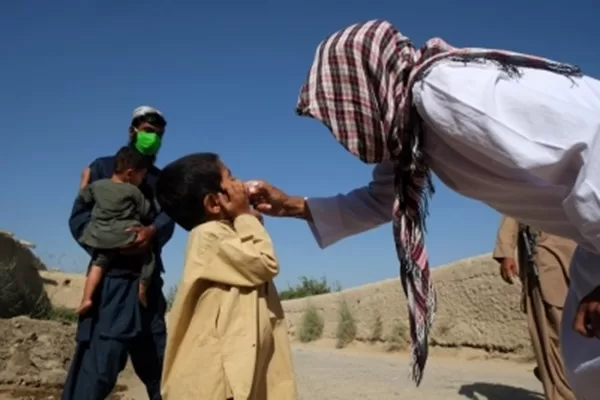
The most controversial element of the austerity measures is the reduction in compensation for the workers who brave extreme heat, difficult terrain, and security threats to deliver the oral polio vaccine (OPV).
| Position | Previous Payment (PKR) | New Payment (PKR) | Percentage Cut |
| Frontline Worker | 13,000 | 7,000 | 46% |
| Area In-Charge | 19,000 | 9,216 | 51% |
| Union Council Medical Officer | 25,000 | 16,000 | 36% |
Female polio workers, who make up the backbone of the program due to their ability to enter conservative households, have launched protests across several provinces. Many have labeled the cuts “unjust,” pointing out that while their wages are being halved, the cost of basic commodities like flour and fuel has more than doubled in the last year.
The Rawalpindi “Fake Success” and Viral Resurgence
The timing of these cuts is particularly precarious. While some district administrations previously claimed to have eliminated polio in urban centers like Rawalpindi, recent environmental surveillance tells a different story.
Analysis of sewage samples—the “gold standard” for detecting the presence of the virus in a community—has revealed a significant viral load in Rawalpindi’s waste management systems. This indicates that the virus is still circulating silently among the population, even if paralytic cases have not yet been reported.
Furthermore, “refusal cases”—where parents decline the vaccine—are on the rise. Interestingly, this trend is no longer confined to rural, under-educated areas. Health officials have noted a spike in refusals in affluent neighborhoods such as Satellite Town and Khayaban-e-Sir Syed.
“The presence of the virus in sewage in a major hub like Rawalpindi is a blinking red light on the dashboard,” explains Sarah Vickers, an epidemiologist specializing in infectious diseases. “It means the immunity gap is widening. When you combine a circulating virus with a demoralized, underpaid workforce and a shorter window to vaccinate, you create the perfect conditions for an outbreak.”
Economic Instability Meets Public Health
Pakistan’s broader socioeconomic crisis is the primary driver of this healthcare retreat. With unemployment rising and the national treasury depleted, the government is struggling to maintain its share of the Global Polio Eradication Initiative (GPEI) funding.
However, the “savings” found by cutting polio workers’ wages may be illusory. The World Health Organization (WHO) has long maintained that the cost of an outbreak far exceeds the cost of prevention. If polio is allowed to re-establish itself in Pakistan’s urban centers, the risk of international spread increases, potentially leading to travel restrictions and further economic isolation for a country already on the brink.
Implications for the Public
For the average Pakistani parent, the message from health authorities remains urgent: The vaccine is safe, and it is the only protection against life-long paralysis. Medical experts emphasize that:
-
The virus does not discriminate: As evidenced by the Rawalpindi samples, the virus is present in both wealthy and poor areas.
-
Multiple doses are vital: Because of high rates of malnutrition and diarrhea in the region, children often need multiple doses of OPV to build full immunity.
-
Worker morale matters: A motivated worker is more likely to spend the time necessary to answer a parent’s questions and overcome hesitancy.
Limitations and Counterarguments
The Pakistani government maintains that these cuts are a temporary necessity necessitated by a “severe financial and economic crisis.” Officials argue that by concentrating resources into a more intensive four-day window, they can maintain “efficiency” while respecting the reality of the empty treasury.
Critics, however, argue that the government should look to trim “extravagance” in administrative sectors rather than targeting the daily-wage workers who are the final line of defense against a global health emergency.
Looking Ahead: The February 2nd Drive
As the next campaign looms, the eyes of the global health community are on Islamabad. The four-day drive starting Monday, February 2nd, will be a litmus test for whether a scaled-back program can still achieve the high coverage rates necessary to interrupt viral transmission.
Without a restoration of worker wages and a return to full-scale operations, the “End Polio” stickers seen on millions of Pakistani doorways may remain a promise unfulfilled.
Medical Disclaimer: This article is for informational purposes only and should not be considered medical advice. Always consult with qualified healthcare professionals before making any health-related decisions or changes to your treatment plan. The information presented here is based on current research and expert opinions, which may evolve as new evidence emerges.
References and Sources
https://tennews.in/cash-crunch-to-cut-short-pakistans-polio-vaccination-campaign/