 0
0
 0
0
Climate and Dengue: What the New Research Reveals
A major new analysis published this month in the Proceedings of the National Academy of Sciences provides the most clear-cut evidence to date that climate change is a significant driver of the global surge in dengue fever cases. Researchers from Stanford and Harvard universities analyzed dengue data spanning 1995–2014 across 21 countries in Asia and the Americas, finding that rising temperatures tied to climate change contributed to 18% of dengue cases during this period—an average of more than 4.6 million additional infections each year.
Study Key Findings
-
The study isolates temperature increases as a separate factor—distinct from changes due to urbanization, population growth, or land use—in boosting dengue transmission.
-
Projections warn that, if warming continues without aggressive mitigation, dengue cases could climb an additional 49–76% in the studied areas by 2050.
-
Incidence could more than double in many cooler regions, placing over 260 million people at increased risk.
-
These estimates are likely conservative, as the analysis did not include countries like India and regions of Africa due to limitations in reliable data, and where the burden of dengue is already high.
Dengue on the Rise: Global and Indian Context
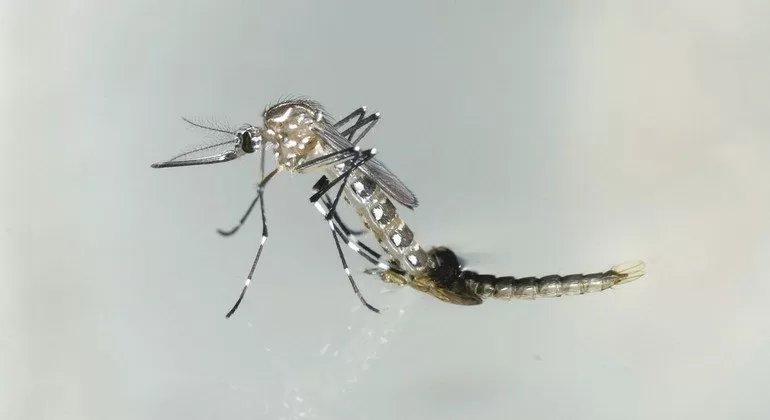
Dengue, a mosquito-borne viral disease, has become the world’s most widespread vector-borne infection. Cases globally have skyrocketed, from roughly 500,000 reported in 2000 to more than 14 million in 2024, with India responsible for nearly a third of all infections.
Climatic drivers such as higher temperatures, increased rainfall, and humidity create ideal conditions for the Aedes mosquitoes that transmit dengue. In India, detailed modelling for hotspots like Pune highlights how moderate, consistently spread rainfall and average temperatures in the range of 27°C–35°C elevate dengue risk, while extremes (like heavy rains) can temporarily suppress outbreaks by disrupting mosquito breeding.
Perspectives from the Experts
Dr. Erin Mordecai, senior author and infectious disease ecologist at Stanford University, emphasized the study’s ability to quantify climate change’s effect on dengue burden: “This is not just hypothetical future change but a large amount of human suffering that has already happened because of warming-driven dengue transmission”.
Dr. Marissa Childs, assistant professor of environmental health at the University of Washington and lead author, noted, “Even small shifts in temperature can have a big impact on dengue transmission, and we’re already seeing the fingerprint of climate warming”.
Dr. Amita Jain, infectious disease expert at King George’s Medical University (not involved in the study), commented in a recent interview: “These findings reinforce the need to integrate climate monitoring into dengue early warning systems, especially as we see unseasonal cases in new regions.”
Implications for Public Health
The exponential rise of dengue—with projections of up to 76% more cases by 2050—poses significant challenges for health systems worldwide. Key takeaways for policymakers and the public include:
-
Vector control remains the cornerstone of dengue prevention. Protecting oneself against mosquito bites and reducing breeding sites are essential actions.
-
Climate adaptation strategies must be embedded in public health planning. Surveillance, community education, and robust health infrastructure are crucial as case numbers and geographic spread rise.
-
International collaboration and climate action can moderate future risks. Sharp cuts in greenhouse gas emissions could reduce the projected rise in cases from up to 76% to about 49% by 2050.
-
Vaccines are available but are not universally accessible or suitable for all populations. Continued research and targeted vaccination campaigns will be important as dengue risk expands.
What It Means for People: Everyday Actions
For the general public, especially those in dengue-prone areas or regions experiencing warmer, wetter climates:
-
Use mosquito repellents containing DEET or Picaridin.
-
Wear clothing that covers the body, use mosquito nets, and install window screens.
-
Regularly remove standing water from around the home to eliminate mosquito breeding grounds.
-
Stay informed during outbreak seasons and seek medical attention for severe symptoms such as persistent fever, abdominal pain, or bleeding.
Study Limitations and Counterpoints
While the link between climate and dengue is robust, experts caution:
-
The study’s projections may underestimate the risk for regions like India and Africa due to limited or inconsistent reporting data.
-
Socioeconomic factors, urbanization, changes in mosquito behavior, and virus evolution can also influence outbreaks and may interact with climate in complex ways.
-
Effective adaptation measures—such as early warning systems, improved urban planning, and widespread vaccination—can help blunt future increases in dengue, even as the climate changes.
References
- https://health.economictimes.indiatimes.com/news/industry/18-pc-of-dengue-cases-in-asia-americas-during-1995-2014-linked-to-climate-change-study/123809575?utm_source=top_story&utm_medium=homepage
Medical Disclaimer
Medical Disclaimer: This article is for informational purposes only and should not be considered medical advice. Always consult with qualified healthcare professionals before making any health-related decisions or changes to your treatment plan. The information presented here is based on current research and expert opinions, which may evolve as new evidence emerges.