 0
0
 0
0
Beijing, January 28, 2026 — Chinese public health authorities have confirmed that no human cases of Nipah virus infection have been detected in China, as neighboring India grapples with a fresh cluster of infections in West Bengal. Officials from the National Disease Control and Prevention Administration (NDPA) say the immediate risk to China remains low but warn there is a potential for imported cases during the Lunar New Year travel surge.
The reassurance comes amid rising online concern in Chinese social‑media circles, where references to the virus have trended ahead of the Spring Festival, one of the world’s largest annual travel peaks. Yet infectious‑disease experts stress that, while Nipah is serious, it does not transmit as efficiently as respiratory viruses such as influenza or SARS‑CoV‑2, reducing the likelihood of widespread outbreaks under existing control measures.
What’s happening in India and why China is watching
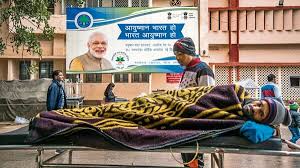
Indian authorities reported at least five confirmed Nipah infections in West Bengal, with around 100 close contacts placed under quarantine. The virus has a historically high fatality rate of roughly 45–75%, though the exact figure varies by outbreak setting and supportive‑care capacity. Past experience from outbreaks in Malaysia, Bangladesh, and southern India shows that human–human transmission—if it occurs—usually happens through close contact with infected people’s bodily fluids or contaminated environments, rather than via casual environmental exposure.
China’s NDPA notes that West Bengal does not share a direct land border with China, which adds geographic distance to its risk‑reduction calculus. Still, with the 40‑day Lunar New Year “chunyun” travel period on the horizon—when billions of passenger journeys are anticipated nationwide—health officials are treating Nipah as a high‑priority monitored pathogen, even in the absence of domestic cases.
Why Nipah virus triggers alarm, but not panic
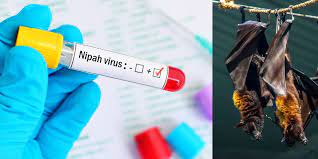
Nipah is an emerging zoonotic virus, meaning it jumps from animals to humans. Fruit bats of the Pteropus genus are the natural reservoir, while domestic animals such as pigs and horses can act as intermediate hosts in some outbreaks. Humans usually become infected through:
-
Direct contact with infected animals or their secretions,
-
Consuming contaminated food (for example, raw date‑palm sap contaminated by bat urine or saliva), or
-
Close contact with an infected person’s respiratory droplets, urine, or other bodily fluids.
Clinical illness ranges from asymptomatic or mild flu‑like symptoms to severe respiratory disease and encephalitis (brain inflammation). In the most serious forms, patients may rapidly progress to confusion, seizures, coma, and death, typically within days to weeks. The absence of licensed vaccines and approved targeted antiviral treatments at present amplifies concern among clinicians and public‑health planners, even though supportive care in intensive‑care settings improves survival.
Nonetheless, medical experts repeatedly highlight that Nipah’s transmissibility is relatively low compared with respiratory viruses like measles or SARS‑CoV‑2. In prior outbreaks, most transmission occurred within households or healthcare settings rather than in the general community. Chinese virologists have also pointed out that Nipah does not survive well in the environment outside a host, which further limits everyday exposure for the general population.
China’s preparedness beyond the “no cases” headline
Despite the reassuring “no detected cases” message, Chinese authorities emphasize that preparedness has been in place for years. Since 2021, the country has operated under technical guidelines for Nipah virus prevention and control, standardizing monitoring, reporting, lab diagnostics, clinical case management, and disinfection protocols. These cover everything from early‑case detection to isolation and contact tracing, mirroring lessons absorbed from prior outbreaks elsewhere.
China has also developed domestic nucleic‑acid testing methods for Nipah and maintains emergency diagnostic‑kit reserves, ensuring local CDC laboratories nationwide can rapidly confirm suspected infections. Public‑health leaders have moved to include Nipah in recently updated border‑health and quarantine regulations, enabling health inspectors to screen arriving travellers from high‑risk regions and trigger containment steps if needed.
Practical implications for the public
For the average person in China—or in other neighboring countries not exposed to an active H0 cluster—expert messaging is relatively straightforward: the everyday risk is currently low, but basic hygiene and vigilance matter. Health authorities advise:
-
Travelers to affected regions (such as areas in India with active Nipah transmission) to:
-
Avoid contact with livestock, bats, or unknown animals,
-
Refrain from eating fresh raw date‑palm sap or fruits that may have been exposed to bats,
-
Practice frequent hand washing, mask use in crowded settings, and good respiratory etiquette.
-
-
For healthcare workers, hospitals, and clinics, authorities recommend:
-
Strict infection‑prevention and control practices for any patient with unexplained severe respiratory or neurological illness, especially if there is a relevant travel or animal‑contact history.
-
-
For anyone who feels unwell after returning from a region with ongoing Nipah activity—particularly if fever, difficulty breathing, confusion, or altered consciousness appears—it is important to seek medical care promptly and disclose travel history so clinicians can test and isolate appropriately.
Global context and research developments
China’s cautious posture mirrors a broader global concern about high‑consequence, low‑transmissibility viruses, which can cause concentrated death and disruption unless quickly contained. The World Health Organization (WHO) classifies Nipah as a “high‑priority” emerging pathogen due to its epidemic potential and lack of targeted vaccines or antivirals.
Within this framework, some Chinese and international researchers are exploring existing antiviral drugs as possible tools against Nipah. One domestically developed oral antiviral drug, initially approved for treating COVID‑19, has shown significant in vitro antiviral activity against Nipah virus in preclinical studies and is being evaluated as a possible candidate for further clinical investigation. However, health officials stress that this does not yet constitute an approved therapy, and more rigorous trials are required before any such agent would be used in routine clinical care.
Limitations and what the public should be cautious about
While China’s current stance is reassuring, scientists caution against complacency for several reasons. First, Nipah’s behavior can vary between geographic settings; outbreak dynamics, animal‑host ecology, and human‑care practices in one country may not perfectly predict what happens elsewhere. Second, most data come from sporadic, small‑scale clusters rather than large, sustained epidemics, which limits the precision of fatality estimates and transmission‑risk predictions.
At the same time, experts warn that viral evolution or changes in animal‑host distribution could alter transmissibility and geographic spread over time. Public‑health messaging must therefore balance transparent risk communication with avoidance of fear‑based narratives, particularly on social media where images of “bat‑borne brain‑eating virus”‑type framing can distort scientific nuance.
Conclusion: A measured approach for a high‑stakes virus
For now, China’s situation can be summarized in two parts: there have been no reported Nipah cases domestically, but authorities are treating the pathogen as a priority threat and have fortified surveillance, diagnostics, and cross‑border safeguards. For the public, especially in countries far removed from current outbreak zones, the practical takeaway is vigilance without anxiety: routine hygiene, responsible travel‑related behaviors, and prompt healthcare‑seeking if symptoms align with unusual neurological or respiratory illness.
As research and surveillance networks grow, public‑health systems worldwide—including India, China, and their neighbors—are better positioned not only to detect Nipah early but also to prevent localized clusters from snowballing into wider crises, even as the scientific community continues the search for definitive treatments and vaccines.
Medical Disclaimer
Medical Disclaimer: This article is for informational purposes only and should not be considered medical advice. Always consult with qualified healthcare professionals before making any health‑related decisions or changes to your treatment plan. The information presented here is based on current research and expert opinions, which may evolve as new evidence emerges.
References
-
Reuters. “No Nipah virus cases detected in China, state media says.” Reuters Business – Healthcare & Pharmaceuticals, 27 January 2026.d2391.cms.socastsrm+1