 0
0
 0
0
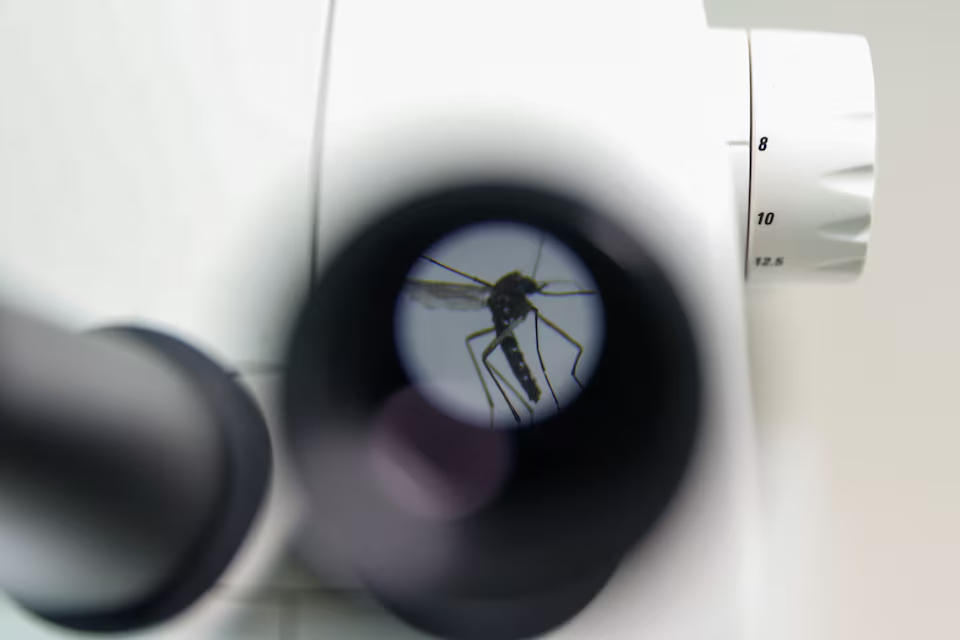
Beijing, 16 August 2025 — China is facing its largest-ever chikungunya outbreak, reporting more than 8,000 cases in Guangdong Province since June 2025. The epicentre is Foshan City, but infections are spreading to nearby regions, including Hong Kong and Macao. While authorities report all cases as mild so far—with no deaths—the sheer number of infections has triggered swift and robust containment efforts.
Aggressive Containment Strategies
To stop the mosquito-borne virus from spreading further, Chinese authorities are combining traditional and modern methods:
-
Drones are being used to identify and map sources of standing water—prime mosquito breeding grounds.
-
Fines are imposed on households that fail to clear stagnant water from their premises.
-
Thousands of larvae-eating fish have been released into ponds and reservoirs to naturally reduce mosquito populations.
-
Community isolation protocols are enforced for those testing positive to minimize human-to-mosquito transmission cycles.
These rapid controls come as a response to the significant threat chikungunya poses, especially in a warm, humid, and densely populated region like Guangdong.
Global and Regional Context
Worldwide, chikungunya is on the rise. The European Centre for Disease Control and Prevention (ECDC) reports that 240,000 cases and 90 deaths spanned 16 countries by July 2025, tracking closely with 2024’s totals at this point in the year. Previously, most cases concentrated in South America.
Chikungunya causes high fever and incapacitating joint pain, typically resolving in a week. However, severe, prolonged symptoms can persist for months, especially in vulnerable groups—infants, the elderly, and those with weakened immune systems.
Dr. Doris Kemunto Nyamwaya, an epidemiologist at the London School of Hygiene and Tropical Medicine, points to climate change, urbanization, and increased travel as factors enabling mosquito-borne diseases to breach traditional geographic barriers. In China, these patterns have allowed the typically non-endemic virus to find favorable conditions for local transmission.
Travel Advisories and Rising Vigilance
With global travel contributing to chikungunya’s spread, health authorities abroad are on alert. The US Centers for Disease Control and Prevention (CDC) has issued a Level 2 travel advisory for Guangdong, urging travelers to take enhanced precautions, such as using mosquito repellents and avoiding areas with standing water.
Notably, even countries like the UK are feeling the ripple effects: imported cases between January and June 2025 have nearly tripled compared to the same period last year.
Vaccine Progress and Ongoing Challenges
Several chikungunya vaccines have been developed. Bavarian Nordic’s and Valneva’s single-dose vaccine, IXCHIQ, offer up to five years of protection and are authorized in the US, EU, and UK. However, these vaccines remain “travel jabs” for now; the World Health Organization has yet to fully prequalify a vaccine for outbreak use in wider populations.
Experts stress that existing vaccines require more study across different viral genotypes and population subgroups. Different genotypes—like the East/Central/South African (ECSA) strain—can cause more severe disease, highlighting the urgency for broader vaccine evaluation.
Disclaimer: This article is for informational purposes. Readers should consult official health resources or medical professionals for the latest travel advisories, vaccine information, or details about the current chikungunya outbreak.
Reference: Gavi, the Vaccine Alliance. “Larvae-eating fish and anti-mosquito drones: China battles largest-ever chikungunya outbreak”.