 0
0
 0
0
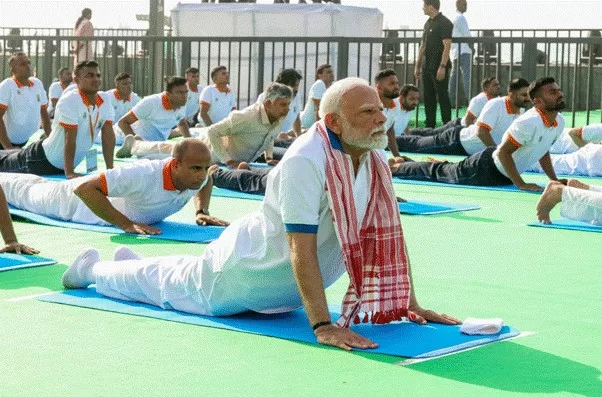
THIRUVANANTHAPURAM – In a landmark address marking a century of service at the Arya Vaidya Sala Charitable Hospital, Prime Minister Narendra Modi underscored a pivotal shift in the global medical landscape: the transition from viewing traditional medicine as an isolated relic of the past to embracing it as a cornerstone of holistic, evidence-based preventive health.
Speaking via video message on Wednesday, the Prime Minister framed Ayurveda not merely as a system of medicine, but as a “way to understand life” that emphasizes harmony with nature—a philosophy increasingly backed by modern efforts to integrate Ancient Wisdom with Artificial Intelligence (AI).
A Century of Healing: The Legacy of Arya Vaidya Sala
The occasion celebrated the 100th anniversary of the Arya Vaidya Sala (AVS) Charitable Hospital and the 125-year journey of the parent institution founded by Vaidyaratnam P.S. Varier. Based in Kottakkal, Kerala, the institution has become a global beacon for Ayurvedic practice, currently manufacturing over 600 traditional medicines and treating patients from more than 60 countries.
“Ayurveda in India has never been limited to any single period or region,” PM Modi stated. “Across ages, it has guided people to achieve balance. This institution is a living symbol of that ancient healing tradition.”
For healthcare professionals, the longevity of AVS represents more than just tradition; it represents a massive, longitudinal dataset of patient outcomes. The Prime Minister praised the institution for its rigorous approach to validating traditional treatments through scientific collaboration with bodies like the Council of Scientific and Industrial Research (CSIR) and the Indian Institutes of Technology (IIT).
From Tradition to Tech: The Integration of AI
One of the most significant takeaways for the medical community was the Prime Minister’s call to modernize Ayurveda through cutting-edge technology.
“We must adapt to the changing times and increase the use of modern technology and AI in Ayurveda,” Modi urged. The vision includes using AI for:
-
Predictive Diagnostics: Analyzing “Prakriti” (individual constitution) through data patterns to predict disease susceptibility.
-
Precision Treatment: Tailoring herbal formulations based on genomic and phenotypic data.
-
Standardization: Using machine learning to ensure the consistency and safety of herbal extracts.
Independent experts note that this technological leap is essential for Ayurveda’s global acceptance. “The challenge has always been the ‘standardization of the cure,'” says Dr. Arathi Varma, a public health researcher not affiliated with the government. “Integrating AI allows us to bridge the gap between subjective traditional diagnosis and the objective data required by modern clinical protocols.”
The Economics of Wellness: A Growing Global Market
The Prime Minister highlighted a dramatic shift in the “Ayush” (Ayurveda, Yoga, Unani, Siddha, and Homeopathy) sector over the last decade. Since the establishment of the Ministry of Ayush in 2014, the sector has seen exponential growth:
| Metric | 2014 | Current (2025/26) |
| Ayush Exports | ₹3,000 Crore | ₹6,500 Crore |
| Wellness Centres | Negligible | 12,000+ |
| Global Presence | Limited | WHO Global Traditional Medicine Centre (Jamnagar) |
This growth is supported by initiatives like the Ayush Visa, designed to facilitate Medical Value Travel for international patients seeking traditional treatments in India. Furthermore, recent trade agreements with the European Union have opened doors for Indian practitioners to offer services in Europe, provided they meet specific qualification standards.
Public Health Implications: The Preventive Shift
For the general consumer, the Prime Minister’s message reinforces a “preventive-first” healthcare model. The National Ayush Mission has integrated over 12,000 wellness centers into the national healthcare grid, focusing on yoga and lifestyle interventions to manage the rising tide of non-communicable diseases (NCDs) like diabetes and hypertension.
However, medical professionals urge a balanced approach. While Ayurveda excels in preventive care and chronic lifestyle management, acute emergencies and infectious diseases often require the immediate intervention of allopathic (Western) medicine. The Prime Minister acknowledged this by advocating for a holistic approach where Ayush services are linked with mainstream hospitals to ensure comprehensive care.
Addressing the “Evidence Gap”
Historically, the primary criticism of Ayurveda from the scientific community has been the lack of large-scale, double-blind clinical trials. PM Modi addressed this candidly, noting that “efforts have often been needed to explain its value due to limited evidence-based research.”
To combat this, the government has supported a Centre of Excellence for Cancer Research at AVS. By focusing on supportive care in oncology—such as reducing the side effects of chemotherapy and improving the quality of life for terminal patients—Ayurveda is finding its place in “integrative oncology,” a field gaining traction in major medical centers globally, including the Mayo Clinic and Memorial Sloan Kettering.
Potential Limitations
Critics often point out that the “herbal” tag does not automatically mean “safe.” Issues such as heavy metal contamination in poorly regulated products remain a concern. The Prime Minister’s emphasis on “systematizing treatments” at institutions like AVS is seen as a direct response to these safety concerns, pushing for stricter quality control across the industry.
What This Means for You
For the health-conscious reader, the evolution of Ayurveda offers more tools for personal health management, but with a caveat: Consultation is key.
-
Seek Certified Practitioners: Look for “Vaidyas” or doctors with recognized institutional backing.
-
Integrate, Don’t Replace: Use Ayurvedic lifestyle changes (like Dinacharya or daily routines) alongside your current medical treatments, not instead of them.
-
Demand Transparency: Ensure the Ayurvedic supplements you use are batch-tested and certified by regulatory bodies.
As the WHO establishes its Global Traditional Medicine Centre in Gujarat, the eyes of the medical world are on India. The goal is no longer to choose between the ancient and the modern, but to create a unified healthcare system that uses the best of both worlds to achieve what PM Modi described as “harmony with nature.”
Medical Disclaimer: This article is for informational purposes only and should not be considered medical advice. Always consult with qualified healthcare professionals before making any health-related decisions or changes to your treatment plan. The information presented here is based on current research and expert opinions, which may evolve as new evidence emerges.
References & Sources
https://tennews.in/ayurveda-shows-us-way-to-understand-life-achieve-balance-and-live-in-harmony-with-nature-pm-modi/