 0
0
 0
0
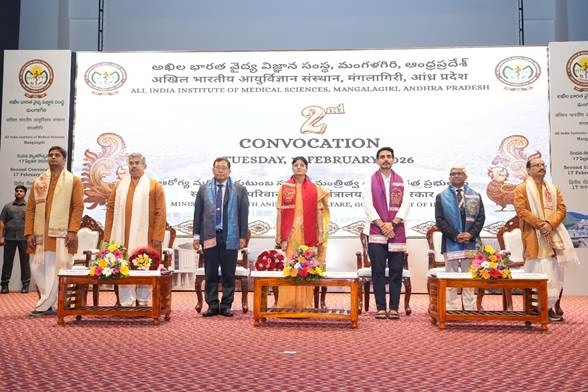
MANGALAGIRI, ANDHRA PRADESH – In a ceremony marking both a personal milestone for young clinicians and a strategic pivot for national health policy, Union Minister of State for Health and Family Welfare, Smt. Anupriya Patel, addressed the 2nd Convocation of the All India Institute of Medical Sciences (AIIMS), Mangalagiri, on February 17, 2026.
The event, which saw the conferring of degrees upon 49 MBBS, five MD/MS, and four Post-Doctoral Certificate Course (PDCC) students, served as a platform to highlight India’s aggressive expansion of medical infrastructure and its emerging “integrative” model of care—blending cutting-edge Artificial Intelligence (AI) with traditional medical systems.
A Decade of Infrastructure Transformation
The central theme of the Minister’s address was the “unprecedented” scale of growth in India’s medical education sector over the last 12 years. Patel provided a statistical roadmap of this expansion, noting that the number of medical colleges in India has surged from 387 in 2014 to 818 today. Perhaps more strikingly, the number of AIIMS institutions—the country’s premier tertiary care centers—has tripled from 7 to 22.
“Healthcare in India is transitioning from being a privilege to becoming a fundamental right,” Patel stated, noting a 9% increase in healthcare expenditure in the latest Union Budget. This aligns with the National Health Policy 2017, which aims to increase public health spending to 2.5% of the nation’s GDP to reduce out-of-pocket expenses—a primary cause of poverty in many Indian households.
Key Infrastructure Stats at a Glance:
| Category | 2014 Status | 2026 Status |
| Medical Colleges | 387 | 818 |
| AIIMS Institutions | 7 | 22 |
| Ayushman Arogya Mandirs | N/A | 1.80 Lakh+ |
The Rise of the “Integrative” Healthcare Model
One of the most significant shifts discussed was the move toward Integrative Medicine. This approach combines modern Western medicine with traditional AYUSH (Ayurveda, Yoga, Naturopathy, Unani, Siddha, and Homeopathy) systems.
Patel informed the audience that dedicated integrative units are now operational across AIIMS institutions, including Mangalagiri. The goal is to enhance patient outcomes and lower costs by focusing on preventive health and holistic wellness.
Experts in public health suggest that while this model offers a broader toolkit for chronic disease management, the challenge remains in standardizing protocols. “The integration of traditional systems into tertiary care is a bold move toward universal health coverage,” says Dr. Arisudan Kumar, a public health consultant (not affiliated with the research). “However, the success of this model depends on rigorous, evidence-based validation of combined therapies to ensure patient safety and efficacy.”
AI: An Assistive Force, Not a Replacement
Addressing the rapid integration of technology, Patel underscored the role of Artificial Intelligence (AI) as a “powerful enabler” rather than a threat to the medical profession.
“AI is an assistive force that strengthens doctors, not replaces them,” she emphasized. She cited the success of AI-powered tools in India’s National Tuberculosis Elimination Program, which utilizes:
-
Handheld X-ray devices for remote screening.
-
Cough-based diagnostic solutions (using acoustic AI).
-
Predictive analytics to identify potential outbreak hotspots.
By utilizing genomic surveillance and real-time monitoring, the ministry aims to transform disease surveillance into a proactive rather than reactive system.
Financial Protections and Grassroots Access
The Minister also highlighted the Ayushman Bharat-Pradhan Mantri Jan Arogya Yojana (PM-JAY), describing it as the world’s largest health assurance scheme. The program provides an annual cover of ₹5 lakh per family to approximately 62 crore (620 million) beneficiaries.
For the graduates at AIIMS Mangalagiri, this means practicing in an environment where financial barriers to surgery and specialized treatment are increasingly being dismantled. Shri Nara Lokesh, Andhra Pradesh’s Minister for IT and Human Resources, noted that AIIMS Mangalagiri itself has evolved into a 650-bed super-specialty hub capable of robotic surgery and organ transplantation, symbolizing this shift in accessibility.
The Human Element in a Digital Age
Despite the focus on AI and infrastructure, the convocation speakers returned repeatedly to the “healing power of the human touch.”
Patel urged the new doctors to prioritize their own mental and physical well-being, acknowledging the high burnout rates in the profession. “Healthy caregivers are essential for delivering quality healthcare,” she noted—a sentiment echoed by health organizations globally as medical systems face post-pandemic strain.
Shri Nara Lokesh reminded the graduates that while technology will continue to advance, “empathy, humility, and ethical integrity remain the core pillars of medical practice.”
Implications for the Public
For the average citizen, these developments suggest:
-
Increased Availability: More doctors and specialized hospitals mean shorter wait times and less travel for complex procedures.
-
Lower Costs: Programs like PM-JAY and Jan Aushadhi (affordable medicines) are designed to prevent “catastrophic health expenditure.”
-
Modernized Care: Patients can expect more digital health interventions, from teleconsultations to AI-assisted diagnostics, particularly in rural areas.
Limitations and Future Challenges
While the growth in numbers is historic, medical education experts caution that increasing the number of seats must be matched by a proportionate increase in high-quality faculty. Furthermore, the “integrative” model requires ongoing clinical trials to determine how traditional and modern medicines interact biologically.
As these 58 new graduates enter the workforce, they carry the weight of a system in flux—moving from a model of crisis management to one of holistic, technology-driven wellness.
Medical Disclaimer: This article is for informational purposes only and should not be considered medical advice. Always consult with qualified healthcare professionals before making any health-related decisions or changes to your treatment plan. The information presented here is based on current research and expert opinions, which may evolve as new evidence emerges.
References
Institutional Sources:
-
Press Information Bureau (PIB) Delhi: “Union MoS for Health and Family Welfare, Smt. Anupriya Patel Addresses 2nd Convocation of AIIMS Mangalagiri.” (Feb 17, 2026).