 0
0
 0
0
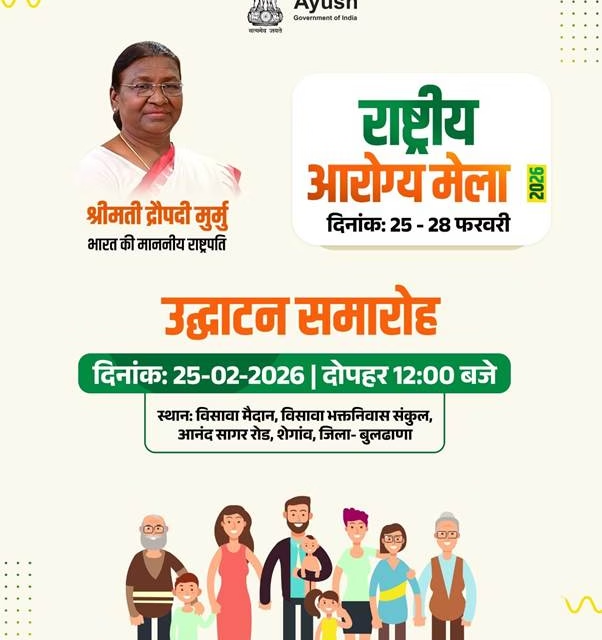
SHEGAON, MAHARASHTRA — In a landmark move to integrate ancient wellness systems with modern rural economics, the President of India, Smt. Droupadi Murmu, is set to inaugurate the National Arogya Fair 2026 today, February 25, at Visava Maidan. The four-day event, running through February 28, represents a strategic pivot by the Ministry of Ayush to transform traditional medicine from a healthcare alternative into a robust engine for public health and farmer prosperity in the Vidarbha region.
The fair, organized in collaboration with the All India Ayurvedic Congress, is expected to draw tens of thousands of visitors, ranging from chronic disease patients seeking holistic consultations to marginal farmers looking for sustainable ways to double their income through medicinal plant cultivation.
A Multi-System Approach to Public Health
The core of the National Arogya Fair is a massive public outreach initiative designed to democratize access to the “Big Six” of Indian traditional medicine: Ayurveda, Yoga & Naturopathy, Unani, Siddha, Sowa-Rigpa, and Homoeopathy.
Unlike standard medical expos, the Shegaon fair offers immediate, tangible health services. Visitors have access to:
-
Free Clinical Consultations: On-site specialists providing personalized health assessments.
-
Diagnostic Support: Free health check-ups and essential medicines.
-
Live Demonstrations: Real-time yoga sessions and therapeutic showcases that translate abstract wellness concepts into actionable habits.
The Global Context: Preventive vs. Curative Care
The National Arogya Fair aligns with a global shift in public health, where the World Health Organization (WHO) and other major bodies are increasingly recognizing the value of traditional medicine in preventive care. For many in rural Maharashtra, this fair acts as a primary healthcare entry point, offering low-cost, high-impact strategies for lifestyle management—especially for non-communicable diseases like diabetes and hypertension.
From Soil to Soul: The Economic Integration of Medicinal Plants
While the first half of the fair focuses on clinical health, the latter half—specifically a high-level session on February 27 at 3:00 PM—will pivot to the economic backbone of traditional medicine: Medicinal Farming.
The session, titled “Ayurvedic Farming: Production, Value Addition and Marketing,” aims to address a critical gap in the Indian healthcare supply chain—the sourcing of high-quality, standardized raw materials.
Why This Matters for Farmers
Buldhana and the surrounding Vidarbha region have long been the epicenter of India’s agrarian distress. By introducing agroforestry practices and medicinal plant cultivation, the Ministry of Ayush is offering farmers a “recession-proof” alternative to conventional cash crops.
“The demand for standardized herbal extracts is skyrocketing globally,” says Dr. Anjali Deshmukh, a rural health economist and independent consultant (not affiliated with the event organizers). “If farmers can shift even 10% of their land to medicinal crops like Ashwagandha or Brahmi, they create a steady income stream that is often less vulnerable to the market volatility seen in cotton or soybean.”
Expert Commentary and Strategic Importance
Union Minister of Ayush, Shri Prataprao Jadhav, has been vocal about the fair’s dual mission. By inviting self-help groups (SHGs) and the youth, the government is signaling that traditional medicine is not just about “old ways,” but about modern biotechnology and supply chain management.
However, some public health experts caution against viewing traditional medicine as a “cure-all.” Dr. Sanjay Gupta, a public health researcher based in Pune, emphasizes the need for an integrated approach. “Events like the National Arogya Fair are vital for health literacy, but they must work in tandem with the primary health centers (PHCs). The goal should be an ‘Integrative Medicine’ model where Ayush and Allopathy complement each other for the patient’s benefit.”
What This Means for the Reader
For the health-conscious consumer, the National Arogya Fair provides a rare opportunity to engage directly with institutionalized traditional medicine, bypassing the “quackery” often found on social media. For healthcare professionals, it serves as a massive peer-learning platform to understand the standardized protocols being developed in the Ayush sector.
Key Takeaways for Attendees:
-
Evidence-Based Wellness: Learn about the clinical research backing traditional therapies.
-
Preventive Tools: Discover yoga and dietary protocols tailored to specific constitutional types (Prakriti).
-
Economic Opportunity: For those in agriculture, the fair provides a direct roadmap for entering the lucrative medicinal plant market.
Potential Limitations and Challenges
Despite the enthusiasm, the scale-up of medicinal farming faces hurdles. Standardization remains a challenge—medicinal plants must meet strict chemical marker profiles to be effective in pharmaceuticals. Furthermore, while the fair provides free initial consultations, the long-term integration of these services into the broader national health insurance schemes (like Ayushman Bharat) remains an ongoing policy discussion.
Looking Ahead
As Shegaon prepares for the presidential visit, the National Arogya Fair 2026 stands as more than just a local event. It is a microcosm of India’s larger strategy: utilizing its cultural heritage to solve modern-day problems of health accessibility and rural poverty.
Whether you are a patient seeking relief or a farmer seeking a new beginning, the message from Shegaon is clear: Holistic health is the foundation of national prosperity.
Medical Disclaimer: This article is for informational purposes only and should not be considered medical advice. Always consult with qualified healthcare professionals before making any health-related decisions or changes to your treatment plan. The information presented here is based on current research and expert opinions, which may evolve as new evidence emerges.
References and Sources
Official Statements:
-
Press Information Bureau (PIB) Delhi, Ministry of Ayush, February 24, 2026.