 0
0
 0
0
January 19, 2026
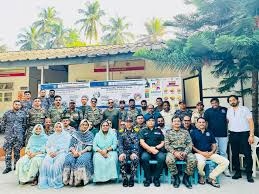
KAVARATTI, LAKSHADWEEP — In a landmark demonstration of civil-military cooperation, a five-day joint services multi-speciality medical camp concluded this week across the Lakshadweep archipelago, providing critical healthcare services to 4,719 residents. Led by the Indian Navy in coordination with the Army and Air Force, the initiative—which ran from January 12 to January 16—brought advanced diagnostic tools and super-specialist consultations to five remote islands: Kavaratti, Agatti, Amini, Androth, and Minicoy. The mission marks one of the largest medical deployments in the region’s history, aimed at reducing the geographic barriers that often separate island communities from life-saving specialized care.
A New Frontier in Remote Healthcare Delivery
For the residents of Lakshadweep, accessing a neurologist or a cardiologist typically involves a precarious and expensive journey to mainland India, often to cities like Kochi. This medical camp effectively flipped that script by bringing the “mainland hospital” to the islands.
The scale of the operation was unprecedented for the Union Territory. Beyond general medicine, the deployment featured an elite team of super-specialists in fields including:
-
Neurology and Cardiology
-
Nephrology and Endocrinology
-
Gastroenterology and Radiology
The logistical feat required a sophisticated “airlift and sea lift” strategy to transport sensitive medical equipment—such as echocardiogram machines and endoscopic towers—across the Arabian Sea. According to official statements, the “jointness” of the three services allowed for the rapid establishment of fully functional surgical theaters and diagnostic suites on each island.
Surgical Success and Diagnostic Breakthroughs
The impact of the camp was measured not just in consultations, but in immediate surgical interventions. Surgeons performed 51 general surgical procedures, significantly clearing a local backlog of cases that would otherwise have required mainland referrals.
One of the most profound impacts was seen in the ophthalmology department. Doctors conducted 71 cataract surgeries, a procedure that the World Health Organization (WHO) identifies as one of the most cost-effective interventions for reducing preventable blindness. For many elderly residents, these 15-minute procedures resulted in the immediate restoration of vision and independence.
By the Numbers: Impact of the 5-Day Camp
| Service Provided | Volume of Patients/Procedures |
| Total Patient Beneficiaries | 4,719 |
| Cataract Surgeries | 71 |
| General Surgical Procedures | 51 |
| Ultrasound Examinations | 250+ |
| Endoscopic Procedures | 50+ |
| Echocardiographic Exams | 50+ |
| Dental Procedures | 100+ |
“The ability to perform over 50 endoscopies and treadmill tests in a field setting is a testament to the military’s mobile medical capabilities,” says Dr. Anirudh Mehta, a public health consultant not involved in the camp. “In remote island geography, early diagnosis of cardiac or gastrointestinal issues is often the difference between a manageable condition and a medical emergency.”
Beyond Treatment: The Preventive Pillar
While the surgeries grabbed headlines, the camp’s focus on Information, Education, and Communication (IEC) activities may have the longest-lasting impact. The Armed Forces teams conducted workshops on:
-
Cancer Awareness: Early detection signs for common malignancies.
-
Mental Wellness: Addressing the unique psychosocial stressors of isolated communities.
-
Basic Life Support (BLS): Training locals in CPR and emergency response.
To ensure the benefits outlasted the five-day window, the Indian Navy donated two ECG machines to local healthcare facilities in Agatti and Amini. This hardware facilitates the “Golden Hour” response—the critical window for treating heart attacks where early diagnosis is vital.
Expert Perspective: The “Reachable” Milestone
Public health experts suggest that while these camps are vital, they highlight the ongoing need for sustainable local infrastructure.
“The overwhelming response of nearly 5,000 patients in just five days reveals a significant ‘pent-up’ demand for specialist care,” explains Sarah Williams, a researcher specializing in rural healthcare delivery. “While the military’s intervention is heroic, the real victory lies in the data collected during these camps, which can help the civil administration map the specific disease burden of the islands—be it high rates of diabetes (Endocrinology) or kidney issues (Nephrology).”
The integrated “tri-services” approach—using the combined assets of the Navy, Army, and Air Force—is increasingly seen as a model for Disaster Risk Reduction (DRR) and humanitarian assistance in the Indo-Pacific region.
Challenges and Limitations
Despite the success, experts note that “camp-based” medicine has inherent limitations. Follow-up care is the primary concern; complex surgeries require post-operative monitoring that must be handed off to local island practitioners who may not have the same specialist training. Furthermore, while 4,719 patients were treated, the total population of Lakshadweep is approximately 65,000, suggesting that periodic “health corridors” or increased telemedicine integration will be necessary to reach 100% of the population.
Looking Ahead
The conclusion of the camp on January 16 leaves the islands with more than just donated equipment; it provides a blueprint for future interventions. The seamless cooperation between the Armed Forces and the Lakshadweep civil administration suggests that the “remote” nature of these islands is no longer an excuse for a lower standard of care.
For the residents of Kavaratti and Minicoy, the presence of the white-clad naval medical officers wasn’t just about medicine—it was about a promise that no citizen is too far for the nation’s best healthcare to reach.
References
- https://www.thip.media/news/4719-patients-benefit-from-armed-forces-medical-camp-in-lakshadweep/136281/
Medical Disclaimer: This article is for informational purposes only and should not be considered medical advice. Always consult with qualified healthcare professionals before making any health-related decisions or changes to your treatment plan. The information presented here is based on current research and expert opinions, which may evolve as new evidence emerges.