 0
0
 0
0
AMARAVATI – For decades, the global health narrative regarding India has focused on overpopulation and the “demographic dividend” of its youth. However, a significant shift is occurring in southern India that has prompted local government officials to consider a radical reversal of long-standing family planning logic.
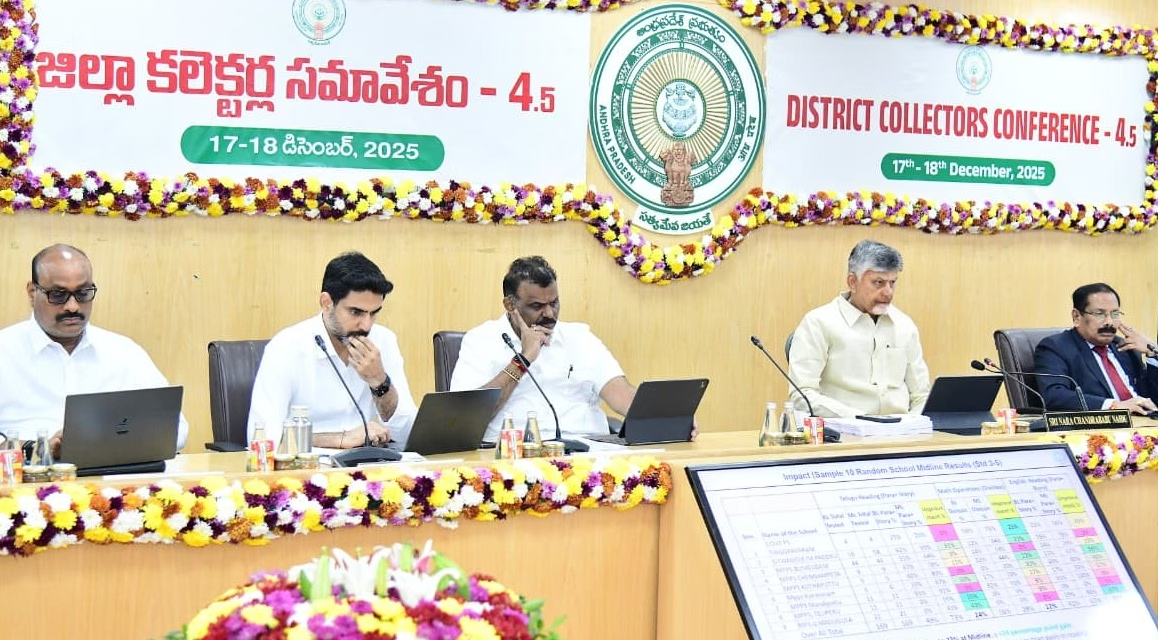
With Andhra Pradesh’s population aging faster than the national average, state authorities are currently mulling a series of incentives to encourage families to have more children—specifically focusing on the second child and beyond. This development, confirmed by top officials on Thursday, marks a pivotal moment in public health policy, signaling a transition from “population control” to “population sustainability.”
The Graying of the South: A Statistical Reality
The proposal stems from a growing concern over the state’s Total Fertility Rate (TFR) and a rapidly increasing elderly dependency ratio. While India’s national TFR has hovered around the replacement level of 2.1, several southern states, including Andhra Pradesh, have seen their rates dip significantly below that mark.
According to data from the National Family Health Survey (NFHS-5), Andhra Pradesh’s fertility rate has declined sharply over the last decade. Simultaneously, life expectancy has risen. The result is a “demographic squeeze”: a shrinking workforce tasked with supporting an expanding elderly population.
“We are seeing a demographic transition that was expected to take another twenty years happening right now,” says Dr. Arisetti Vinay Kumar, a public health researcher specializing in South Asian demographics. “When a population ages faster than its infrastructure can adapt, it places an immense strain on the healthcare system, specifically regarding chronic disease management and geriatric care.”
The Proposed Incentives: Shifting the Paradigm
While the specific details of the incentive package are still under deliberation, officials indicate the plan may include financial assistance, enhanced maternal health benefits, and educational subsidies for families that choose to have more than one child.
This is a stark departure from the 1970s and 80s, when “Hum Do, Hamare Do” (We Two, Our Two) was the national mantra. The new approach reflects a realization that “replacement level” fertility is essential for the economic and physical health of the state.
“Public health is not just about managing diseases; it’s about managing the structure of society to ensure care is available for everyone,” says a senior official in the State Health Department, speaking on the condition of anonymity. “If the youth migrate or the birth rate remains too low, who will staff our hospitals and care for our elders in 2040?”
Expert Perspectives: Medical and Social Implications
Medical professionals and sociologists are watching the development with a mix of interest and caution. While the economic arguments for a younger workforce are clear, health experts emphasize that any policy encouraging higher birth rates must be accompanied by robust maternal and child health infrastructure.
“From a maternal health perspective, we must ensure that ‘incentivizing’ more children does not lead to a compromise in the quality of care,” explains Dr. Meera Deshpande, an obstetrician-gynecologist with 20 years of experience in regional health planning. “Any policy must prioritize the health of the mother, ensuring adequate intervals between births and access to high-quality prenatal and postnatal nutrition.”
Furthermore, geriatricians point out that a younger population is only half the solution. “We need to build a healthcare system that treats aging as a physiological process, not just a series of ailments,” says Dr. Deshpande. “Andhra Pradesh is at the forefront of this challenge. How they balance encouraging births while supporting an aging population will be a blueprint for the rest of India.”
Public Health Challenges: The “Middle-Income Trap”
The concern for Andhra Pradesh is avoiding what economists and health policy experts call the “middle-income trap,” where a region grows old before it grows rich enough to provide universal geriatric care.
-
Healthcare Workforce: A declining youth population means fewer doctors, nurses, and home-health aides in the pipeline.
-
Chronic Disease Burden: An older population naturally sees higher rates of non-communicable diseases (NCDs) like hypertension, diabetes, and dementia, requiring long-term, expensive medical intervention.
-
Social Isolation: With smaller family units, the traditional “family safety net” for the elderly is fraying, necessitating state-funded social safety nets.
Counterarguments and Limitations
Not everyone agrees that financial incentives are the answer. Critics argue that fertility is more closely tied to female literacy, economic stability, and access to healthcare than to government subsidies.
“International examples, such as those in Japan or Scandinavia, show that financial incentives often have a marginal impact on birth rates if the underlying social structures—like childcare and work-life balance—are not addressed,” notes Dr. Kumar.
Additionally, environmental advocates suggest that in a resource-constrained world, encouraging population growth should be handled with extreme care to avoid putting further pressure on land, water, and air quality.
What This Means for Residents
For the average citizen in Andhra Pradesh, these discussions signal a shift in how the government views the family unit. If the policy moves forward, residents may see:
-
Increased focus on maternal health clinics.
-
New financial products or subsidies linked to child-rearing.
-
Expanded geriatric services in local government hospitals.
As the state government prepares its formal roadmap, the eyes of the nation remain on Andhra Pradesh. The transition from managing “too many” to “too few” is a complex health and social challenge that will define the next generation of Indian public policy.
Medical Disclaimer: This article is for informational purposes only and should not be considered medical advice. Always consult with qualified healthcare professionals before making any health-related decisions or changes to your treatment plan. The information presented here is based on current research and expert opinions, which may evolve as new evidence emerges.
Reference Section
-
AP7AM News: “Andhra Pradesh Ageing Faster, Mulls Second Child Onwards Incentive” (Reported December 18, 2025).