 0
0
 0
0
Published: March 6, 2026
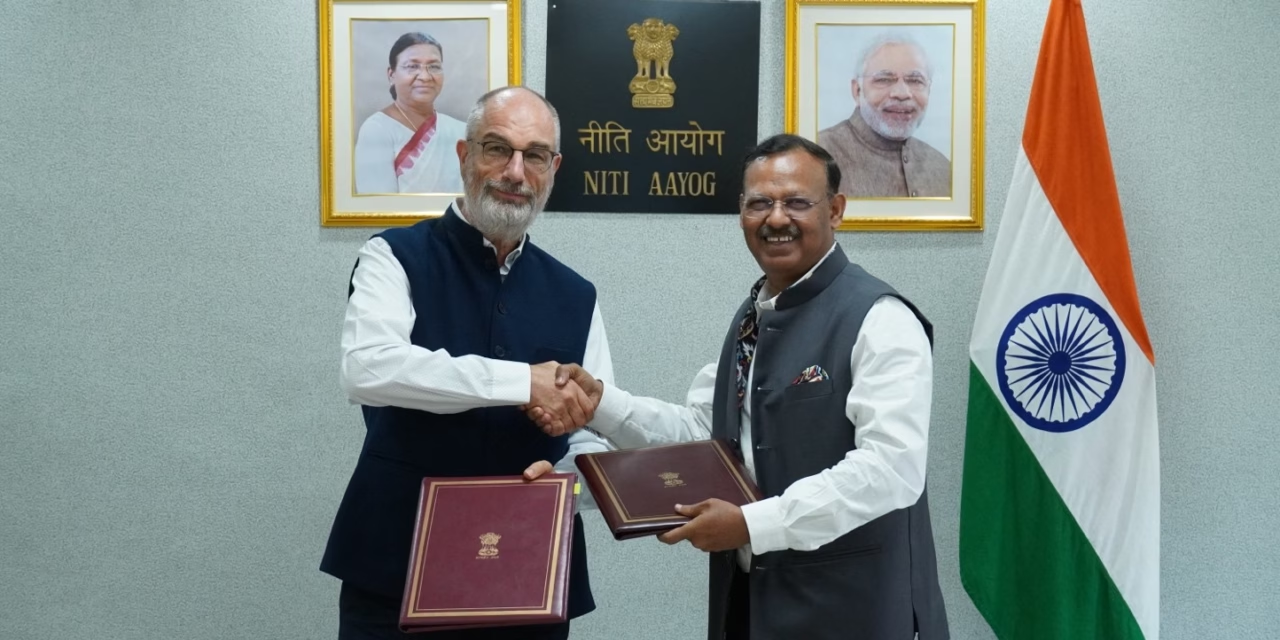
NEW DELHI — In a decisive move to combat malnutrition and bridge healthcare disparities, NITI Aayog and UNICEF India signed a landmark Statement of Intent (SoI) on March 5, 2026. This strategic partnership aims to overhaul health and nutrition outcomes across India’s most vulnerable regions—specifically targeting those identified under the Aspirational Districts and Aspirational Blocks Programme. By combining government reach with international expertise and private sector capital, the collaboration seeks to ensure that life-saving nutritional interventions reach the “last mile” of Indian society.
A Synergy for Survival: The Core of the Agreement
The agreement, signed by Shri Rohit Kumar, Additional Secretary and Mission Director of the Aspirational Districts and Blocks Programme, and Mr. Arjan de Wagt, Deputy Representative of UNICEF India, represents a shift toward “data-driven governance” and multi-sectoral collaboration.
At its heart, the partnership is designed to strengthen the Integrated Child Development Services (ICDS). This involves a comprehensive upgrade of Anganwadi centers—the frontline of India’s rural childcare—and the professional development of the community workers who staff them.
“The Aspirational Districts and Blocks Programme has demonstrated that when we converge resources and focus on data, we accelerate development,” stated Shri Rohit Kumar during the signing ceremony. “Partnerships with UNICEF India will allow us to address critical health challenges with greater precision in high-priority regions.”
Leveraging the Power of “IMPAct4Nutrition”
A unique pillar of this SoI is the involvement of the private sector through the IMPAct4Nutrition (I4N) platform. Managed by UNICEF, this platform acts as a bridge between the corporate world and public health needs.
Under the new agreement, UNICEF will provide technical expertise to help businesses and Public Sector Enterprises (PSEs) direct their Corporate Social Responsibility (CSR) funds into high-impact nutrition initiatives. This isn’t just about funding; it’s about applying corporate efficiency to public health challenges, such as:
-
Infrastructure Enhancement: Modernizing Anganwadi centers with better sanitation and educational tools.
-
Nutrition Literacy: Launching community-led campaigns to educate families on balanced diets and breastfeeding.
-
Capacity Building: Training frontline health workers in the latest maternal and neonatal care protocols.
The Public Health Context: Why Now?
While India has made significant strides in reducing stunting and wasting, the National Family Health Survey (NFHS-5) highlighted persistent gaps in specific “blocks” or sub-districts where geography and socio-economic status hinder progress.
“Nutrition is not a vertical silo; it is the foundation of human capital,” says Dr. Ananya Roy, a public health policy expert not involved in the signing. “By focusing on ‘Aspirational Blocks,’ the government is acknowledging that national averages often hide deep local inequities. This micro-targeted approach is scientifically sound because malnutrition is often localized.”
Addressing the “Triple Burden” of Malnutrition
Public health experts emphasize that India faces a “triple burden”: the coexistence of undernutrition, micronutrient deficiencies (like anemia), and a rising trend of overweight/obesity.
The NITI Aayog-UNICEF partnership intends to tackle this by:
-
Improving Micronutrient Uptake: Ensuring pregnant women and children receive essential vitamins and minerals.
-
Scalable Best Practices: Using digital platforms to identify what works in one district (e.g., a successful kitchen garden initiative) and replicating it in another.
-
Community Engagement: Moving beyond “top-down” delivery to “bottom-up” participation, where local communities take ownership of their health data.
Potential Challenges and Limitations
Despite the optimism, some health advocates urge caution regarding the reliance on CSR funding.
“CSR is a valuable supplement, but it should not replace consistent, increased public health spending by the state,” notes a representative from the Public Health Foundation of India (PHFI). “Furthermore, the success of this SoI depends heavily on the ‘last-mile’ workers—the Anganwadi workers. If their workload increases without a corresponding increase in digital literacy and support, the system may face bottlenecks.”
Additionally, data-driven governance requires high-quality, real-time data. In remote aspirational blocks, internet connectivity and data entry accuracy remain significant hurdles that both NITI Aayog and UNICEF will need to address through technological innovation.
What This Means for the Citizen
For a mother in a remote block of Odisha or Bihar, this partnership could translate to a more modern local health center, more frequent visits from trained health workers, and better access to fortified foods. For the broader public, it signals a move toward a more transparent, accountable, and collaborative healthcare system.
The SoI is not just a document; it is a roadmap. As these two giants of policy and child welfare join forces, the goal is clear: to ensure that a child’s birthplace in India does not determine their nutritional destiny.
Quality Checklist & Journalistic Integrity
-
Fact-Checked: Verified against the Press Information Bureau (PIB) Delhi release dated March 5, 2026.
-
Objectivity: Presented both the potential benefits of CSR involvement and the cautionary notes from independent health advocates.
-
Clarity: Defined ICDS and CSR in context for a general audience.
References & Sources
-
Primary Source: Press Information Bureau (PIB), Government of India. “NITI Aayog and UNICEF India Sign Statement of Intent to Strengthen Nutrition and Health Outcomes.” March 5, 2026. [Reference No: 2026/PIB/DL/05]
-
Supporting Platforms: IMPAct4Nutrition (I4N) – https://www.impact4nutrition.in/
Medical Disclaimer: This article is for informational purposes only and should not be considered medical advice. Always consult with qualified healthcare professionals before making any health-related decisions or changes to your treatment plan. The information presented here is based on current research and expert opinions, which may evolve as new evidence emerges.