 0
0
 0
0
March 16, 2026
NEW DELHI — India’s flagship health insurance scheme, Ayushman Bharat-Pradhan Mantri Jan Arogya Yojana (AB-PMJAY), has transformed the landscape of oncology for millions of vulnerable citizens, but a landmark study warns that a massive funding shortfall threatens its long-term impact. The “FinCan” study, led by researchers at AIIMS Delhi, reveals that while the scheme has covered over 68 lakh treatments since 2018, the current annual budget of ₹7,700 crore falls far short of the ₹33,000 crore required to provide comprehensive, five-year standard care for the nation’s rising cancer cases.
As the Indian Council of Medical Research (ICMR) projects cancer incidence to exceed 15 lakh cases annually by 2026, the study calls for a radical shift toward expanded coverage ceilings, smarter spending on early diagnostics, and decentralized care to save more than 30,000 lives each year.
The FinCan Findings: A Case for “Smarter Spending”
The FinCan study, conducted by a multidisciplinary team of oncologists and health economists, modeled the full trajectory of cancer care—including surgery, radiotherapy, targeted therapies, and long-term follow-up. The data highlights a critical disconnect: cancer is a multi-year battle, yet the current policy provides a flat ₹5 lakh annual family cap.
Researchers propose a “revolving ceiling” of ₹25 lakh over five years, supplemented by a ₹10 lakh top-up for advanced stages. Currently, approximately 30% to 37% of patients require these more intensive, high-cost treatments that quickly exhaust existing limits.
“Better cancer care is not only about spending more but also about spending smarter,” says Dr. Abhishek Shankar, Assistant Professor of Radiation Oncology at AIIMS Delhi and the lead author of the FinCan study. “Early diagnosis and well-designed coverage can prevent both late-stage suffering and the catastrophic costs that drive families into poverty.”
The Power of Early Detection
One of the study’s most striking revelations involves the economic and human value of diagnostics. Currently, diagnostic tests account for only 3% of total treatment costs, yet they frequently fall outside of AB-PMJAY coverage. This exclusion often leads to delays in care, pushing patients into advanced stages where survival odds plummet and costs balloon.
According to OECD-aligned modeling within the study, prioritizing early screening could:
-
Save ₹5,000 crore annually in treatment costs.
-
Prevent over 30,000 premature deaths per year.
-
Add 204,400 “worker-years” back into the Indian economy.
A separate study published in The Lancet underscores the scheme’s potential, noting that AB-PMJAY enrollees are 90% more likely to start treatment within 30 days of diagnosis compared to the pre-2018 era. However, without covering the initial tests that lead to that diagnosis, the “starting line” remains out of reach for many.
Successes and Structural Hurdles
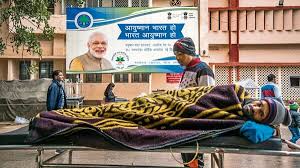
Since its launch in 2018, AB-PMJAY has slashed out-of-pocket expenses, which previously accounted for 70% of all cancer spending in India. Government data indicates that 76% of claims originate from rural areas, suggesting the scheme is successfully reaching the populations it was designed to protect.
“Patients in the fourth stage have been receiving treatment here for five to six years,” says Dr. Dheerendra Sachan of Shivpuri Medical College. “This is a positive sign that the financial barrier is being dismantled.”
However, significant hurdles remain:
-
Facility Distribution: Only 438 of the 1,575 empanelled hospitals offer full multidisciplinary oncology care.
-
Technology Gaps: Shortages in radiotherapy equipment and the exclusion of certain modern immunotherapies limit treatment options.
-
Administrative Barriers: Some private hospitals continue to demand upfront payments despite the “cashless” mandate of the scheme.
Expert Perspectives
Dr. Dheeraj Gautam, an oncologist, emphasizes that the scheme’s next evolution must focus on the primary care level. “Early detection significantly reduces treatment costs. If we integrate screening into the Health and Wellness Centres under the National Health Mission, we catch oral, breast, and cervical cancers when they are most curable.”
Public Health Implications and the 2025-26 Budget
The government has signaled its commitment to addressing these gaps. The Union Budget 2025-26 allocated funds for 200 new day-care cancer centers in district hospitals, a move intended to reduce the travel burden for rural patients.
For the general public, the implications are clear: an Ayushman card is a vital safety net, but it is most effective when paired with health literacy. Recognizing early warning signs—such as unexplained weight loss, persistent lumps, or changes in bowel habits—and seeking care at empanelled facilities can mean the difference between palliative care and a complete cure.
Limitations and Counterarguments
While the FinCan study provides a robust roadmap, critics point out that the proposed financial models rely on projections that may vary by state. Furthermore, AB-PMJAY does not currently cover “indirect costs”—such as travel to distant cities for treatment or the lost wages of family caregivers—which remain a significant cause of “financial toxicity” for the poor.
Some health advocates argue for a comprehensive National Cancer Policy that integrates insurance with broader social support systems to ensure that people with cancer are supported through their entire journey, not just their hospital stay.
Practical Advice for Readers
-
Check Eligibility: Visit pmjay.gov.in or call the national helpline at 14555 to see if you are eligible under the SECC 2011 database or updated state criteria.
-
Know the Signs: Do not ignore persistent symptoms. Early intervention via covered tests can often lead to less invasive treatments.
-
Use the App: Use the official Ayushman Bharat app to track claims and identify the nearest empanelled hospital offering specialized oncology services.
-
Report Issues: If a hospital demands upfront payment for covered services, report the grievance immediately through the National Health Authority (NHA) portal.
By combining systemic reforms with individual vigilance, India stands at the threshold of a new era in cancer care—one where a diagnosis is no longer a debt sentence.
Medical Disclaimer: This article is for informational purposes only and should not be considered medical advice. Always consult with qualified healthcare professionals before making any health-related decisions or changes to your treatment plan. The information presented here is based on current research and expert opinions, which may evolve as new evidence emerges.
References
-
Shankar A, et al. FinCan Study on AB-PMJAY Cancer Coverage. As reported in The Tribune India, March 15, 2026.