 0
0
 0
0
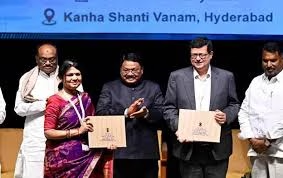
HYDERABAD – In a landmark move toward achieving universal health coverage, the Union Ministry of Tribal Affairs has announced a national initiative to formally recognize and integrate tribal healers as collaborative partners within India’s public health ecosystem.
Addressing a national capacity-building program on Friday, Union Minister for Tribal Affairs Jual Oram emphasized that indigenous medicinal traditions, which survived centuries of colonial rule, represent a vital, untapped resource for modern healthcare. The initiative aims to bridge the “last-mile” gap in healthcare delivery for India’s 104 million tribal citizens by training traditional practitioners to act as community mobilizers and referral links to formal medical facilities.
From Tradition to Technical Integration
The initiative, “Strengthening Health Outreach in Tribal Areas,” brought together nearly 400 tribal healers from across India. Unlike previous informal acknowledgments of traditional medicine, this program signals a structured technical partnership.
Experts from premier institutions—including AIIMS Delhi, ICMR Bhubaneswar, and the World Health Organization (WHO)—are leading technical sessions to enhance the service delivery capacities of these healers. The goal is not to replace modern medicine, but to create a “continuum of care” where traditional wisdom and clinical science coexist.
“Tribal healers command generations of trust and social legitimacy within their communities,” said Manish Thakur, Additional Secretary in the Ministry of Tribal Affairs. “The Ministry now envisions these healers as collaborative partners, particularly in preventive care, early identification of illness, and timely referral.”
Addressing Tribal Health Disparities
The push for integration comes at a critical time. Despite India’s rapid economic growth, tribal populations—comprising approximately 8.6% of the population—continue to face significant health disparities.
-
Communicable Diseases: Malaria, tuberculosis (TB), and leprosy remain endemic in several tribal districts.
-
Genetic Conditions: Sickle Cell Anaemia affects tribal communities at disproportionately high rates.
-
The Double Burden: As lifestyles change, non-communicable diseases (NCDs) like hypertension, diabetes, and cancer are rising in previously isolated areas.
Tribal Affairs Secretary Ranjana Chopra noted that community-led health solutions are often the most cost-effective and sustainable. By training healers to recognize the early symptoms of TB or Malaria, the government hopes to accelerate elimination targets in geographies where geographical and cultural barriers often prevent residents from seeking care at formal hospitals.
The Global Context: Lessons from WHO
The strategy is backed by global precedents. Dr. Dilip Singh Mairembam, a National Professional Officer at the WHO, presented case studies highlighting how other nations have successfully engaged indigenous healers.
The WHO’s involvement underscores a growing global recognition of “cultural safety.” When a patient feels their traditional beliefs are respected, they are more likely to engage with the formal health system. The key, according to Dr. Mairembam, lies in “functional referral pathways”—ensuring a healer knows exactly when a patient’s condition requires a transfer to a District Hospital.
Economic Empowerment and “Viksit Bharat”
Minister Oram also highlighted a secondary benefit of this integration: livelihood. He encouraged states to explore market linkages between tribal healers and the Fast-Moving Consumer Goods (FMCG) or pharmaceutical sectors. By standardizing the production of traditional remedies, the government aims to create economic value from ancient botanical knowledge.
Minister of State for Tribal Affairs, Durgadas Uikey, added that the “sustainable lifestyles” of tribal communities offer lessons in resilience for the wider population. “Scheduled Tribes are integral to the vision of Viksit Bharat (Developed India),” he stated, suggesting that an integrated approach combining ancient wisdom with modern technology is the path forward for national wellness.
Navigating Limitations and Safety
While the initiative has been met with optimism, medical experts outside the Ministry urge a balanced approach. The primary challenge remains the lack of standardization in traditional practices.
“Integration must be handled with rigorous oversight,” says Dr. Anjali Nayyar, a public health consultant not involved in the program. “While healers are excellent at community mobilization, we must ensure there is a clear boundary. Traditional methods should complement, not delay, life-saving interventions like immunizations or chemotherapy.”
The Ministry has addressed these concerns by positioning healers as “connectors” rather than primary clinicians for complex pathologies. Their role is defined by three pillars: Trust, Navigation, and Referral.
What This Means for Public Health
For the average citizen, particularly those in rural or tribal belts, this policy change could mean:
-
Increased Access: Shorter travel times for basic health screenings.
-
Culturally Competent Care: Healthcare providers who speak the local language and understand local customs.
-
Early Detection: Improved survival rates for diseases like cancer and TB through earlier identification by trusted community figures.
As the program rolls out, the Ministry of Health and the Ministry of AYUSH will continue to monitor the impact on health outcomes, aiming to turn an age-old tradition into a modern pillar of Indian public health.
References
- https://tennews.in/tribal-healers-key-players-in-public-health-ecosystem-minister-jual-oram/
Medical Disclaimer: This article is for informational purposes only and should not be considered medical advice. Always consult with qualified healthcare professionals before making any health-related decisions or changes to your treatment plan. The information presented here is based on current research and expert opinions, which may evolve as new evidence emerges.