 0
0
 0
0
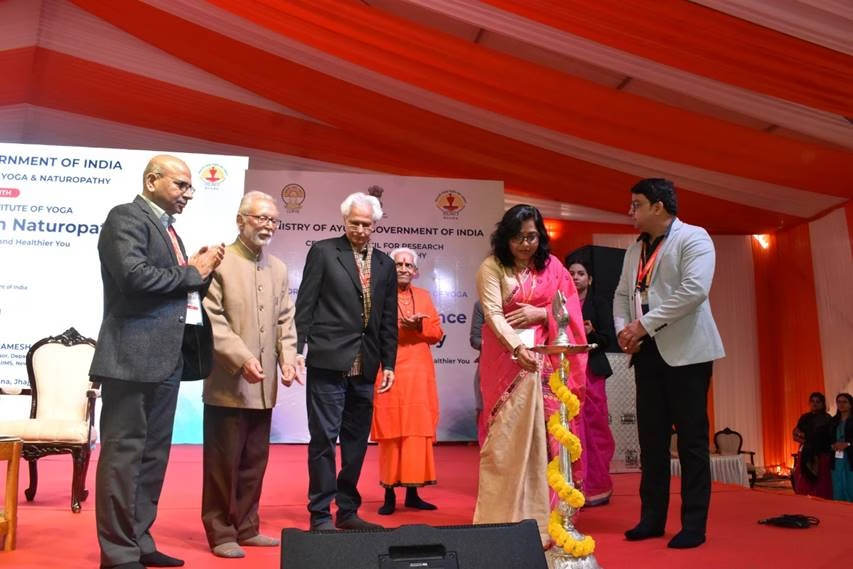
NEW DELHI — As global healthcare systems grapple with an escalating crisis of lifestyle-related chronic diseases, a gathering of the nation’s leading medical minds has proposed a paradigm shift: the formal integration of ancient wisdom with modern clinical practice.
The National Conference on Naturopathy–2026, held February 5–6 in the capital, concluded with a powerful consensus on “Yoga Samyog”—the evidence-based union of Yoga, Naturopathy, and conventional medicine. Organized by the Morarji Desai National Institute of Yoga (MDNIY) and the Central Council for Research in Yoga & Naturopathy (CCRYN) under the Ministry of Ayush, the summit served as a rigorous platform for validating traditional practices through the lens of modern physiology and clinical research.
A National Mandate for Integrative Health
The conference opened with a clear message from the highest levels of government. In a video address, Shri Prataprao Jadhav, Minister of State (Independent Charge) for the Ministry of Ayush, emphasized that the integration of Ayush practices is no longer a matter of “alternative” interest but a primary strategy for improving national health outcomes.
“The Ministry is committed to promoting research that bridges traditional systems with contemporary medicine,” Jadhav stated, highlighting that public awareness and scientific validation are the twin pillars of this movement.
Ms. Monalisa Dash, Joint Secretary for the Ministry of Ayush, noted that 2026 has seen the International Day of Yoga celebrated in a record 190 countries, signaling a global appetite for sustainable, holistic healthcare. “Yoga and Naturopathy are not just cultural heritage; they are complementary systems that provide a framework for a stronger, healthier society,” Dash said.
The Science of “Samyog”: Yoga as Clinical Intervention
The core of the conference, titled “Yog Samyog,” moved beyond the spiritual aspects of Yoga to focus on its neuro-physiological and therapeutic applications.
Managing the Diabetes Epidemic
One of the most pressing topics was the management of Type 2 diabetes. Dr. Satish D. Pathak, Assistant Director of Scientific Research at Kaivalyadhama, presented findings suggesting that while modern medicine is vital for acute stabilization, Yoga and Naturopathy offer superior long-term management for lifestyle disorders.
“Diabetes is rapidly increasing, but it is manageable through early diagnosis and the ‘Samyog’ approach,” Dr. Pathak explained. Research presented at the conference suggests that specific asanas (postures) and pranayama (breathing exercises) can improve insulin sensitivity and reduce cortisol levels, which are often elevated in patients with chronic metabolic stress.
Yoga Nidra and Mental Health
Dr. Vishwas Mandalik, Director of Yoga Vidya Gurukul, delivered a keynote on Yoga Nidra—a state of “conscious deep sleep”—as a potent form of psychotherapy. He illustrated its efficacy in treating:
-
Obesity: By addressing emotional eating patterns.
-
Insomnia: By retraining the nervous system to transition from “fight or flight” to “rest and digest.”
-
Spinal Disorders: By reducing chronic muscle tension through deep relaxation.
Evidence-Based Medicine: The Expert Perspective
While the conference celebrated traditional roots, the tone remained strictly scientific. Dr. Ramesh Bijlani, former Professor of Physiology at AIIMS, New Delhi, provided a sobering but optimistic view on the need for rigorous data.
“For Yoga to have global credibility and wide applicability in hospitals, we need continuous, robust, and scientifically validated research,” Dr. Bijlani noted. He argued that Yoga should be prescribed with the same precision as pharmaceuticals, based on its measurable impact on physiological markers like heart rate variability and cytokine levels.
Focus on Women’s Health and Neurophysiology
The third session of the conference highlighted the multidisciplinary reach of integrative care. Expert contributors included:
-
Dr. Sudha Prasad (Maulana Azad Medical College): Discussed the role of Yoga in managing polycystic ovary syndrome (PCOS) and reproductive health.
-
Dr. Ravindra P. N. (NIMHANS): Presented cutting-edge research on the neuro-physiological aspects of meditation, showing how regular practice can physically alter the brain’s structure (neuroplasticity) and improve sleep architecture.
Public Health Implications: What This Means for You
For the average consumer, the “Yoga Samyog” initiative marks a shift in how healthcare might be delivered in the coming decade. Instead of choosing between a GP and a yoga instructor, patients may increasingly find “Integrative Health Clinics” where both work in tandem.
The practical takeaways for the public include:
-
Preventive Primacy: Utilizing Naturopathy to prevent the onset of lifestyle diseases rather than waiting for symptoms to appear.
-
Rehabilitative Support: Using Yoga as a recovery tool for chronic pain and post-surgical rehabilitation.
-
Holistic Management: Recognizing that mental health and physical health are inextricably linked through the nervous system.
Limitations and the Road Ahead
Despite the enthusiasm, experts at the conference acknowledged significant hurdles. Shri Amarendra Singh, Director (Yoga & Naturopathy), pointed out the need for more structured education and public outreach to ensure that “integration” does not lead to “dilution” of either system.
Critics of integrative medicine often point to the lack of large-scale, double-blind randomized controlled trials (RCTs) for many natural therapies. However, the 2026 conference signaled a commitment to meeting these gold-standard requirements through collaborations between institutes like NIMHANS, AIIMS, and dedicated Yoga research centers.
Conclusion
The National Conference on Naturopathy–2026 has set a new benchmark for how traditional Indian medicine is perceived. By focusing on “Samyog”—the strategic integration of disciplines—the Ministry of Ayush is moving toward a future where healthcare is not just about treating disease, but about cultivating a “Stronger and Healthier You.”
As Prof. (Dr.) Kashinath Samagandi, Director of MDNIY, concluded in his valedictory address, “This is not just an exchange of knowledge; it is a policy dialogue that will shape the health of the next generation.”
Medical Disclaimer: This article is for informational purposes only and should not be considered medical advice. Always consult with qualified healthcare professionals before making any health-related decisions or changes to your treatment plan. The information presented here is based on current research and expert opinions, which may evolve as new evidence emerges.
References & Sources
-
Ministry of Ayush: Press Information Bureau (PIB) Delhi, Release ID: 2026-NCN-01.