 0
0
 0
0
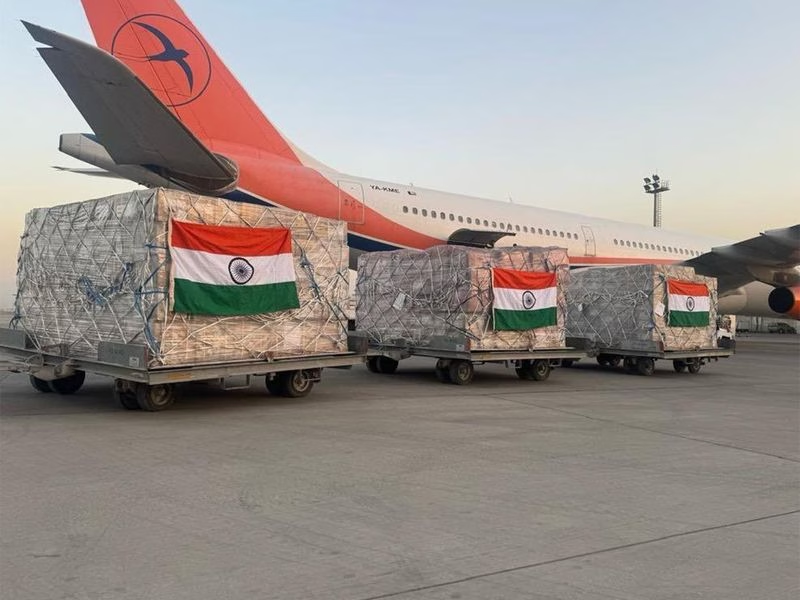
KABUL/NEW DELHI – In a significant escalation of humanitarian medical aid, India delivered a 7.5-tonne consignment of life-saving cancer medications to Kabul on Thursday. The shipment marks a critical intervention for Afghanistan’s struggling healthcare infrastructure, where oncology services have faced severe resource depletion over the last several years.
The delivery, confirmed by Ministry of External Affairs (MEA) spokesperson Randhir Jaiswal, is part of a broader bilateral effort to stabilize the Afghan health sector. “India remains committed to supporting the friendly people of Afghanistan,” Jaiswal stated, highlighting the urgent need to address the rising mortality rates associated with untreated malignancies in the region.
A Lifeline for Oncology Patients
For the thousands of Afghans living with cancer, the arrival of these medicines is more than a diplomatic gesture; it is a clinical necessity. Cancer treatment requires consistent, uninterrupted cycles of chemotherapy and supportive care—logistics that have been fraught with challenges in Kabul.
The consignment follows a high-level meeting in New Delhi between Afghanistan’s Minister of Public Health, Mawlawi Noor Jalal Jalali, and India’s Minister of Health and Family Welfare, Jagat Prakash Nadda. The discussions underscored a shift from emergency aid toward sustainable healthcare cooperation.
Key Components of the Aid Package:
-
-
7.5 Tonnes of Oncology Medicines: Including essential chemotherapy agents and palliative care drugs.
-
Diagnostic Infrastructure: Dispatch of a 128-slice CT scanner to a children’s hospital in Kabul to improve early detection.
-
Preventative Care: Large batches of vaccines to bolster public immunity.
-
Technical Capacity: Ongoing proposals for a radiotherapy machine and the training of Afghan medical professionals.
-
Restoring Diagnostic and Treatment Capacity
The inclusion of a 128-slice CT scanner is particularly noteworthy. In oncology, the “slice” count refers to how many images the scanner can take in a single rotation. A 128-slice machine provides high-resolution, three-dimensional images that allow clinicians to detect smaller tumors and assess the stage of cancer with much higher precision than older equipment.
“Without advanced diagnostics like CT scans and radiotherapy, a cancer diagnosis in a resource-limited setting is often a late-stage diagnosis,” explains Dr. Arvinder Singh, an international health policy consultant not involved in the current mission. “India’s focus on providing both the ‘software’—the medicines—and the ‘hardware’—the diagnostic tools—creates a more comprehensive pathway for patient survival.”
Over the past four years, India has supplied a total of 327 tonnes of medicines and vaccines to Afghanistan. This consistent flow is vital because pharmaceutical supply chains for specialized treatments like oncology are highly sensitive to temperature and storage conditions.
Integrating Traditional Medicine
In a move that reflects the cultural health landscape of the region, Minister Jalali also met with India’s Minister for AYUSH, Prataprao Jadhav. The two nations are exploring the establishment of a traditional medicine institute and research center in Kabul.
Minister Jalali noted that standardizing traditional medicine is essential for Afghanistan. By leveraging India’s structured regulatory framework for Ayurveda and Unani systems, Afghanistan aims to integrate evidence-based traditional practices with modern oncology to provide holistic supportive care for patients.
The Public Health Context: A Region in Need
The World Health Organization (WHO) has previously highlighted that non-communicable diseases (NCDs), including cancer, account for a growing percentage of deaths in Afghanistan. However, the country’s healthcare system has been hampered by:
-
Brain Drain: A shortage of specialized oncologists and radiologists.
-
Economic Barriers: High costs of imported chemotherapy drugs.
-
Geographical Hurdles: Patients often have to travel hundreds of miles to Kabul for basic screening.
India’s commitment to easing medical visas for Afghan patients further addresses these gaps. By allowing complex cases to be treated in Indian hospitals, New Delhi is providing a pressure-release valve for Afghanistan’s overburdened facilities.
Limitations and Future Challenges
While 7.5 tonnes of medication provides immediate relief, experts caution that the long-term sustainability of cancer care requires more than shipments.
“Medical aid is a bridge, not a destination,” says Dr. Singh. “The next step must be the ‘capacity building’ mentioned in the bilateral talks—ensuring there are enough trained Afghan technicians to maintain a 128-slice CT scanner and enough pharmacists to manage complex chemotherapy protocols safely.”
Furthermore, the success of this aid depends on the internal distribution networks within Afghanistan, ensuring that these life-saving drugs reach provincial clinics and are not bottled up in the capital.
Looking Ahead
Minister Nadda reaffirmed that India’s assistance is an ongoing commitment. With proposals for radiotherapy machines currently being processed, the focus is moving toward building a self-sustaining oncology network in Kabul. For the patients currently waiting for treatment, this shipment represents a renewed chance at recovery and a testament to the power of humanitarian health diplomacy.
Medical Disclaimer
Medical Disclaimer: This article is for informational purposes only and should not be considered medical advice. Always consult with qualified healthcare professionals before making any health-related decisions or changes to your treatment plan. The information presented here is based on current research and expert opinions, which may evolve as new evidence emerges.
References
https://tennews.in/india-delivers-7-5-tonnes-of-life-saving-cancer-medicines-in-afghanistan/