 0
0
 0
0
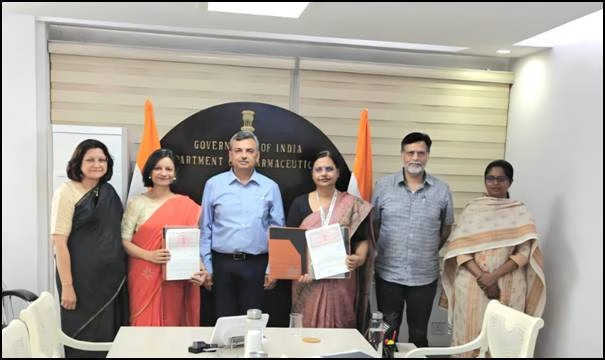
NEW DELHI — In a move set to accelerate India’s transition from a global “pharmacy of the world” to a “discovery hub of the world,” the National Institute of Pharmaceutical Education and Research (NIPER) Raebareli has signed a landmark Memorandum of Understanding (MoU) with Roche Pharma India. The partnership, formalized on March 17, 2026, aims to modernize pharmaceutical education through high-level academic-industry integration, focusing on regulatory sciences, artificial intelligence (AI), and biologics.
The agreement was signed at Shastri Bhawan in the presence of Shri Manoj Joshi, Secretary of the Department of Pharmaceuticals, Ministry of Chemicals and Fertilizers. This collaboration arrives at a critical juncture for the Indian healthcare landscape, as the nation seeks to align its domestic manufacturing prowess with global standards of innovation and complex drug development.
A Curriculum for the Future: Regulatory Affairs and AI
At the heart of this partnership is a concerted effort to close the “skill gap” that often exists between traditional academic curricula and the rapid-fire evolution of the global pharmaceutical industry.
The MoU outlines several key initiatives:
-
Certificate Programs in Regulatory Affairs: Designed for both students and working professionals, these programs will focus on the complex legal and safety standards required to bring new drugs to market.
-
AI-Driven Research: Joint ventures into how Artificial Intelligence can shorten the drug discovery cycle—a process that traditionally takes over a decade and billions of dollars.
-
Expert Lecture Series: Senior scientists and executives from Roche will provide direct mentorship on emerging trends in healthcare innovation and drug development.
“India needs to strengthen its capabilities in regulatory sciences, biologics, and AI in pharmaceuticals to achieve a sustained global competitive advantage,” stated Shri Manoj Joshi during the signing ceremony. He emphasized that academia-industry collaborations are no longer optional but are the “critical fuel” for the country’s #ViksitBharat vision.
Why This Matters for Public Health
For the average consumer, an MoU between a government institute and a multinational corporation might seem distant. However, the implications for public health are profound.
Pharmaceutical innovation is moving toward biologics—complex medicines derived from living organisms—and personalized medicine, which uses a patient’s genetic profile to guide treatment. These fields require a highly specialized workforce. By training the next generation of Indian scientists in these specific areas, the partnership ensures that cutting-edge treatments can be developed, tested, and regulated more efficiently within India.
“When we talk about ‘value-driven innovation,’ we are talking about finding better cures for cancer, rare diseases, and chronic conditions,” says Dr. Aranya Sen, a health policy analyst not involved in the agreement. “By embedding industry standards into the educational phase at NIPER, we reduce the time it takes for a breakthrough in the lab to reach a patient’s bedside.”
Statistical Context: The Shift to Value
India currently ranks 3rd globally in pharmaceutical production by volume but 14th by value. According to data from the Economic Survey of India, the domestic pharmaceutical market is projected to reach $130 billion by 2030. To reach this target, experts suggest a shift toward high-value products like biosimilars and mRNA technology is essential.
| Metric | Current Status (Approx.) | 2030 Goal |
| Global Rank (Volume) | 3rd | Maintain |
| Global Rank (Value) | 14th | Top 10 |
| Market Valuation | $50 Billion | $130 Billion |
The collaboration with Roche—a global leader in oncology and diagnostics—provides NIPER Raebareli students with a front-row seat to the standards used by top-tier global firms, potentially increasing the “exportability” of Indian pharmaceutical talent and research.
Addressing Potential Challenges
While the partnership is being hailed as a major win for the #BiopharmaShakti mission, some industry observers urge a balanced perspective.
“Collaborations between public academic institutions and private entities must maintain a strict boundary to ensure research remains objective,” notes a representative from a leading health watchdog. “The focus must remain on public health priorities rather than just commercial viability.”
Furthermore, the integration of AI in drug research, while promising, remains in its infancy. Ethical considerations regarding data privacy and the “black box” nature of AI algorithms in clinical settings are hurdles that both NIPER and Roche will need to address as they develop their curriculum.
Practical Implications for Students and Professionals
For students at NIPER Raebareli, this MoU translates to enhanced employability. For healthcare professionals, the introduction of a specialized certificate in regulatory affairs offers a path to upskill in a field that is becoming increasingly digital and data-heavy.
The emphasis on Regulatory Sciences is particularly noteworthy. As India seeks more approvals from the US FDA and the European Medicines Agency (EMA), having a workforce that natively understands these rigorous global standards is a strategic asset.
Conclusion: A Step Toward Sovereignty in Innovation
The NIPER-Roche partnership is more than a training agreement; it is a signal of India’s intent to lead in the “vanguard of the biopharmaceutical sector.” By fostering a future-ready workforce, the initiative aims to ensure that the next generation of life-saving medicines is not just manufactured in India, but imagined and developed here as well.
Medical Disclaimer: This article is for informational purposes only and should not be considered medical advice. Always consult with qualified healthcare professionals before making any health-related decisions or changes to your treatment plan. The information presented here is based on current research and expert opinions, which may evolve as new evidence emerges.
References
-
Press Information Bureau (PIB). (2026, March 17). NIPER Raebareli Signs MoU with Roche Pharma India to Strengthen Pharmaceutical Education and Research. Ministry of Chemicals and Fertilizers.