 0
0
 0
0
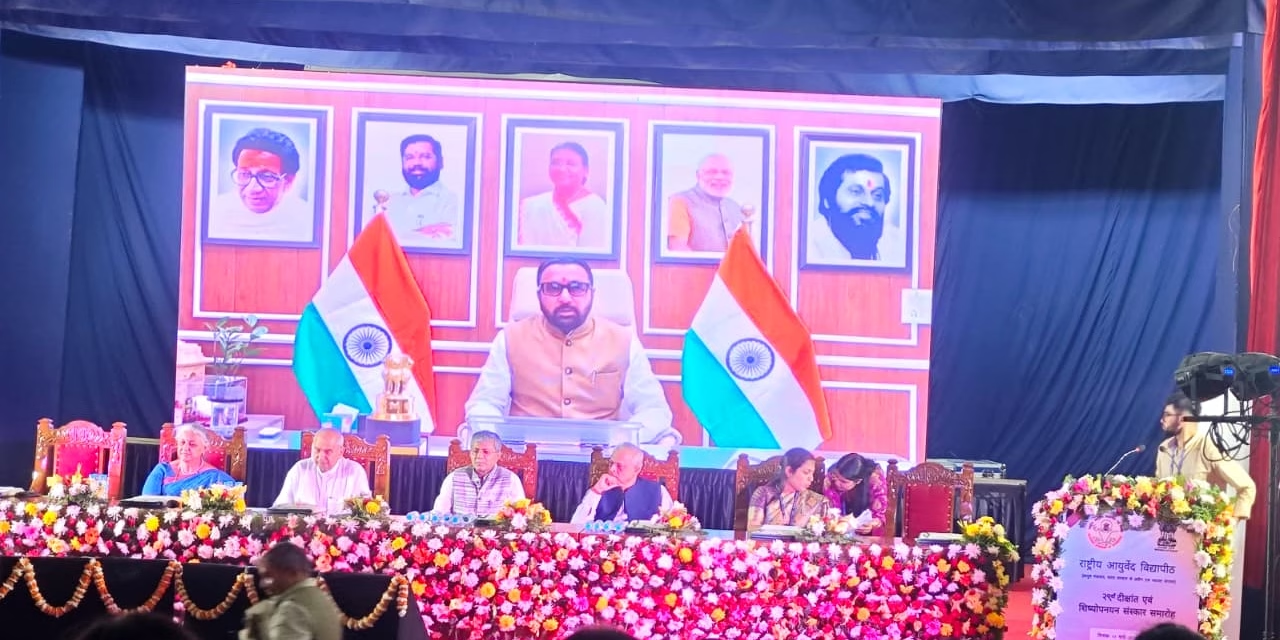
VARANASI — In the heart of Kashi, a city synonymous with the dawn of ancient medical science, the future of traditional Indian medicine took center stage today. The Rashtriya Ayurveda Vidyapeeth (RAV), an autonomous body under the Ministry of Ayush, held its 29th Convocation and Shishyopanayaniya Samskara ceremony at Banaras Hindu University (BHU). The event served as both a celebration of academic achievement and a strategic pivot toward integrating the historic Guru–Shishya (teacher-disciple) tradition with 21st-century evidence-based healthcare.
The ceremony, held at the Swatantrata Bhawan, saw hundreds of scholars graduate from the Certificate of Rashtriya Ayurveda Vidyapeeth (CRAV) program. Addressing the assembly virtually, Shri Prataprao Jadhav, Union Minister of State (I/C) for Ayush, underscored a pivotal shift: Ayurveda is moving beyond its roots as a cultural heritage to become a cornerstone of India’s global healthcare diplomacy.
The Resurgence of the Guru–Shishya Tradition
At the core of the convocation was the Shishyopanayaniya Samskara, a traditional induction ceremony that signifies the formal acceptance of a student by a teacher. While modern medical education often relies on standardized classroom settings, the RAV’s model emphasizes direct mentorship under eminent Vaidyas (physicians).
“Ayurveda is not merely a system of medicine; it is a holistic knowledge system,” Minister Jadhav stated. He noted that legendary figures such as Sushruta, the father of surgery, and Charaka emerged from this very lineage. By pairing young physicians with seasoned practitioners, the CRAV program aims to preserve “soft skills” and clinical intuition—qualities often lost in purely digital or theoretical learning environments.
Global Ambitions and Evidence-Based Medicine
A recurring theme among the keynote speakers was the necessity of “scientific validation.” While Ayurveda has been practiced for millennia, its integration into global primary healthcare depends on its ability to withstand modern clinical scrutiny.
Vaidya Rajesh Kotecha, Secretary of the Ministry of Ayush, urged the graduating class to prioritize research and scientific writing. “Evidence-based studies are essential for strengthening the credibility and global acceptance of Ayush systems,” Kotecha remarked. He pointed to the WHO Global Traditional Medicine Centre and the expansion of the All India Institute of Ayurveda (AIIA) as infrastructure designed to facilitate this rigorous data collection.
Key Developments Highlighted:
-
Healthcare Diplomacy: The Ministry is leveraging traditional medicine as a “soft power” tool in international relations.
-
Standardization: Efforts are underway to standardize education across Ayurveda, Yoga, Unani, Siddha, and Homoeopathy (AYUSH).
-
Infrastructure: The upgradation of research centers to meet World Health Organization (WHO) standards for traditional medicine.
The Public Health Impact: What This Means for Consumers
For the general public, the professionalization of Ayurveda through institutions like RAV offers a layer of safety and quality assurance. As interest in holistic wellness grows globally—the global complementary and alternative medicine market is projected to reach significant heights by 2030—the focus on “qualified Vaidyas” helps distinguish authentic clinical practice from unregulated “wellness” trends.
Independent experts suggest that this “integrated” approach—where traditional knowledge meets modern diagnostics—could be the key to managing chronic lifestyle diseases like Type 2 diabetes and hypertension, where conventional medicine often focuses on symptom management rather than root-cause lifestyle changes.
“The challenge and the opportunity lie in the synthesis,” says a spokesperson from the National Commission for Indian System of Medicine (NCISM). “When a practitioner understands both the classical Sanskrit texts and modern pathophysiology, the patient receives a more comprehensive form of care.”
Recognizing Excellence and Lifetimes of Service
The ceremony also served to honor those who have dedicated decades to the field. Lifetime Achievement Awards were conferred upon:
-
Vaidya Nirmala Sharma
-
Vaidya Keval Krishna Thakral
-
Vaidya Girdhari Lal Mishra
Additionally, the title of Fellow of RAV (FRAV) was awarded to several distinguished practitioners, including Vaidya Tanuja Manoj Nesri and Vaidya Rama Jaysundar, recognizing their contributions to research and clinical excellence.
Challenges and Counterarguments
Despite the optimism at BHU, the path to global integration is not without hurdles. Skeptics within the conventional medical community often point to the “lack of large-scale, double-blind, placebo-controlled trials” for many Ayurvedic formulations. Furthermore, the presence of heavy metals in some non-standardized Ayurvedic products remains a point of concern for international regulators.
The Ministry of Ayush addressed these concerns indirectly by emphasizing the role of the National Commission for Indian System of Medicine (NCISM) in enforcing stricter quality controls and educational standards. The goal is to ensure that every graduating “Vaidya” is as proficient in safety protocols as they are in ancient pharmacology.
The Road Ahead
As the 29th batch of RAV scholars enters the workforce, they do so at a time when the world is looking for sustainable, preventative health solutions. The message from Varanasi was clear: the future of Ayurveda is not just in looking back at the texts of the past, but in utilizing those texts to solve the health crises of the future.
For the health-conscious consumer, this means a shift toward more reliable, scientifically-backed traditional treatments. For the healthcare professional, it represents an invitation to a more pluralistic approach to healing.
Medical Disclaimer: This article is for informational purposes only and should not be considered medical advice. Always consult with qualified healthcare professionals before making any health-related decisions or changes to your treatment plan. The information presented here is based on current research and expert opinions, which may evolve as new evidence emerges.
References & Data Sources
-
Press Information Bureau (PIB), Delhi: “Rashtriya Ayurveda Vidyapeeth holds 29th Convocation & Shishyopanayaniya Samskara Ceremony at BHU,” March 11, 2026.